
China details 2030 lunar landing roadmap with dual-launch strategy
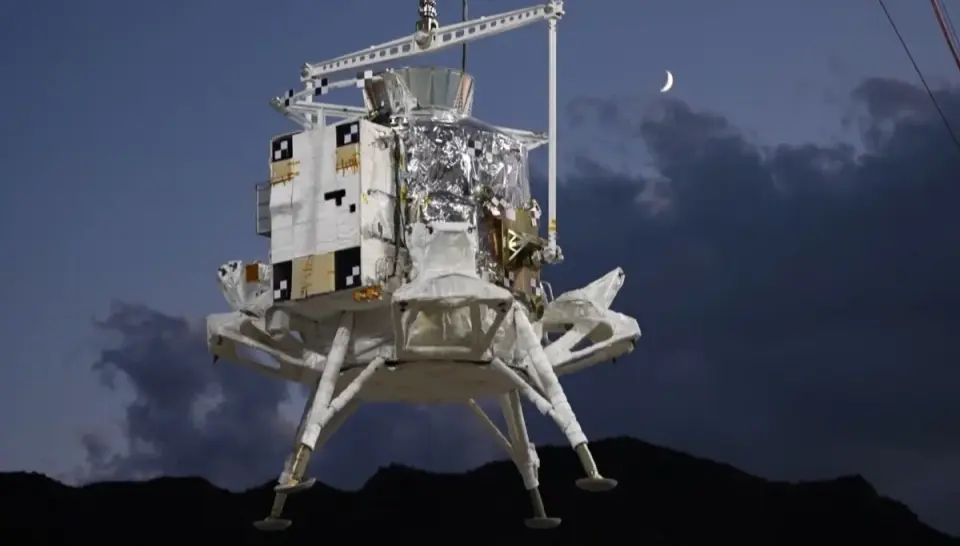
China has publicly outlined a specific four-year timeline to land astronauts on the Moon before 2030, utilizing a dual-launch rendezvous strategy. Deputy chief designer Wang Xiang presented the plan at the Seventh Manned Space Symposium, detailing uncrewed tests of the Mengzhou spacecraft and Lanyue lander in 2027 and 2028, followed by a full rehearsal in 2029. The mission involves launching two Long March 10 rockets separately, docking in lunar orbit, and transferring two of three taikonauts to the lander for a three-day surface stay. This disclosure marks a shift from vague timelines to concrete milestones, intensifying the competition with NASA’s Artemis program, which aims for a 2028 landing but faces uncertainties regarding commercial lander development.
Key points
- Wang Xiang, deputy chief designer of China’s lunar exploration program, presented the detailed roadmap at the Seventh Manned Space Symposium in Beijing, coinciding with the 70th anniversary of China’s space program.
- The plan involves launching the Mengzhou crew capsule and Lanyue lunar lander on two separate Long March 10 rockets, which will dock in lunar orbit before two taikonauts transfer to the lander for a three-day surface mission.
- Key milestones include an uncrewed Mengzhou test in low-Earth orbit in early 2027, an uncrewed Lanyue lunar landing test in 2028, and a full-scale uncrewed rehearsal of the dual-launch and rendezvous in 2029.
- China recently published 17 new standards for its space program, including specifications for Ethernet and Wi-Fi networks on its space station, signage in orbit, and procedures for extravehicular activities and robotic arm usage.
- The plan omits a crewed lunar flyby or orbital test similar to Apollo 8 or Artemis II, relying instead on uncrewed rehearsals and low-Earth orbit tests for the Mengzhou vehicle before the final crewed mission.
Background
China has previously stated a goal to land astronauts on the Moon before 2030, but this is the first time a detailed, step-by-step timeline has been publicly disclosed. In August 2026, China canceled the Chang’e 7 robotic mission due to launch criteria issues, with a retry planned for next year. The current disclosure aligns with Beijing’s 15th five-year plan (2026-2030) and follows a successful high-fidelity test of the Lanyue lander in August 2025. The broader context includes a renewed 'space race' dynamic, with the US and China competing for the first crewed lunar landing since the Apollo era.
How outlets are covering it
The Register emphasizes the technical specifics of the dual-launch strategy and the new operational standards published by China, noting the recent cancellation of the Chang’e 7 mission as a potential setback. Ars Technica highlights the competitive aspect, contrasting China’s detailed timeline with NASA’s 2028 target and noting the absence of a crewed lunar flyby test in China’s plan. Gizmodo focuses on the shift from vague to concrete timelines and the immediate preparations observed at the Wenchang spaceport. Space Policy Online provides a comparative analysis, noting that NASA’s Artemis program also uses a dual-launch approach for its landers but includes crewed orbital tests (Artemis II and III) that China’s plan omits. All sources agree on the 2030 target and the dual-launch method, but differ on the emphasis of the geopolitical race versus the technical milestones.
Why it matters
This disclosure provides the first clear, public benchmark for China’s progress toward a crewed lunar landing, allowing for direct comparison with NASA’s Artemis program. The detailed timeline and technical specifications, including the new standards for space station networks and EVA procedures, indicate a maturing space program. The race to land humans on the Moon by 2030 has significant geopolitical implications, with both nations seeking to establish a long-term presence at the lunar South Pole. The outcome will influence future international cooperation or competition in space exploration and the development of lunar infrastructure.
What to watch
China is expected to begin the uncrewed Mengzhou test in low-Earth orbit in early 2027, followed by the Lanyue lunar landing test in 2028. Preparations for these missions are already underway at the Wenchang spaceport. NASA is accelerating its Artemis program, with Administrator Jared Isaacman pushing to streamline development and secure lander contracts with SpaceX and Blue Origin to meet the 2028 target. The next major milestone will be the 2029 full-scale uncrewed rehearsal of the dual-launch and lunar orbit rendezvous, which will serve as the final test before the crewed mission.
- China outlines plans for moonshot it hopes to land by 2030 The Register
- China publicly discloses plan for a lunar landing within three years Ars Technica
- China Details Its Plan to Land Astronauts on the Moon Before 2030 Gizmodo
- China Plans “Two Launches, Lunar Orbit Rendezvous” to Land Taikonauts on Moon Space Policy Online
- China outlines uncrewed test campaign for buildup to crewed moon landing SpaceNews
Want the full story? Read the original reporting
Read on The Register