
Cosmic duet: twin supermassive black holes near collision could send Earth-detectable waves within a century
TL;DR
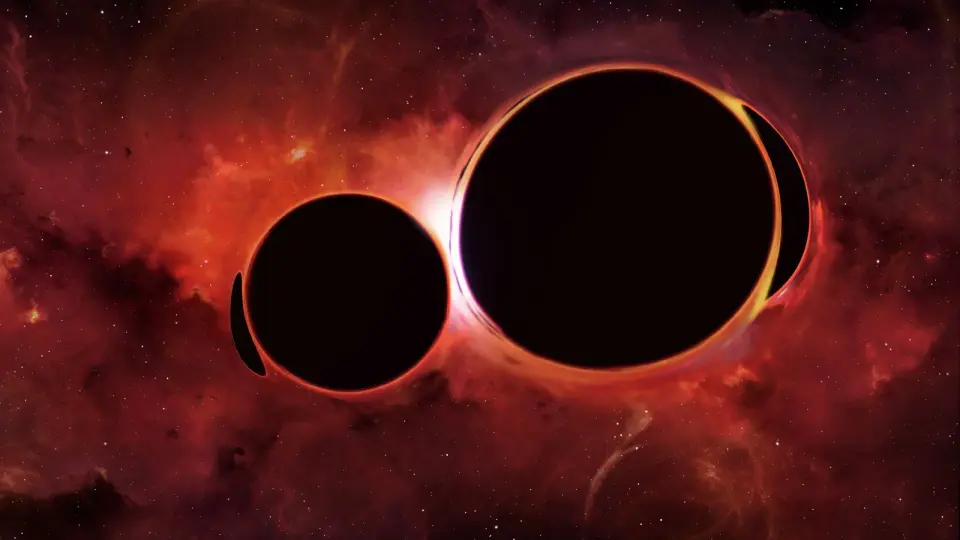
Decades of radio observations reveal that the blazar Markarian 501 hosts two supermassive black holes in a tight binary, each hundreds of millions to billions of solar masses, orbiting about every 121 days at a separation of roughly 250–540 AU. The pair is expected to merge within less than 100 years, producing powerful gravitational waves that could be detected on Earth and offering new insights into extreme black-hole mergers.
- 2 supermassive black holes may collide 100 years from now — and Earth would feel it Live Science
- Two supermassive black holes are now heading for a Universe-shaking collision BBC Science Focus Magazine
- Two Monsters, One Galaxy, and a Collision 100 Years Away! Universe Today
- Two Supermassive Black Holes Are on a Cosmic Collision Course Nautilus | Science
- A Never-Before-Seen Radio Telescope Detection of Twin Particle Jets Reveals a Titanic Collision in the Making The Debrief
Want the full story? Read the original reporting
Read on Live Science