
Astronaut Jessica Meir Captures New View of Mauritania's 'Eye of Africa'
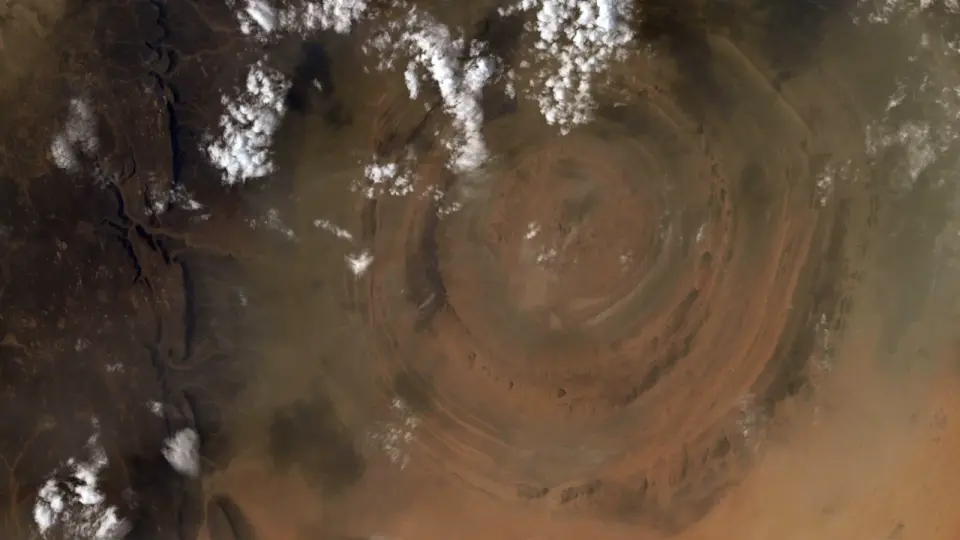
NASA astronaut Jessica Meir captured a new photograph of the Richat Structure, known as the 'Eye of Africa,' from the International Space Station. The 25-mile-wide geologic formation in Mauritania features concentric rings that have been visible from space since 1965. Meir highlighted the unique lighting and textures of the image, describing it as 'pure Earth Art.'
Key points
- NASA astronaut Jessica Meir photographed the Richat Structure from the International Space Station during Expedition 75.
- The Richat Structure, nicknamed the 'Eye of Africa,' is a 25-mile-wide (40 km) circular geologic formation in Mauritania.
- The feature consists of concentric ridged rings and has been observed from space since 1965, when astronauts Ed White and James McDivitt photographed it during the Gemini IV mission.
- Meir shared the image on social media, noting that the specific lighting and color palette made the natural formation resemble artistic carving.
Background
The Richat Structure is a well-known geologic landmark in northwestern Africa, frequently captured by astronauts due to its distinct circular shape. Previous observations date back to the 1960s, establishing it as a long-standing subject for orbital photography. Recent ISS missions have continued to document various terrestrial features, including storms and auroras, as part of routine visual documentation.
Why it matters
The image highlights the ongoing role of the International Space Station in documenting Earth's geologic features. It demonstrates how natural formations can appear artistic from orbit, fostering public interest in planetary science and geology. The continuity of observation since 1965 underscores the value of long-term space-based monitoring for understanding Earth's surface.
What to watch
No specific future actions are mentioned in the source. The image serves as part of ongoing social media engagement and educational content from NASA and the ISS crew. Future missions may continue to capture similar geologic features as part of routine photography operations.
Want the full story? Read the original reporting
Read on Space