
ESA Confirms Space Rider Crash Caused by Parafoil Detachment
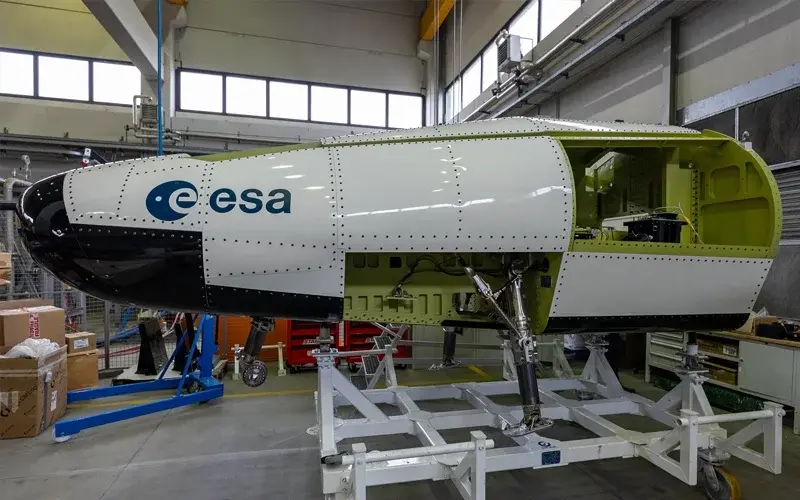
The European Space Agency (ESA) confirmed that its Space Rider test model crashed during a drop test in Sardinia on October 6 after the main parafoil detached. While the initial drogue parachute functioned correctly, the loss of the steerable parafoil caused the full-scale mockup to impact the ground. An investigation board has been established to determine the cause, though ESA officials state the failure is not expected to delay the program’s critical path or the targeted 2028 launch.
Key points
- The failed test occurred on October 6 at a military range in Sardinia, Italy, involving a full-scale model released from a helicopter at approximately 3 kilometers altitude.
- The initial drogue parachute deployed successfully, but the subsequent parafoil, which guides the vehicle to a controlled landing, detached during deployment.
- Géraldine Naja, ESA’s Director of Space Transportation, confirmed that remnants of the test model were recovered and an investigation board has been formed to identify the root cause.
- ESA maintains that the remaining qualification activities are not on the critical path, meaning development work can continue while the investigation proceeds.
- The first orbital flight of Space Rider remains targeted for the first half of 2028 aboard a Vega C rocket, though the schedule will be reviewed after the investigation concludes.
Background
Space Rider is Europe’s first reusable uncrewed orbital spacecraft, designed to carry experiments to low Earth orbit and return them for recovery. Previous qualification campaigns in 2025 successfully demonstrated individual landing system elements, including parafoil deployment and autonomous guidance. A prior drop test attempt in May was aborted due to a sensor issue, and the testing range was unavailable from June through September. This incident follows earlier thermal protection testing in plasma wind tunnels earlier this year.
How outlets are covering it
All sources agree on the core facts: the crash resulted from parafoil detachment during the October 6 test in Sardinia. European Spaceflight and Space.com provide detailed accounts of the briefing by Géraldine Naja, emphasizing that the failure does not currently threaten the 2028 launch timeline. Aviation Week notes the specific dimensions of the parafoil (27 meters long, 10 meters wide) but requires a subscription for full details. KeepTrack summarizes the event briefly within a broader space news digest. The primary source and Space.com highlight that earlier individual component tests were successful, suggesting the issue lies in the system-level integration rather than the components themselves.
Why it matters
The success of Space Rider’s landing system is critical for its reusability and cost-effectiveness. A failure in the parafoil deployment could impact the vehicle’s ability to perform precise runway-style touchdowns, which is a key differentiator from other parachute-aided recovery methods. While ESA is confident the schedule will not slip, the outcome of the investigation will determine if design modifications are needed, potentially affecting the vehicle’s operational profile and future mission planning.
What to watch
An independent investigation board will determine the root cause of the parafoil detachment. ESA will review the development schedule once the investigation is complete. The program continues with other qualification activities, and the first orbital flight remains targeted for the first half of 2028.
- ESA Provides New Details on Failed Space Rider Drop Test European Spaceflight
- Europe's Space Rider vehicle comes crashing down during drop test Space
- Space Rider Crashes After Parafoil Detaches KeepTrack
- Europe's Reusable Space Rider Mockup Hits the Ground After Parachute Fails Around Prague
- ESA’s Space Rider Suffers Mishap In Drop Test Aviation Week
Want the full story? Read the original reporting
Read on European Spaceflight