
Faint X-ray shock breakout reveals a new path for massive-star deaths (SN 2026gzf)
TL;DR
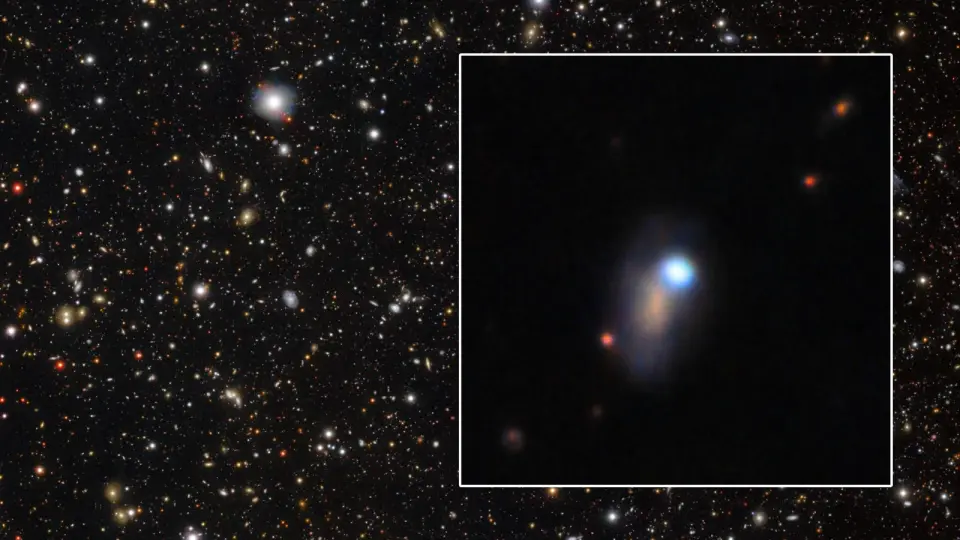
Astronomers tracked SN 2026gzf from its faint X-ray shock breakout to its early light across multiple wavelengths, revealing a broad-lined Type Ic explosion from a Wolf‑Rayet star about 500 million light-years away that did not produce a gamma-ray burst. The rapid, multi-instrument follow-up mapped the explosion and its interaction with surrounding material, suggesting diverse pathways to such energetic deaths beyond GRB jets and shedding light on the star’s final years.
- Astronomers witness the strange final moments of a massive star's supernova death (video) Space
- Astronomers catch massive star's death from the first explosive moment Phys.org
- A star 20 times the size of the sun died in a supernova — and telescopes around the world joined forces to watch it Live Science
- Astronomers Capture 'Exceptionally Rare' Star Explosion for Only the Second Time in 20 Years PetaPixel
- Rare Stellar Explosion Gives Astronomers a Front-Row Seat to a Massive Star’s Death Carnegie Mellon University
Want the full story? Read the original reporting
Read on Space