
Global telescope network captures earliest moments of a distant supernova in unprecedented detail
TL;DR
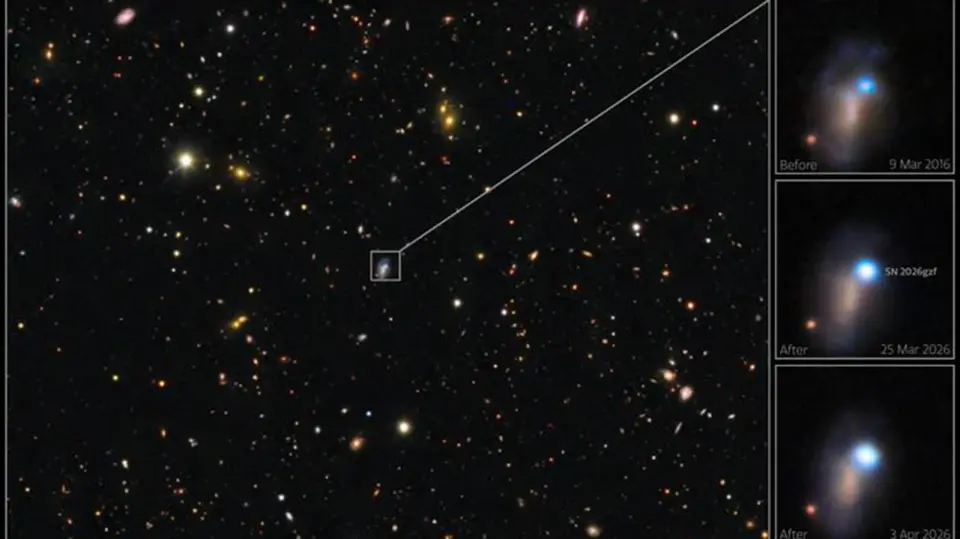
A network of ground- and space-based telescopes, including the Vera C. Rubin Observatory, captured the first moments and subsequent evolution of a Type Ic broad‑lined supernova roughly 500 million light-years away. The observations detail the shock breakout and early light with unprecedented clarity, and follow-up studies found no accompanying gamma-ray bursts, suggesting a possible choked jet. Researchers mapped the star’s pre‑explosion environment around a Wolf‑Rayet progenitor, and Rubin’s continued, high-cadence monitoring will provide long-term data on this event and many future supernovas.
- A star 20 times the size of the sun died in a supernova — and telescopes around the world joined forces to watch it livescience.com
- Astronomers witness the strange final moments of a massive star's supernova death (video) Space
- Astronomers Catch Massive Star’s Death From the First Explosive Moment NOIRLab
- Astronomers catch massive star's death from the first explosive moment Phys.org
- Rare Stellar Explosion Gives Astronomers a Front-Row Seat to a Massive Star’s Death Carnegie Mellon University
Want the full story? Read the original reporting
Read on livescience.com