
JWST Decodes the Universe's Dust Origins by Studying a Nearby Dwarf Galaxy
TL;DR Summary
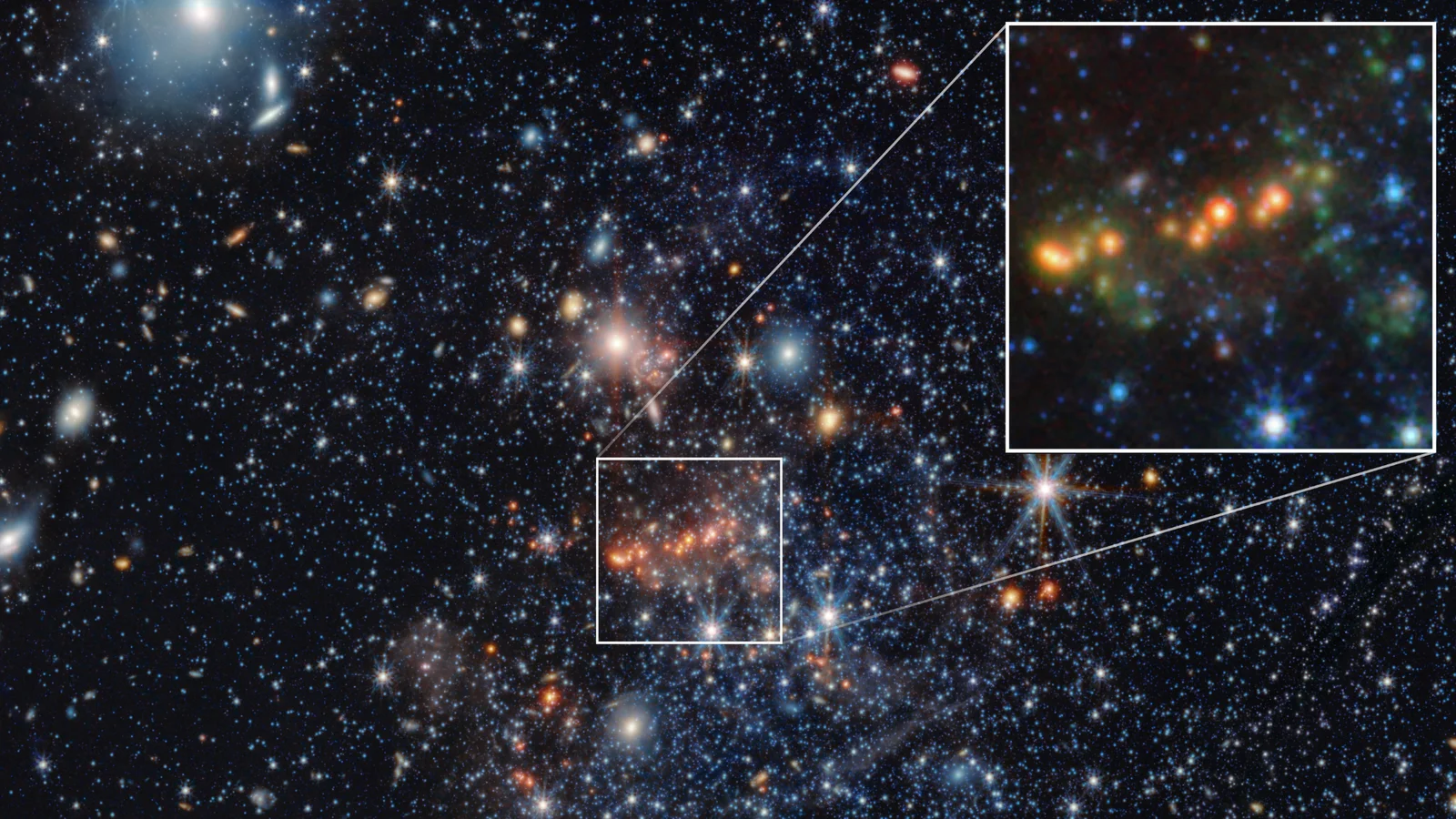
Using the James Webb Space Telescope to study Sextans A, a metal-poor dwarf galaxy 4.6 million light-years away, researchers map dust-producing stars and find that about 2–3 billion years after their formation, a subset of asymptotic giant branch stars produced thick dust shells. This helps explain how the first generations of stars seeded the interstellar medium with metals and dust, enabling the early universe to become the birthplace of stars and galaxies.
Topics:science#asymptotic-giant-branch#dust#early-universe#james-webb-space-telescope#sextans-a#space
- James Webb Space Telescope discovers the secrets of cosmic 'factories' that filled the early universe with stardust Space
- Webb telescope reveals a surprisingly mature galaxy in the early Universe Earth.com
- A primitive dwarf galaxy with almost none of the heavy elements found in the Milky Way is somehow producing iron and silicon-carbide dust — materials astronomers thought early galaxies would struggle to make Space Daily
- Astronomers uncover the earliest known signs of galaxy-building in action Phys.org
- James Webb Telescope reveals earliest blueprint of galaxies, finds IUCAA study Hindustan Times
Reading Insights
Total Reads
1
Unique Readers
37
Time Saved
106 min
vs 107 min read
Condensed
100%
21,281 → 72 words
Want the full story? Read the original article
Read on Space