
JWST Reveals Galaxy-Killing Wind Behind Early Galaxies’ Rapid Demise
TL;DR
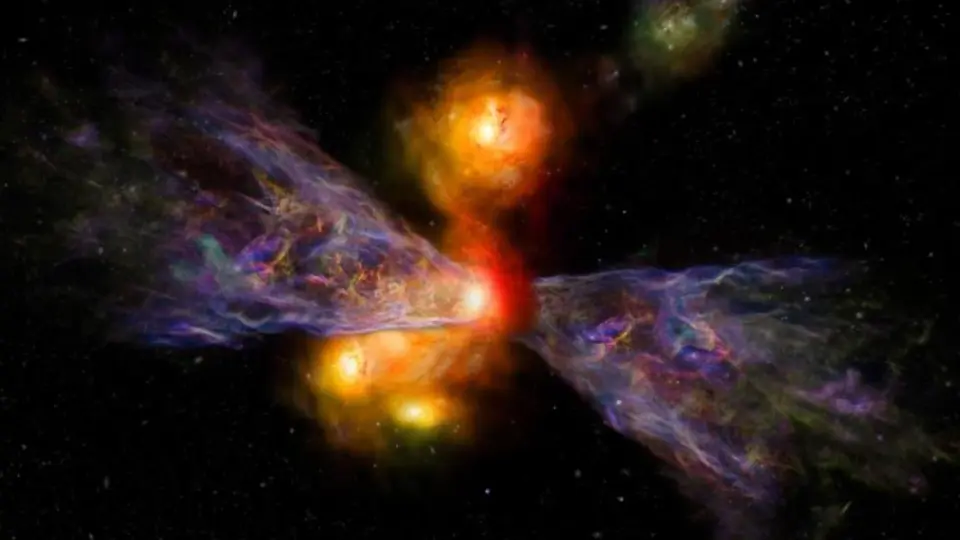
Using JWST and ALMA, astronomers observed the merging galaxy CRISTAL-02 about 1 billion years after the Big Bang and detected a powerful, high-velocity outflow that ejects cold gas far from the galaxy. This wind can strip the material needed to form new stars, and if it continues, CRISTAL-02 could be dead in under 50 million years, helping explain why many massive early galaxies stopped forming stars so quickly. The findings, published in Monthly Notices of the Royal Astronomical Society: Letters, suggest mergers and intense starbursts may have driven widespread galaxy-killing winds in the young universe.
Topics:sciencespace#cristal-02#early-universe#galaxy-wind#james-webb-space-telescope#space#star-formation-quenching
- James Webb Space Telescope discovers 'galaxy-killing' wind that may explain why some early galaxies lived fast and died young Space
- Astronomers found a galaxy in the throes of death – and they know what’s killing it The Conversation
- Galaxy-killing wind discovered in the early universe The Royal Astronomical Society
- Caught in the act: the wind that could kill a galaxy Astronomy Now
- JWST Solves Mystery Of Early Galaxies That Live Fast And Die Young HotHardware
Want the full story? Read the original reporting
Read on Space