
JWST reveals the self-sustaining feeding cycle of a supermassive black hole
TL;DR
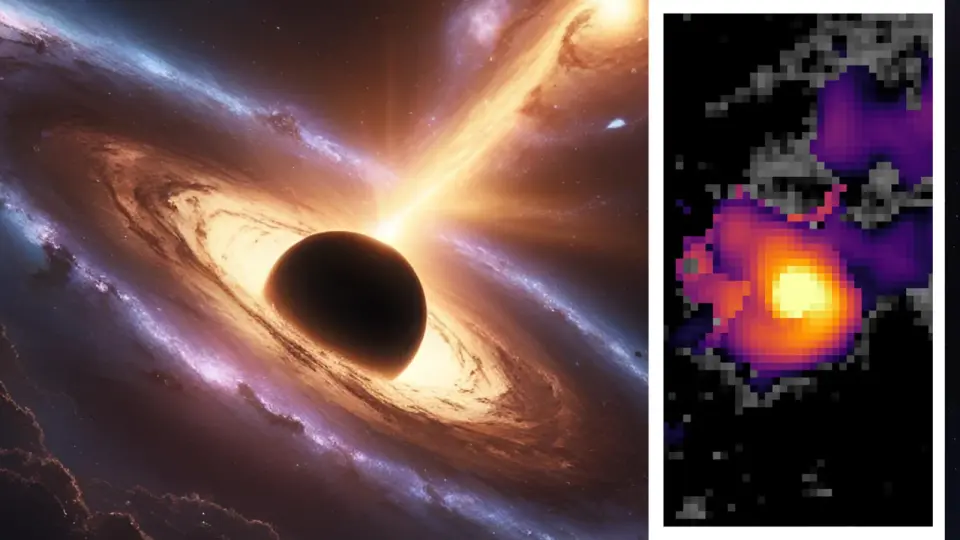
Using the James Webb Space Telescope, astronomers map gas flows in the central galaxy NGC 4696 of the Centaurus Cluster, finding a hook-shaped gas swirl connected to a vast filament that feeds the black hole by forming a swirling accretion disk. The observations support a self-regulating cycle where jets heat surrounding gas and later cooling gas returns as filaments to fuel renewed growth, potentially explaining how supermassive black holes grow rapidly in the early universe and influence star formation in their galaxies.
Topics:sciencespace#active-galactic-nuclei#black-holes#centaurus-cluster#james-webb-space-telescope#ngc-4696#space
- James Webb Space Telescope discovers how black holes feed themselves Space
- NASA’s James Webb catches a supermassive black hole feeding ScienceDaily
- UK researcher helps solve longstanding black hole mystery UKNow
- JWST reveals how a supermassive black hole keeps feeding itself Yahoo
- James Webb Space Telescope reveals how black holes feed themselves The News International
Want the full story? Read the original reporting
Read on Space