
ESA’s Mars Express Captures New 3D Imagery of Schiaparelli Crater, Site of 'The Martian' Stranding
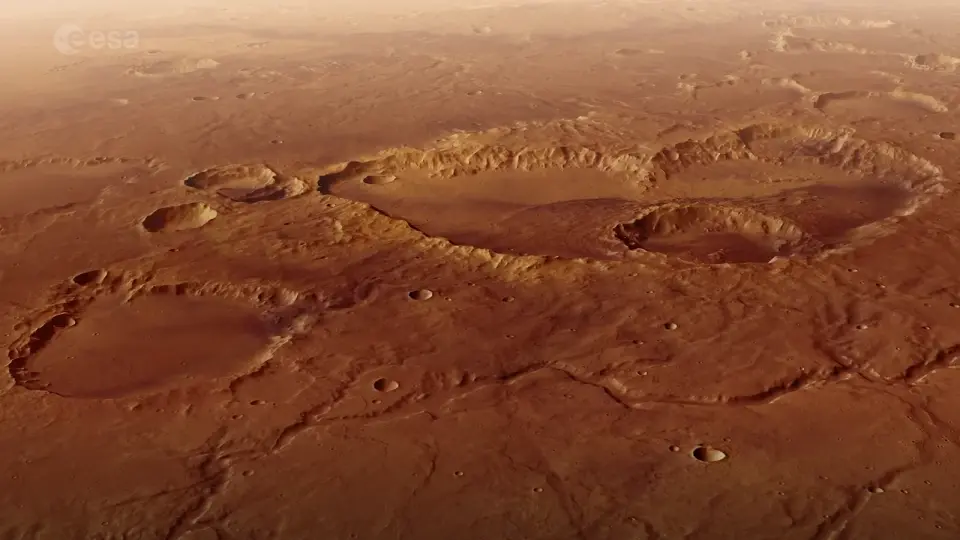
The European Space Agency’s Mars Express orbiter has captured new high-resolution video and 3D imagery of Schiaparelli Crater on Mars. The spacecraft, which has been operating since 2003, used its High Resolution Stereo Camera to scan the crater during a low-altitude pass. Schiaparelli Crater, located in the Southern Highlands, is over 460 kilometers wide and is known for geological features shaped by ancient water flows. The site also gained cultural fame as the location where the protagonist is stranded in the novel 'The Martian.'
Key points
- Mars Express captured new video and 3D color renderings of Schiaparelli Crater using its High Resolution Stereo Camera.
- The crater is located in Mars' Southern Highlands and measures more than 460 kilometers across.
- The imagery reveals geological evidence of water flows that occurred approximately 3.7 billion years ago.
- Schiaparelli Crater is the fictional landing site for Mark Watney in the novel 'The Martian.'
- The crater shares its name with ESA’s Schiaparelli lander, which crashed on Mars in 2016, and Italian astronomer Giovanni Schiaparelli.
Background
This latest imagery from Mars Express adds to a growing body of data from various Mars missions. Recent coverage has highlighted NASA’s Curiosity rover capturing detailed panoramas of Gale Crater, including the Miraflores butte, and Perseverance documenting dust devil interactions in Jezero Crater. Additionally, Mars Express previously revealed chrome-like dunes in Kaiser Crater, demonstrating the ongoing value of orbital imaging for understanding Martian geology and climate history.
Why it matters
New high-resolution imagery from Mars Express provides critical insights into the geological history of Mars, particularly regarding ancient water activity. Schiaparelli Crater serves as a significant site for both scientific study and cultural reference, linking real planetary geology with popular science fiction. The data helps scientists understand past climates and surface processes on Mars, contributing to the broader goal of understanding the planet's potential for past habitability.
What to watch
Scientists will analyze the new 3D renderings and video data from Mars Express to further understand the geological history of Schiaparelli Crater and the Southern Highlands. The imagery may provide additional clues about ancient water flows and the planet's past climate. ESA may release further detailed analyses or additional imagery from the orbiter's ongoing mission.
- Mars Express orbiter captures detailed new video of the crater where Mark Watney was stranded in 'The Martian' Space
- Bird's-eye view of Schiaparelli – flying around a giant Martian crater Deutsches Zentrum für Luft- und Raumfahrt
Want the full story? Read the original reporting
Read on Space