Tag

Mars Express

All articles tagged with #mars express

Martian solar storm sparks record electron surge observed by ESA orbiters
space1 month ago

Martian solar storm sparks record electron surge observed by ESA orbiters

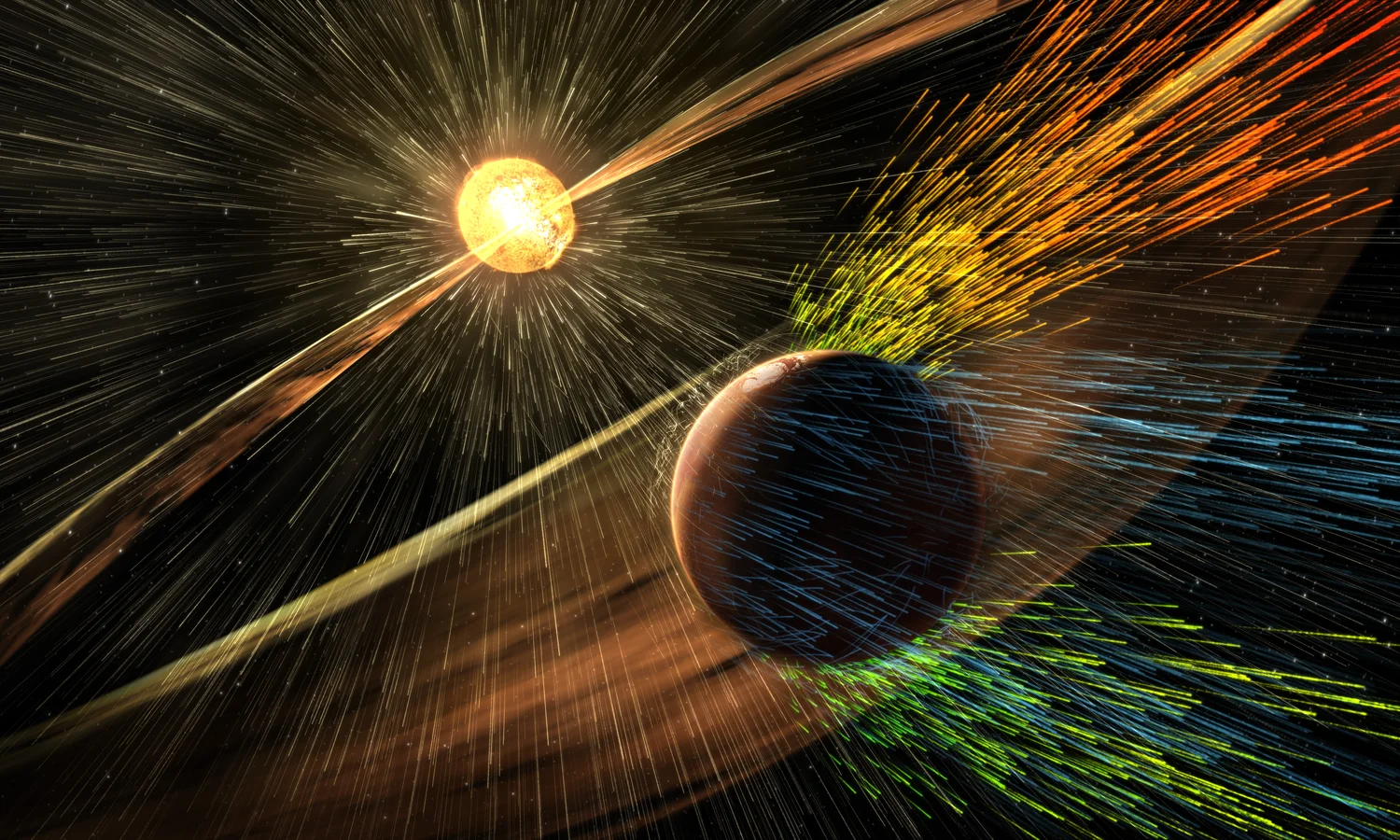
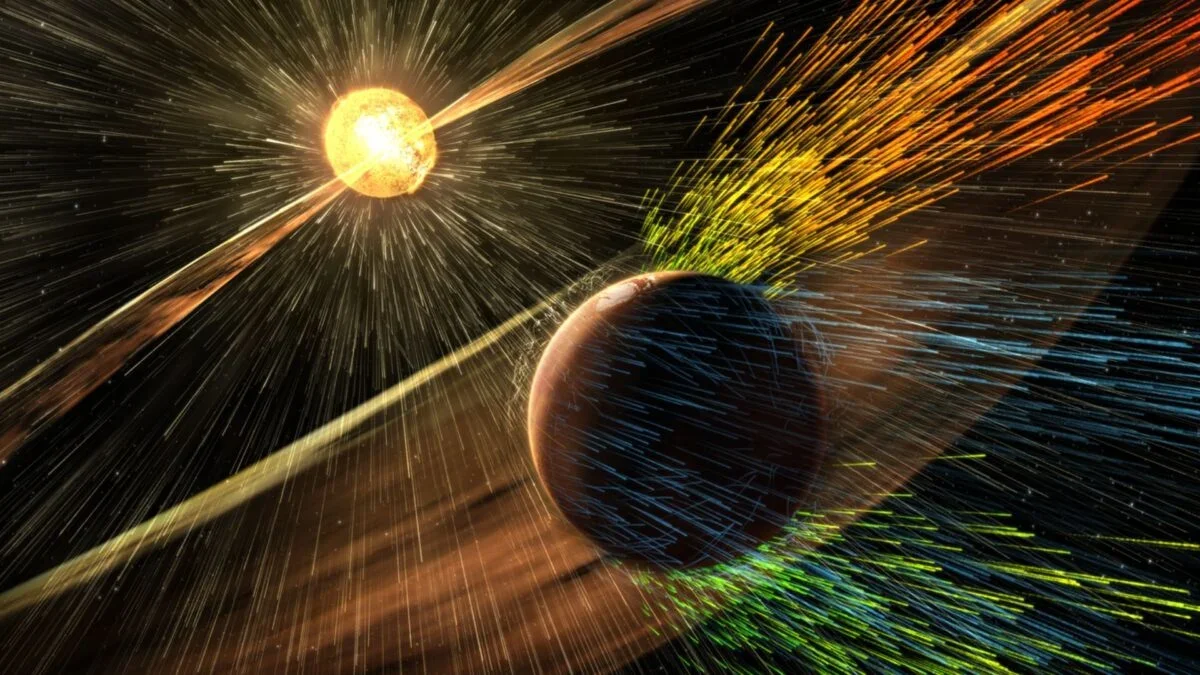
Two ESA Mars-orbiting missions, Mars Express and the ExoMars Trace Gas Orbiter, observed a powerful solar superstorm that also struck Earth in May 2024 and hit Mars, flooding the planet’s upper atmosphere with electrons (about 45% at ~110 km and 278% at ~130 km) and causing radiation-induced glitches in the spacecraft. Using a radio occultation technique, scientists mapped the atmospheric response and noted that Mars—lacking a global magnetic field—reacts differently to space weather than Earth; the observations were unusually well-timed after a large solar flare, and the results were published in Nature Communications.

New Mars view exposes Arabia Terra's ancient cratered heart
astronomy1 month ago

New Mars view exposes Arabia Terra's ancient cratered heart

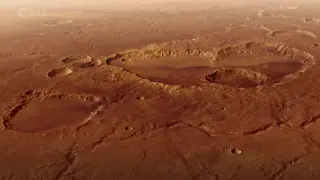
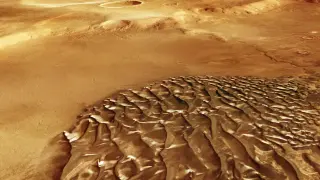
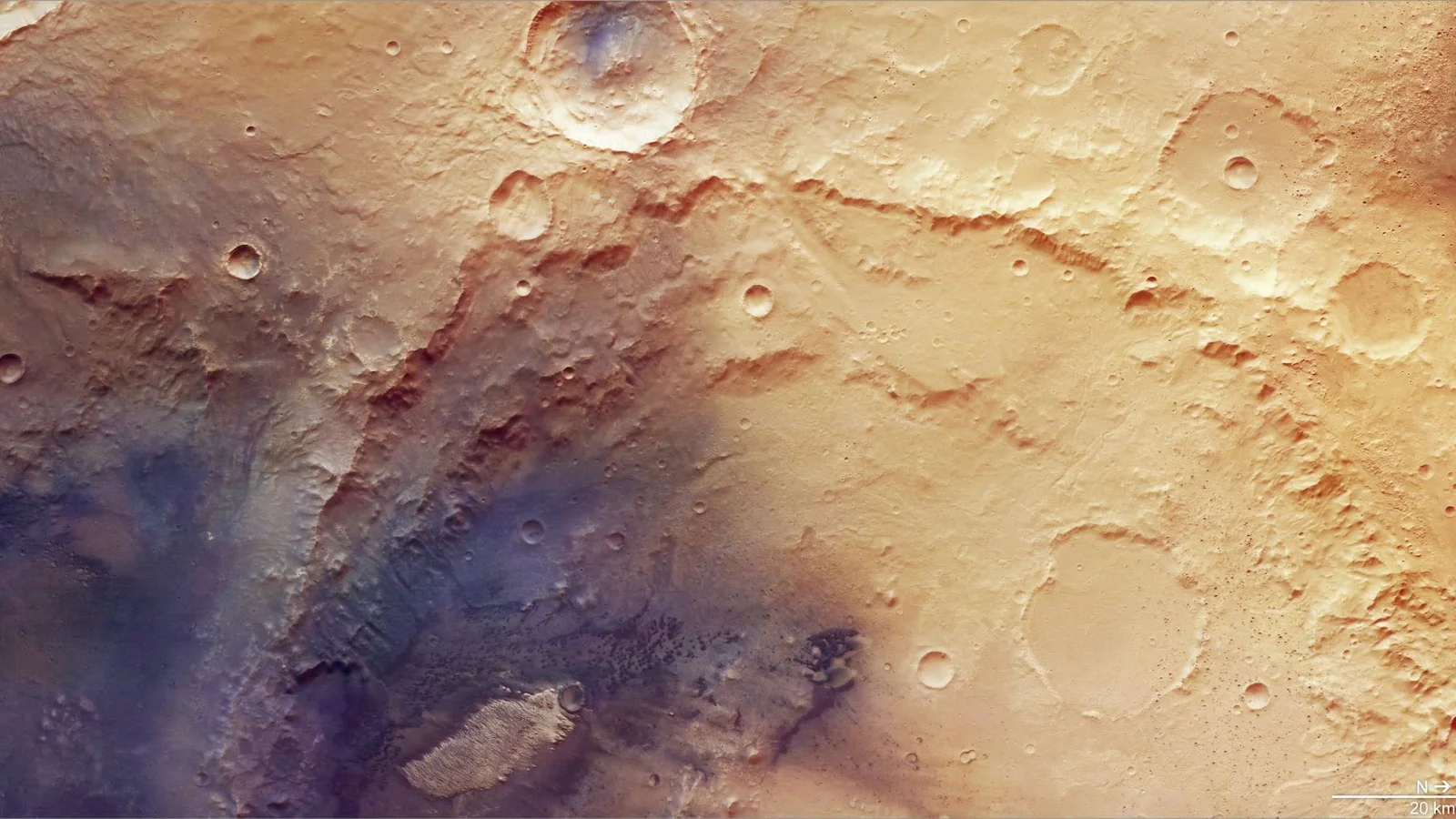
ESA's Mars Express released a richly processed color/topographic image of Arabia Terra (Oct. 12, 2024, HRSC) showing the Red Planet's ancient highlands with Trouvelot Crater at the center and a nearby older, eroded basin. The scene highlights mafic rocks, wind-sculpted dunes, and a light-toned mound that may reveal water-related minerals, illustrating billions of years of impact, volcanism and erosion in this region, and emphasizing the ongoing scientific value of reprocessing archived data rather than a brand-new snapshot.

Solar Superstorm Expands Mars's Ionosphere, Revealing Space Weather on the Red Planet
science1 month ago

Solar Superstorm Expands Mars's Ionosphere, Revealing Space Weather on the Red Planet

A May 2024 solar superstorm from sunspot AR3664 produced an X2.9 flare and a coronal mass ejection that not only triggered a major Earth geomagnetic storm but also dramatically swelled Mars’s lower ionosphere—nearly threefold—as solar plasma and X‑rays flooded the planet’s upper atmosphere. ESA’s Mars Express and the ExoMars Trace Gas Orbiter used radio occultation to measure the changes, showing how solar activity injects energy and particles into Mars’s atmosphere and highlighting its ongoing atmospheric loss. The orbiters briefly glitching during the storm but ultimately recovering demonstrates the value of radiation‑hard spacecraft for space weather studies.

Stunning New Mars Images Reveal Surprising Details and True Colors
science-and-exploration4 months ago

Stunning New Mars Images Reveal Surprising Details and True Colors

ESA's Mars Express has captured an image of a unique crater on Mars that resembles a butterfly, formed by a low-angle impact that created irregular wings and a central oval body, with evidence suggesting interaction with water or ice during formation. The region also features volcanic mesas and signs of past volcanic activity, providing insights into Mars's geological history.

Explore Ares Vallis: A Virtual Mars Flyover
science1 year ago

Explore Ares Vallis: A Virtual Mars Flyover

ESA's Mars Express offers a virtual flight over Ares Vallis on Mars, showcasing the planet's ancient water-carved landscapes, including channels, islands, and chaotic terrain. The tour highlights significant sites like NASA's Pathfinder landing area and the planned ExoMars Rosalind Franklin rover site. The film, created using high-resolution data and digital terrain models, provides a detailed view of Mars's water-rich history and geological features.

"Stunning Mars Canyon Flyover Captured by ESA's Mars Express"
space-exploration1 year ago

"Stunning Mars Canyon Flyover Captured by ESA's Mars Express"

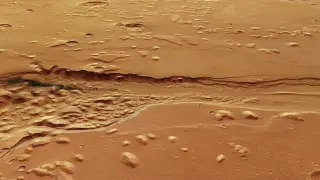
The European Space Agency's Mars Express orbiter has captured stunning flyover footage of Mars' Nili Fossae trenches, revealing insights into the planet's ancient past. These trenches, formed by a colossal meteorite impact around 4 billion years ago, show evidence of past water flow and diverse minerals, indicating a once wet environment. The video, created using high-resolution stereo camera data, aids in understanding Mars' history and informs future exploratory missions.

"Vast Water Ice Reservoir Found Near Mars' Equator"
space-exploration2 years ago

"Vast Water Ice Reservoir Found Near Mars' Equator"

Data collected by the Mars Express orbiter suggests the presence of a large water ice deposit near Mars' equator, potentially indicating that the planet may have once supported life. The discovery was made using the orbiter's MARSIS instrument, which detected thick ice deposits extending up to 3.7 kilometers below the surface. The findings, published in Geophysical Research Letters, raise questions about Mars' climate history and could make the area near the equator an ideal landing spot for future exploration missions.

"Revealing Martian Ice Reservoirs: Changing Our Perception of the Red Planet"
space-science2 years ago

"Revealing Martian Ice Reservoirs: Changing Our Perception of the Red Planet"

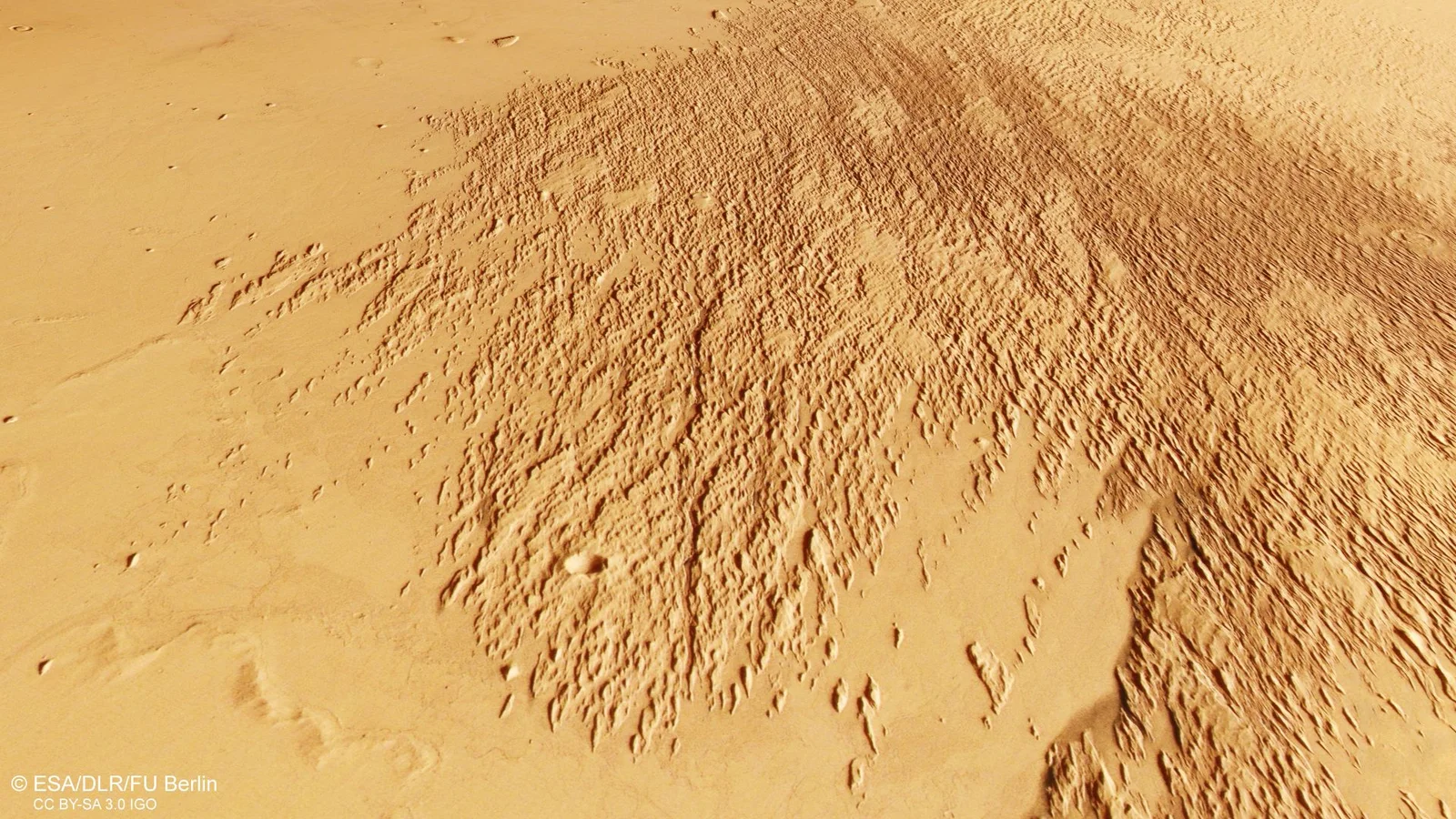
The European Space Agency's Mars Express has discovered a nearly two-mile deep water reservoir on Mars, composed of water ice. This finding in the equatorial region known as the Medusae Fossae Formation could provide insights into the planet's history and its dusty, sandy surface. The discovery supports the theory that Mars was once covered in oceans and rivers, and further exploration may reveal more about these water ice reservoirs.

"Surprising Discovery: Mars Express Uncovers Vast Equatorial Ice Reserves on Red Planet"
space2 years ago

"Surprising Discovery: Mars Express Uncovers Vast Equatorial Ice Reserves on Red Planet"

ESA's Mars Express has discovered extensive layers of water ice in Mars's Medusae Fossae Formation near the equator, potentially impacting our understanding of the planet's climate history and future human exploration. The radar signals match those from Mars's polar caps, indicating the presence of significant water ice deposits, with enough to cover the entire planet in a layer of water 1.5 to 2.7 meters deep if melted. This discovery challenges our understanding of Mars's past climate and presents valuable opportunities for future exploration and potential resource utilization.