
NASA Pivots to Helicopters as Mars Landers Stall
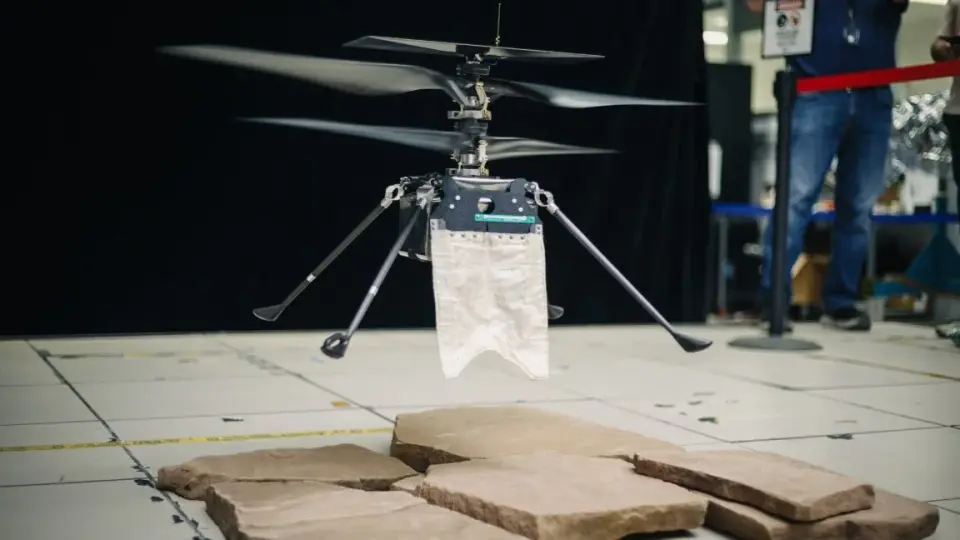
NASA has no planned landers or rovers for Mars, shifting focus to the SkyFall mission, which will deploy three helicopters via the SR-1 Freedom nuclear propulsion testbed. AeroVironment and JPL are building these drones to search for subsurface ice, marking a new era of aerial exploration on the red planet.
Key points
- For the first time in over 30 years, NASA lacks firm plans for new Mars landers or rovers, prioritizing aerial drones instead.
- The SkyFall mission, involving three helicopters and one spare, is set to launch as early as late 2028 alongside the SR-1 Freedom nuclear propulsion test.
- AeroVironment recently secured a contract from JPL to co-design and manufacture the SkyFall helicopters, which are slightly heavier than the Ingenuity prototype.
- The helicopters will deploy autonomously from the SR-1 Freedom spacecraft using a new 'SkyFall maneuver,' eliminating the need for a rover or lander platform.
- SkyFall will carry ground-penetrating radars to detect subsurface ice, a capability not present on the previous Ingenuity mission.
- NASA’s Mars budget has declined, and the Mars Sample Return program was canceled due to costs exceeding $11 billion, forcing a shift to commercial and smaller-scale missions.
Background
This shift follows the cancellation of the Mars Sample Return program and a decline in NASA’s planetary science budget. Previously, NASA relied on rovers like Perseverance for surface exploration, but current constraints have led to a strategy similar to its commercial lunar approach, emphasizing smaller, more affordable missions like SkyFall.
How outlets are covering it
Ars Technica highlights the strategic pivot to helicopters as a cost-effective alternative to canceled rover missions, emphasizing the technical breakthroughs in rotor design. SpaceNews and ExecutiveBiz focus on the recent contract award to AeroVironment, confirming the active development phase of the SkyFall mission. All sources agree that the SkyFall mission represents a new operational mode for Mars exploration, though Ars Technica provides more detail on the technical challenges and budget constraints.
Why it matters
The SkyFall mission represents a significant shift in NASA’s Mars exploration strategy, moving from large, expensive landers and rovers to smaller, more agile aerial drones. This approach could unlock new scientific capabilities, such as searching for subsurface ice, while reducing costs and increasing flexibility in mission planning. It also signals a broader trend toward commercial partnerships and smaller-scale missions in space exploration.
What to watch
NASA is currently selecting a landing site for the SkyFall mission, potentially near the Martian poles to search for permanent ice caps. The agency is also expected to announce the winner of a competition for a Mars Telecommunications Network later this year, which could support future helicopter missions. AeroVironment and JPL continue to refine the helicopter design and test rotor performance in simulated Martian conditions.
- Without new landers or rovers, it's helicopters or bust for NASA's Mars program Ars Technica
- NASA and AeroVironment advance work on SkyFall Mars helicopters SpaceNews
- AeroVironment Awarded Contract For 3 Autonomous Helicopters For Nasa’s Skyfall Mission To Mars TradingView
- AV Books NASA JPL Contract for 3 SkyFall Mars Helicopters ExecutiveBiz
- NASA’s Three Helicopters Head To Mars aero-news.net
Want the full story? Read the original reporting
Read on Ars Technica