
NASA Finalizes SR-1 Freedom Design for 2028 Mars Nuclear Demo
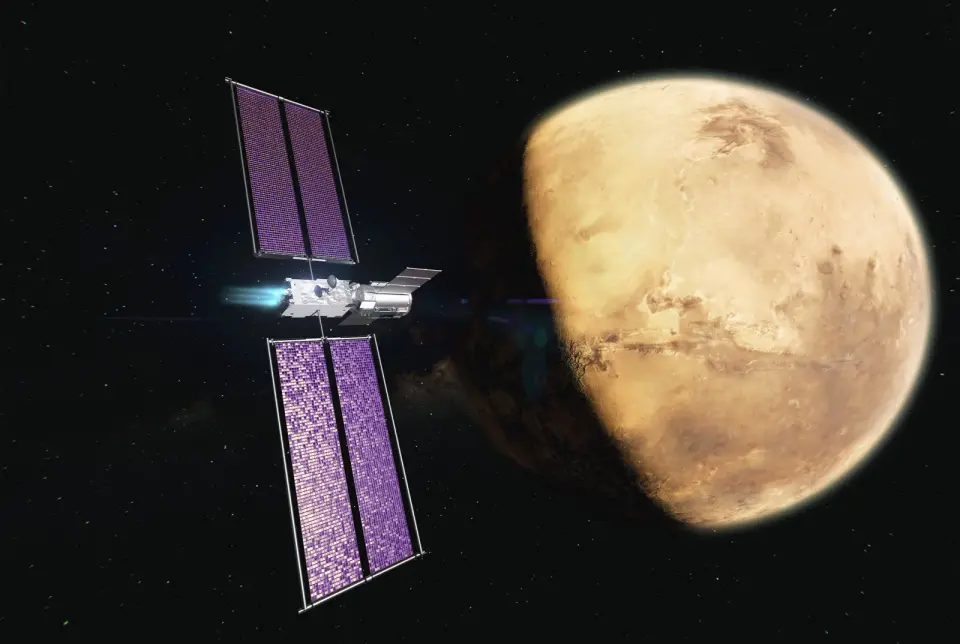
NASA has locked in the mission architecture for Space Reactor-1 (SR-1) Freedom, targeting a late 2028 launch to demonstrate nuclear electric propulsion in deep space. The spacecraft will deliver the SkyFall capsule, carrying three Ingenuity-class helicopters, to Mars. Key design updates include a shorter boom between the reactor and the main body, larger X-band antennas for communication, and a new heat rejection system. NASA awarded a $39.3 million contract to Johns Hopkins University’s Applied Physics Laboratory to develop this critical thermal management system. While the mission aims to prove fission power for deep space travel, experts note that the tight timeline leaves only about two years to complete design, construction, and testing.
Key points
- NASA completed a major design review in October, locking in key elements for the SR-1 Freedom spacecraft, which is targeted for launch in late 2028.
- The mission will be the first to use fission-powered nuclear electric propulsion to travel beyond Earth orbit, delivering the SkyFall capsule to Mars.
- SkyFall will carry three next-generation helicopters to study Martian geology, climate history, and subsurface ice, while the spacecraft demonstrates nuclear power capabilities.
- Design changes include a shorter boom to reduce weight and simplify assembly, as well as larger X-band antenna dishes to improve data transmission back to Earth.
- NASA awarded a $39.3 million contract to Johns Hopkins University’s Applied Physics Laboratory to develop the heat rejection system for the nuclear power module, partnering with Advanced Cooling Technologies.
- The mission profile involves activating the reactor after leaving Earth orbit, shutting it down during the cruise to Mars (powered by solar arrays), and restarting it upon arrival to collect further performance data.
Background
NASA Administrator Jared Isaacman first introduced the SR-1 concept at the agency’s Ignition event in March 2026. Previous reports indicated concerns about integrating the science mission with the technology demo, but recent updates show progress in defining the spacecraft’s architecture. The mission is part of broader efforts to enable long-duration deep space exploration and support future Moon base operations.
How outlets are covering it
NASA emphasizes the mission as a pivotal step for future solar system travel, with program director Steve Sinacore describing it as the 'first freight run on the railroad of the solar system.' The Register highlights the tight timeline, noting that meeting the late 2028 launch target leaves roughly two years to finish design, construction, and testing, and raises the possibility of a delayed launch if the window is missed. BBC Sky at Night Magazine clarifies that while spacecraft have used nuclear power sources like RTGs for decades, SR-1 will be among the first to use nuclear propulsion to travel beyond Earth orbit, distinguishing it from previous nuclear-powered missions.
Why it matters
The SR-1 Freedom mission is a critical test for nuclear electric propulsion in deep space, which could significantly reduce travel times to Mars and enable more ambitious exploration missions. Success would pave the way for reliable surface power systems for future Moon bases and deeper solar system exploration.
What to watch
NASA and its partners will continue to evaluate key design features, including the number of radiator panels, output power levels, and reactor operating duration. The team will focus on reducing risk, simplifying the design, and staying on schedule for the late 2028 launch. Further maturation of the spacecraft plans will ensure it meets mission objectives and prepares for future high-power nuclear systems.
- NASA nuclear propulsion demo mission to make limited use of nuclear propulsion SpaceNews
- Teams Lock in Mission Architecture for NASA’s SR-1 Freedom NASA (.gov)
- NASA's nuclear-powered Mars delivery service takes shape The Register
- NASA's nuclear powered spacecraft just took one step closer to launching to Mars. Here's what we know BBC Sky at Night Magazine
- Space reactor panel discusses SR-1 Freedom mission and design considerations American Nuclear Society
Want the full story? Read the original reporting
Read on SpaceNews