
NASA Administrator Isaacman Visits Idaho National Laboratory to Advance Nuclear Mars Mission
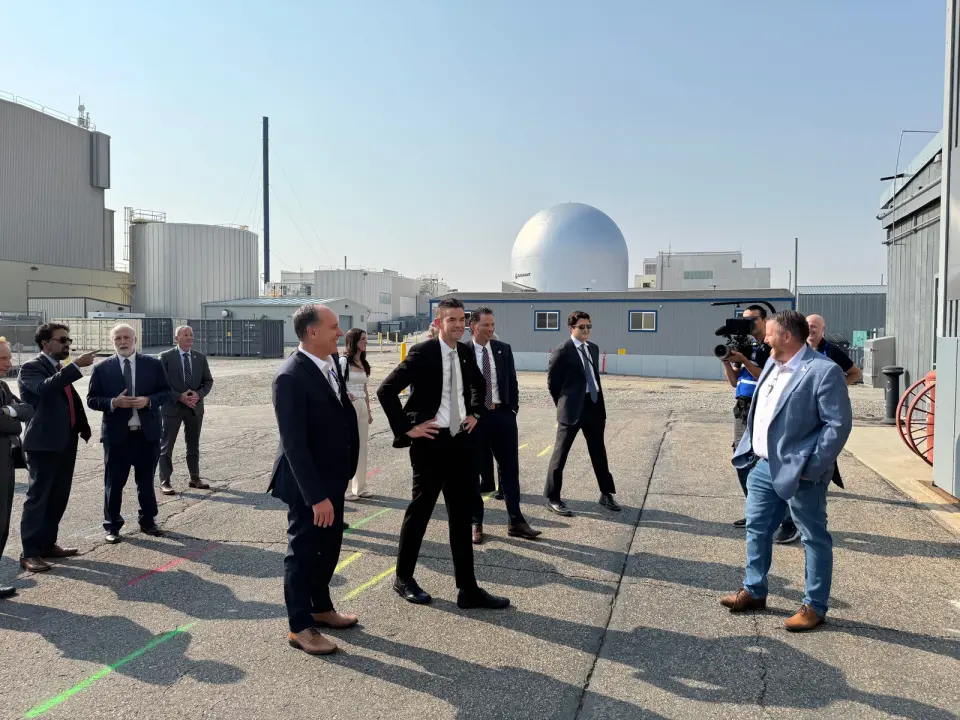
NASA Administrator Jared Isaacman visited Idaho National Laboratory (INL) to review progress on the Space Reactor-1 Freedom (SR-1) mission, a nuclear-powered spacecraft targeting a late-2028 launch to Mars. The visit highlighted INL's role in developing compact reactors and microreactor test beds, reinforcing confidence in the timeline for the first nuclear electric propulsion demonstration in deep space.
Key points
- NASA Administrator Jared Isaacman toured Idaho National Laboratory (INL) in Idaho Falls to inspect facilities critical for the Space Reactor-1 Freedom (SR-1) mission.
- The SR-1 mission aims to launch by late 2028, utilizing a compact nuclear reactor developed at INL to power an interplanetary spacecraft.
- The visit included tours of the Materials and Fuel Complex, the Energy Security Research Laboratory, and demonstrations of the Unity Nuclear Battery by Deployable Energy.
- INL Director John Wagner noted that the lab is central to the 'nuclear renaissance,' having achieved three reactor criticalities by July 2026 as mandated by a 2025 executive order.
- The mission reuses hardware from the Gateway lunar station's Power and Propulsion Element, with Isaacman comparing the approach to the USS Nautilus, where a new reactor was integrated into existing hull technology.
Background
Previous coverage indicates that the SR-1 Freedom mission is estimated to cost approximately $2.1 billion, with funding planned for fiscal years 2026–2029. Earlier reports also highlighted NASA’s testing of high-power lithium thrusters at JPL, which, when paired with nuclear power, could reduce one-way Mars travel time to three months. Additionally, recent gravity assists by the Psyche spacecraft have demonstrated the utility of Mars as a stepping stone for deep-space missions, aligning with the broader strategy of using nuclear propulsion to accelerate solar system exploration.
How outlets are covering it
SpaceNews reports that the visit boosted NASA’s confidence in the SR-1 timeline, emphasizing the technical readiness of the reactor components. KSL.com frames the event as a celebration of the 'new space race,' highlighting political support from Idaho Governor Brad Little and Congressman Mike Simpson, and noting the achievement of three reactor criticalities by July 2026. Metatrends, via Peter Diamandis, provides a technical perspective, contrasting chemical propulsion with nuclear electric propulsion, noting that nuclear could cut Mars transit time from nine months to three, and emphasizing the strategic value of reusing existing hardware to minimize costs. Post Register offers limited additional detail, focusing on INL’s local significance but lacking specific technical updates beyond the general mission overview.
Why it matters
The successful development and launch of the SR-1 Freedom mission would mark a pivotal shift in deep-space exploration, moving away from chemical propulsion toward nuclear electric systems. This transition could significantly reduce travel times to Mars and other outer planets, enabling more frequent crewed missions and sustained presence. The collaboration between NASA, the Department of Energy, and private sector partners like Radiant and Deployable Energy demonstrates a new model of innovation, leveraging existing infrastructure to accelerate progress. Furthermore, the mission’s success could validate the feasibility of long-duration nuclear power in space, influencing future lunar and Martian base designs and reducing reliance on solar power in environments with limited sunlight.
What to watch
NASA and INL are expected to continue testing the SR-1 reactor components, with orbital demonstrations potentially occurring as early as 2028. The mission’s launch is targeted for late 2028, with the spacecraft carrying three helicopters to study Mars. Additionally, the Fission Surface Power project, which aims to deploy a 40-kilowatt reactor on the Moon by 2030, will benefit from the same technological advancements. Further integration of high-power lithium thrusters with nuclear power sources is underway, with the goal of achieving a round-trip Mars mission within a 10-to-15-year window.
- National lab visit boosts NASA’s confidence in space nuclear propulsion mission SpaceNews
- From Idaho to Mars: NASA chief celebrates INL's role in the new space race KSL.com
- Nuclear Rockets Are Coming metatrends.substack.com
- INL is key to NASA's space plans Post Register
- NASA admin: fission is the fuel to get us to Mars Deseret News
Want the full story? Read the original reporting
Read on SpaceNews