Tag

Mars Mission

All articles tagged with #mars mission

Tiny Mars Capsule Tests Big Mars Mission: ESA Validates ExoMars EDLM
space15 days ago

Tiny Mars Capsule Tests Big Mars Mission: ESA Validates ExoMars EDLM

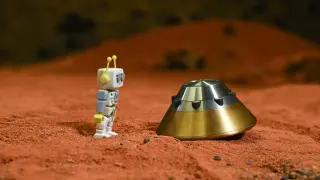
ESA used 20 three‑inch micro‑capsules fired from a bore gun at about 2,600 mph to simulate entering Mars’ atmosphere. Despite their toy-like size, the capsules withstood up to ~17,000 g’s and collected data on acceleration, trajectory and stability to validate the Entry, Descent and Landing Module (EDLM) that will carry the Rosalind Franklin rover to Mars in 2028.

NASA Demonstrates Record-Setting Lithium Plasma Thruster for Future Mars Missions
technology17 days ago

NASA Demonstrates Record-Setting Lithium Plasma Thruster for Future Mars Missions

NASA's JPL has demonstrated a record-high 120 kW lithium-fed magnetoplasmadynamic plasma thruster, the most powerful electric propulsion test in the U.S., signaling progress toward megawatt-class systems for crewed Mars missions. Electric propulsion offers substantial propellant savings and continuous thrust; researchers aim to scale to hundreds of kilowatts to megawatts and, potentially with nuclear power, enable multi-thruster propulsion for long-duration deep-space flights.

NASA Trials Groundbreaking Liquid-Lithium Engine for Mars Mission
space22 days ago

NASA Trials Groundbreaking Liquid-Lithium Engine for Mars Mission

NASA completed high-power tests of a liquid-lithium, magnetoplasmadynamic thruster at up to 120 kilowatts, a major step toward crewed Mars propulsion. Lithium promises higher exhaust velocities and reduced propellant mass versus xenon, but handling molten lithium and corrosion pose severe engineering challenges. Next steps include thousands of hours of endurance testing and scaling toward megawatt-class power (2–4 MW) for long-duration deep-space missions.

NASA tests lithium-metal electric thruster, hits 120 kW power in breakthrough propulsion demo
technology25 days ago

NASA tests lithium-metal electric thruster, hits 120 kW power in breakthrough propulsion demo

NASA’s Jet Propulsion Laboratory demonstrated a lithium-metal vapor electric thruster and set a 120 kW power record, marking a major step toward high‑power, fuel‑efficient propulsion for future crewed Mars missions. While the tech promises substantial propellant savings, a real Mars mission would require multi‑megawatt power and thousands of hours of operation to enable transit, landing, and return; scaling the system remains the key challenge.

NASA Fires Up Lithium Plasma Engine to Accelerate Mars Missions
science26 days ago

NASA Fires Up Lithium Plasma Engine to Accelerate Mars Missions

NASA and JPL successfully fired a lithium-fed magnetoplasmadynamic thruster at 120 kilowatts—the highest power reached by a U.S. electric propulsion system—validating ignition and stable operation at high power and advancing the path to megawatt-class propulsion for crewed Mars missions, though challenges remain in material durability, thermal management, and scaling for long-duration flights.

NASA Demonstrates High-Power Lithium Electric Thruster for Mars-Mmission Ambitions
technology27 days ago

NASA Demonstrates High-Power Lithium Electric Thruster for Mars-Mmission Ambitions

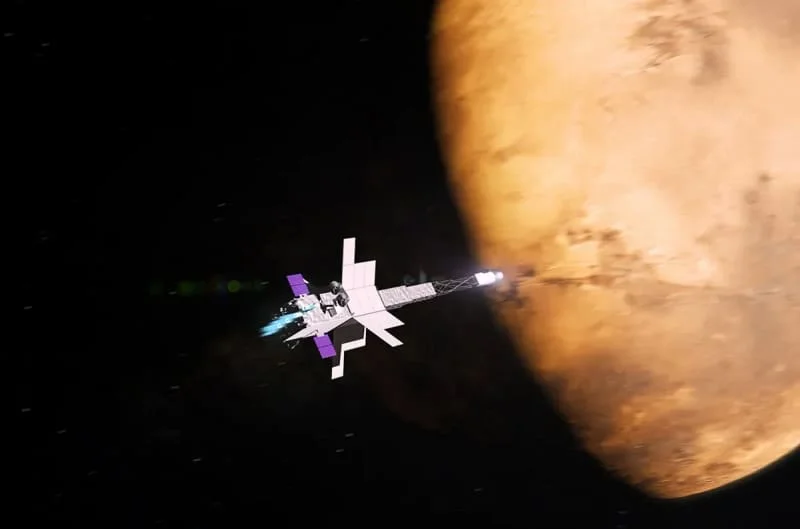
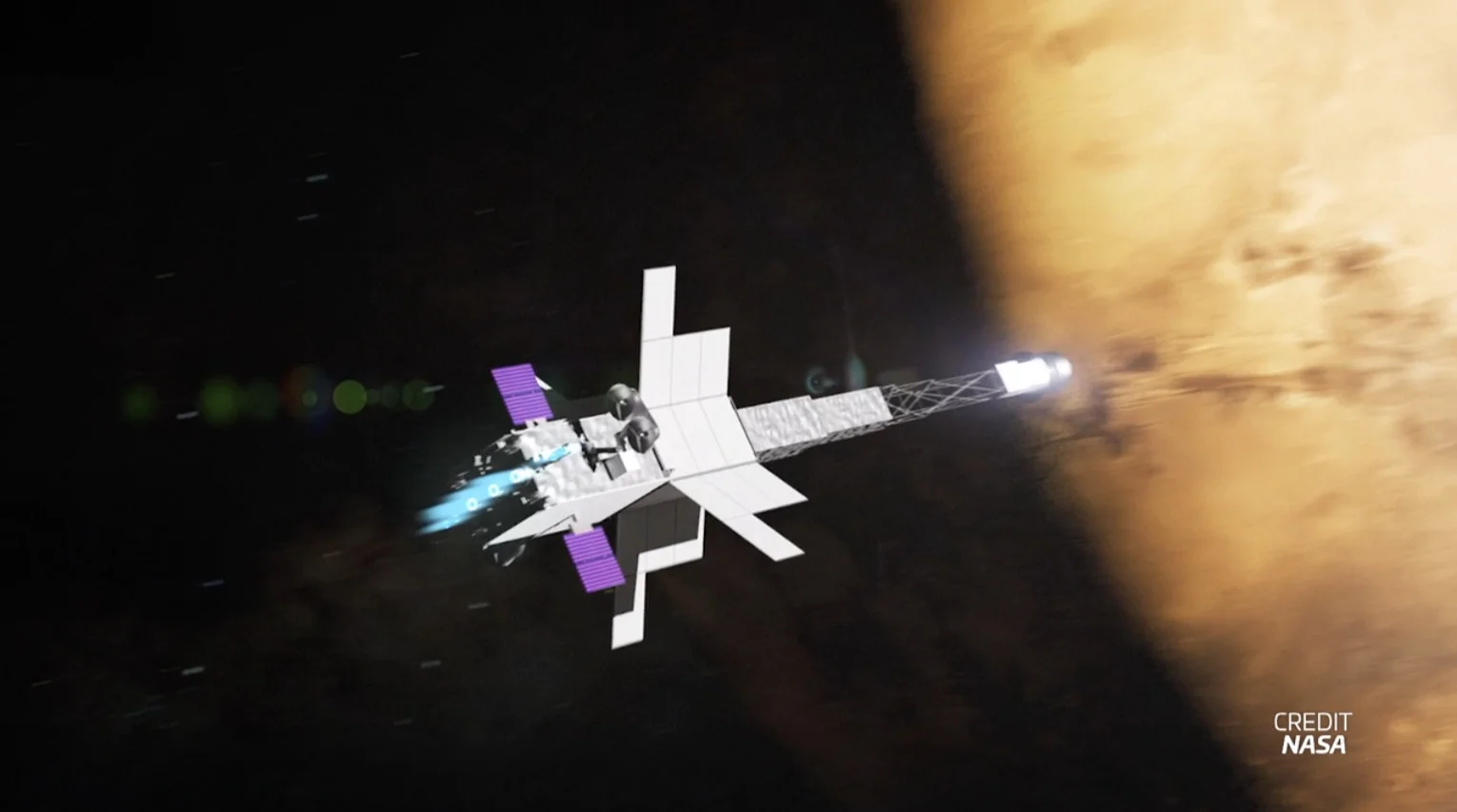
NASA’s Jet Propulsion Laboratory successfully tested a lithium-fed magnetoplasmadynamic thruster in February 2026, achieving up to 120 kilowatts—over 25 times the power of the Psyche mission’s thrusters and the highest power for U.S. electric propulsion tests. The data from this milestone will guide scaling toward megawatt-class systems, which could power future nuclear-electric propulsion for crewed Mars missions and require multiple thrusters with robust heat tolerance for long-duration operation (potentially 2–4 MW total).

NASA's Space Reactor-1 Freedom aims for Mars with a trio of scout helicopters
science1 month ago

NASA's Space Reactor-1 Freedom aims for Mars with a trio of scout helicopters

NASA plans to launch Space Reactor-1 Freedom in 2028, the first nuclear-powered interplanetary spacecraft, using nuclear electric propulsion to reach Mars and carry three Skyfall scout helicopters to map terrain and locate subsurface water ice for future crewed missions; this mission sits within NASA’s broader exploration reboot, which pauses Gateway to focus on a permanent lunar base while keeping Dragonfly to Titan and Rosalind Franklin Rover to Mars on track.

NASA bets on nuclear-electric power for a 2028 Mars mission
space2 months ago

NASA bets on nuclear-electric power for a 2028 Mars mission

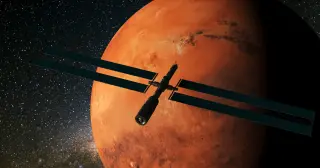
NASA Administrator Jared Isaacman and agency leaders announced Space Reactor-1 Freedom, a nuclear-electric propulsion mission to Mars set for December 2028 that repurposes the Lunar Gateway’s Power and Propulsion Element (PPE) to run xenon ion thrusters and carry three Ingenuity-class helicopters for surface scouting. The spacecraft will host a 20+ kilowatt fission reactor with a closed Brayton power cycle, using solar panels to supply electricity when the reactor is off. The mission aims to demonstrate Nuclear Electric Propulsion as a pathfinder for high‑power, long‑duration journeys and to inform future missions, with readiness milestones in 2027–2028 and a plan to arrive near Mars about a year after launch; it could spawn further concept missions like Lunar Reactor-1 and invite commercial partners and student payloads.

Russia’s Nuclear Plasma Engine Aims to Slash Mars Trip to 30 Days
science3 months ago

Russia’s Nuclear Plasma Engine Aims to Slash Mars Trip to 30 Days

Russian researchers say a magnetoplasma accelerator powered by an onboard nuclear reactor could propel hydrogen at about 100 km/s, enabling a 30‑day Mars voyage. Ground tests are underway in a 14-meter vacuum chamber, with a flight‑model target by 2030, but questions remain about real‑world readiness, regulatory hurdles, and the lack of peer‑reviewed data.

Plasma propulsion targets weeks-long Mars trips
technology3 months ago

Plasma propulsion targets weeks-long Mars trips

US, Russian, and Chinese teams are racing to turn plasma propulsion—using magnetically confined, ionized propellants—into a practical deep-space drive. Concepts like NASA's VASIMR and Pulse Plasma Rocket, along with Rosatom's magnetoplasma accelerator, promise far higher exhaust velocities than chemical rockets and could cut Mars transit from months to weeks (with some projections around a month), but significant challenges remain in power generation, heat management, and material durability before a crewed mission is feasible.

Russia Tests Plasma Engine Aiming to Halve Mars Travel Time
science3 months ago

Russia Tests Plasma Engine Aiming to Halve Mars Travel Time

Russia’s Troitsk Institute (Rosatom) is testing a 300 kW pulsed plasma engine that uses hydrogen and an onboard nuclear reactor to provide continuous thrust, potentially cutting Mars travel from months to about one to two months. Ground tests in a vacuum chamber suggest long operational life, with space deployment hoped for around 2030, though the tech remains unproven in space and faces regulatory and safety hurdles.

Russia Tests Plasma Engine Aimed at Months-Long Mars Trips
space4 months ago

Russia Tests Plasma Engine Aimed at Months-Long Mars Trips

Russian researchers at Rosatom’s Troitsk Institute are testing a 300 kW plasma propulsion system that accelerates hydrogen with an onboard nuclear reactor, potentially cutting Mars travel time to about one to two months; current ground tests report exhaust speeds up to 100 km/s, roughly 6 N thrust, and a 2,400-hour service life, but the system has not yet flown or undergone peer review, and deployment depends on further testing, funding, and regulatory approvals toward a 2030 timeframe.