
Parker Solar Probe Dives into Corona to Untangle the Sun’s Heat Mystery
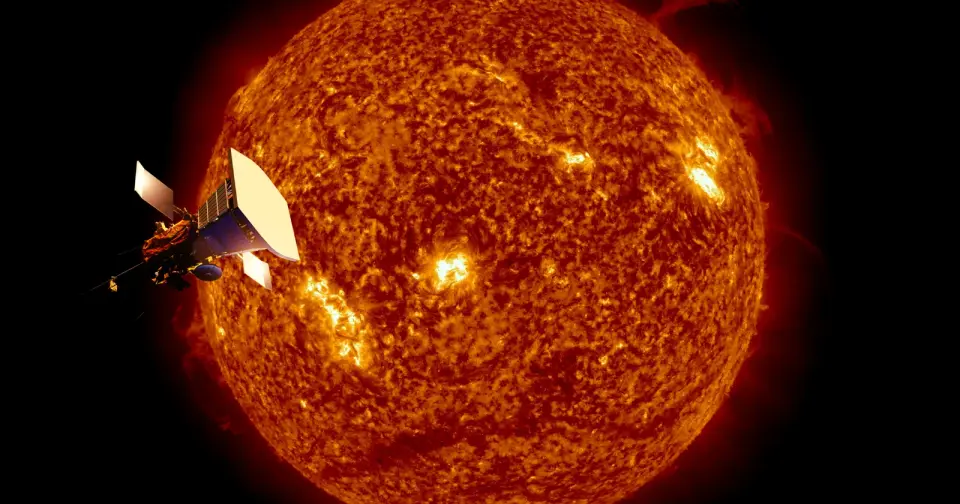
NASA’s Parker Solar Probe has repeatedly traversed the Sun’s corona—the outer atmosphere where temperatures soar above a million degrees—giving in-situ measurements that deepen the mystery of why the corona is so hot. A December 2024 near-surface pass (6.1 million km from the Sun, traveling ~692,000 km/h) confirmed the craft’s survival and enabled direct plasma, magnetic-field, and flow readings. The results keep the heating question open, highlighting two leading ideas—wave heating and small-scale magnetic reconnection (nanoflares)—neither of which is yet confirmed as dominant. The mission also finds switchbacks (abrupt magnetic reversals) abundant in the near-Sun solar wind but apparently absent inside the corona, refining how the wind is accelerated and fed by coronal processes. With repeated passes through late 2026 and NASA’s review looming, Parker’s data are helping to distinguish between competing explanations, but the exact energy transfer powering the corona remains unresolved.
- Parker Solar Probe has flown through the Sun’s outer atmosphere, the corona, where temperatures soar into the millions of degrees even though the visible surface below is far cooler — one of the strangest long-running puzzles in solar physics. Space Daily
- Red-hot voyage to sun will bring us closer to our star Nine.com.au
- NASA’s Parker Solar Probe is flying at 430,000 mph through the Sun’s atmosphere, and its 4.5-inch shield is why it survives OkDiario
Want the full story? Read the original reporting
Read on Space Daily