Tag

Solar Wind

All articles tagged with #solar wind

Mars shows Earthlike solar-wind bending in its atmosphere
space16 hours ago

Mars shows Earthlike solar-wind bending in its atmosphere

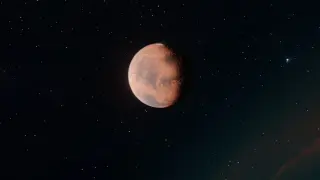
NASA’s MAVEN data, gathered after it went quiet in 2025, reveal the Zwan-Wolf effect—an Earth-style solar-wind deflection—occurring in Mars’ upper atmosphere during a December 2023 solar storm. The finding suggests Mars’ atmosphere can host temporary magnetic structures that funnel charged particles, implying the effect may operate continuously there but is usually too weak to detect; the results were published in Nature Communications. NASA also notes MAVEN’s ongoing recovery efforts after a period of contact loss.

ESA-China SMILE Mission to X-ray Earth’s Magnetosphere During Solar Storms
space8 days ago

ESA-China SMILE Mission to X-ray Earth’s Magnetosphere During Solar Storms

A joint ESA-Chinese mission named SMILE will launch to study how solar storms interact with Earth's magnetosphere by capturing X-ray emissions—the first such observations—from a highly elliptical orbit that will reach up to 121,000 km above Earth. Equipped with an X-ray imager, UV imager, ion analyzer and magnetometer, SMILE aims to improve space-weather understanding for satellites, astronauts and power grids over an initial three-year mission.

Smile mission set for May 19 launch to map Earth's response to solar wind
science-and-exploration1 month ago

Smile mission set for May 19 launch to map Earth's response to solar wind

The European-Chinese Smile mission, a joint ESA-CAS project to study how Earth reacts to solar wind using an X-ray camera for magnetosphere observations and a UV imager for auroras, is rescheduled to launch on May 19, 2026, aboard a European Vega-C rocket from Europe’s Spaceport in French Guiana after a precautionary delay due to a Vega-C subsystem issue. The launch time is 05:52 CEST / 04:52 BST / 00:52 local, with Smile released after about 57 minutes into a low-Earth orbit and solar panels unfolding around 63 minutes after liftoff, before entering an elongated orbit peaking about 121,000 km above the North Pole and extending to roughly 5,000 km above the South Pole to deliver data to ground stations. The mission aims to shed light on space weather, solar storms and geomagnetic processes through its four instruments, as ESA and CAS collaborate on this Solar wind Magnetosphere Ionosphere Link Explorer.

Rare Mid-Latitude Aurora Graces U.S. Skies Tonight and Tomorrow
science1 month ago

Rare Mid-Latitude Aurora Graces U.S. Skies Tonight and Tomorrow

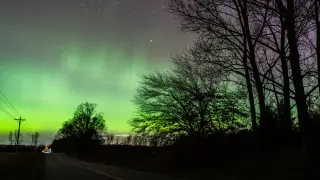
A surge of fast solar wind could trigger geomagnetic storms tonight and tomorrow, pushing the Northern Lights into mid-latitude skies from Illinois to Oregon. NOAA forecasts moderate (G2) storms, with the possibility of stronger (G3) bursts. The display is expected to peak between 5 p.m. and 2 a.m. EDT, weather permitting, and skywatchers are advised to find dark, clear sites and use long-exposure photography for the best view.

Giant Solar Hole Could Bring Northern Lights Across Several U.S. States This Weekend
space1 month ago

Giant Solar Hole Could Bring Northern Lights Across Several U.S. States This Weekend

A large coronal hole opened in the Sun’s atmosphere, sending high-speed solar wind toward Earth and potentially lighting up the Northern Lights across several northern U.S. states Friday night into Saturday morning (Idaho to New York). NOAA forecasts gusty geomagnetic activity (possible G2 storm), which could cause visible auroras under darker skies aided by a new moon. The auroras result from solar particles interacting with Earth’s atmosphere near the poles, driven by coronal holes and related solar wind structures.

Chandra Captures First Astrosphere Around a Sun-like Young Star
science1 month ago

Chandra Captures First Astrosphere Around a Sun-like Young Star

Astronomers using NASA’s Chandra X-ray Observatory have captured the first image of an astrosphere around a Sun-like young star HD 61005 (nicknamed the “Moth”). The extended X-ray emission shows a bubble created by a wind that’s about three times faster and 25 times denser than the young Sun’s, offering insights into how the Sun’s heliosphere may have looked billions of years ago as it moved through the galaxy.

NASA's ESCAPADE Deploys Twin Probes to Decode Mars Space Weather
space2 months ago

NASA's ESCAPADE Deploys Twin Probes to Decode Mars Space Weather

NASA’s ESCAPADE mission launched in 2025 with two orbiters to study how the solar wind and Mars’ magnetosphere interact, revealing real-time atmospheric escape from the Red Planet and providing stereo measurements. The twins will fly in tandem near Mars after looping through a distant Earth magnetotail en route to a Sept. 2027 Mars arrival, also doing discovery science in Earth’s magnetotail. Findings will help protect future astronauts and inform Mars communications and ionospheric understanding as humanity prepares to explore the Red Planet.

Deflated Crescent: Scientists Redraw the Shape of the Sun’s Protective Bubble
science3 months ago

Deflated Crescent: Scientists Redraw the Shape of the Sun’s Protective Bubble

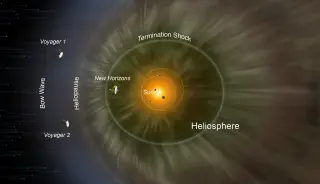
Researchers using ENA data from IBEX and a 3D mapping approach from Los Alamos reveal the heliosphere—our solar wind–generated shield—has a deflated crescent shape, not a sphere or oval, with the sun–heliopause distance around 120 AU in one direction and at least 350 AU in the opposite, indicating an asymmetric boundary shaped by solar and interstellar winds.

Parker Solar Probe Reveals the Hidden Heating of the Solar Wind
space3 months ago

Parker Solar Probe Reveals the Hidden Heating of the Solar Wind

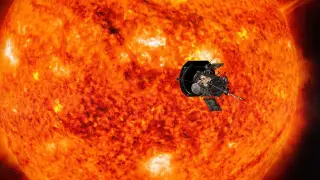
NASA’s Parker Solar Probe, flying closer to the Sun than any prior mission (within 3.8 million miles of the surface), uses a new ALPS analysis tool to map how energy heats and accelerates the solar wind, addressing the coronal heating puzzle and improving space-weather forecasts while providing insights into plasma behavior across the cosmos.