
August 27-28 Partial Lunar Eclipse Offers Deepest Shadow Until 2028
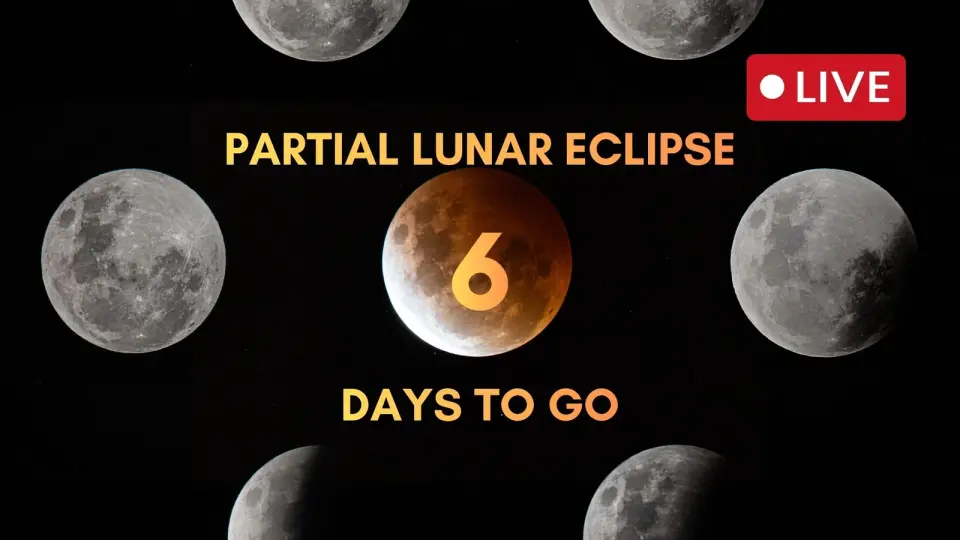
A partial lunar eclipse on August 27-28, 2026, will see 96.2% of the Moon enter Earth's umbra, creating a deep reddish hue. This is the deepest partial eclipse visible until December 2028, observable across the Americas, Europe, Africa, and western Asia.
Key points
- The eclipse reaches maximum depth on August 27 (North America) or August 28 (Western Europe), with 96.2% of the Moon immersed in Earth's central shadow.
- Only a thin sliver of the Moon remains brightly illuminated, while the rest takes on a rusty red or copper hue due to the umbra.
- This event is the deepest partial lunar eclipse visible anywhere on Earth until December 31, 2028.
- Visibility is confirmed for North and South America, Europe, Africa, and parts of western Asia, weather permitting.
- Observers in the Americas are best positioned for the peak, while European viewers should look toward the western horizon before sunrise.
Background
Recent coverage noted a partial solar eclipse in North America on August 12, 2026, with varying coverage percentages across states like Michigan and New York. Earlier reports also highlighted the upcoming August 27-28 lunar eclipse as a significant skywatching event, emphasizing that no special equipment is required for safe viewing, though binoculars or telescopes can enhance detail. The August 2026 lunar eclipse follows the solar event by two weeks, offering a distinct celestial phenomenon for observers.
Why it matters
This eclipse provides a rare opportunity to observe a near-total lunar eclipse without waiting until late 2028. The high percentage of the Moon entering the umbra creates a dramatic visual effect, making it a key event for astronomers and casual skywatchers alike. It also serves as a reminder of the cyclical nature of lunar eclipses and the importance of local timing for optimal viewing.
What to watch
The next comparable partial lunar eclipse will occur on December 31, 2028. Until then, this August event stands as the most significant partial eclipse for global observers. Future lunar eclipses will be less deep, requiring patience for another similar spectacle.
Want the full story? Read the original reporting
Read on Space