
SpaceX Stacks Starship for First Orbital Launch, Aiming for Sept. 28
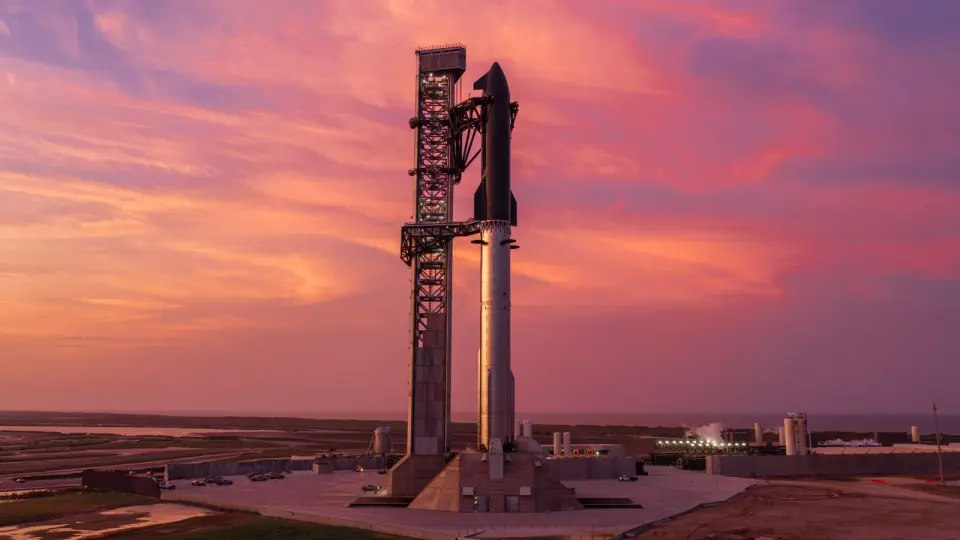
SpaceX has stacked its Starship rocket at Starbase, Texas, for Flight 14, targeting a September 28 launch. This mission marks the vehicle's first attempt to reach orbit and will deploy 26 operational Starlink V3 satellites. The flight is pending FAA approval and represents a significant step for SpaceX's satellite internet business.
Key points
- SpaceX stacked Super Heavy Booster 21 and Ship 41 at Pad 2 in Starbase, Texas, on September 23.
- The launch window for Flight 14 opens at 8:15 a.m. EDT on September 28, pending FAA regulatory approval.
- The mission is Starship's first orbital attempt, targeting an altitude of approximately 275 kilometers and a duration of nearly 10 hours.
- Ship 41 will carry 26 operational Starlink V3 satellites, which offer 10 times the bandwidth capacity of current V2 satellites.
- Both the booster and upper stage are planned for controlled splashdowns in the Gulf of Mexico and Pacific Ocean, respectively, rather than tower catches.
Background
Previous attempts to launch Starship's first orbital flight were delayed from September 22 to September 28. Earlier suborbital tests, including a July flight carrying 20 V3 satellites, were destroyed during reentry. This upcoming flight is the first to deploy operational V3 satellites designed to remain in orbit.
How outlets are covering it
Space.com and Spaceflight Now focus on the technical readiness and stacking of the vehicle, noting the pending FAA approval. PCMag emphasizes the commercial stakes, highlighting that Starlink V3 satellites promise a 10x increase in bandwidth and that a failure would result in a significant financial loss for SpaceX. BASENOR highlights the production pipeline, noting that Ship 44 is already being prepared for stacking, indicating a shift toward rapid, serial production of Starship vehicles.
Why it matters
A successful Flight 14 would validate Starship's orbital capabilities and deploy the first operational Starlink V3 satellites, which are critical for expanding Starlink's capacity and reducing latency. This mission is a key milestone for SpaceX's business model, which relies on Starship to launch large numbers of satellites cost-effectively.
What to watch
SpaceX is expected to conduct a wet dress rehearsal on September 24. The primary gating factor for the September 28 launch is receiving final regulatory approval from the FAA. If approved, the vehicle will attempt six orbits before deorbiting and splashing down in the Pacific.
- SpaceX Starship Flight 14 live updates: Vehicle stacked less than one week until Starship's first orbital launch attempt Space
- No Pressure: A Massive Starlink Upgrade Hinges on SpaceX's Next Starship Launch PCMag
- SpaceX stack Starship and Super Heavy for first orbital flight Spaceflight Now
- SpaceX Starship Flight 14: Ship 41 at the Pad, Ship 44 Already Queued BASENOR
- How SpaceX plans to send Starship around Earth six times on its most ambitious test yet The Independent
Want the full story? Read the original reporting
Read on Space