
Fermi Explorer Mission seeks $15M to launch 80,000-year probe to Alpha Centauri by 2029
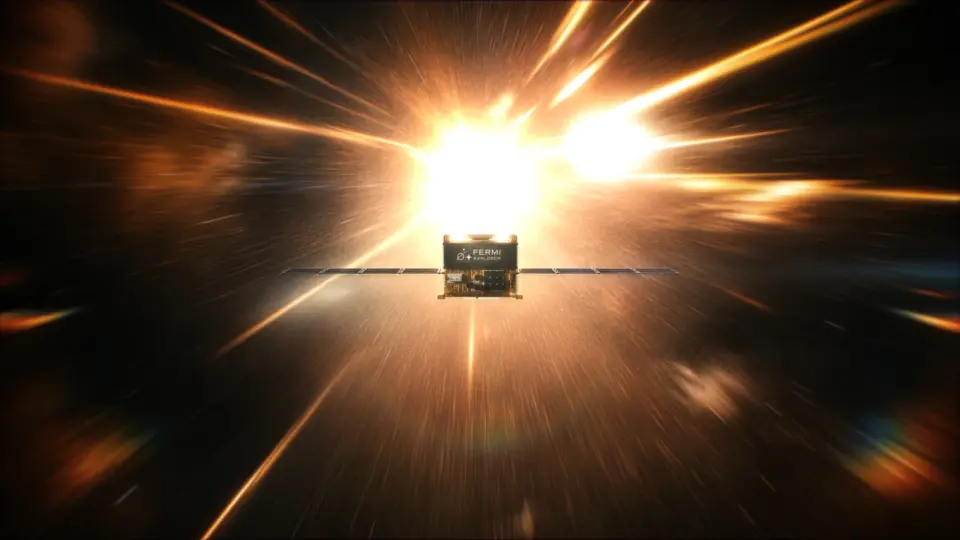
A Seattle-based nonprofit, the Fermi Explorer Mission, is raising $15 million to launch a small, uncrewed spacecraft toward Alpha Centauri by late 2029. The probe, designed to cost under $15 million, will use solar electric propulsion to reach a speed of 25 km/s, arriving at the nearest star system in approximately 80,000 years. Co-founded by Philip Johnston, the mission aims to address the Fermi Paradox by proving that interstellar travel is feasible with existing technology, rather than relying on advanced propulsion concepts.
Key points
- The Fermi Explorer Mission is a nonprofit initiative co-founded by Philip Johnston, Ezra Feilden, and Adi Oltean, who also co-founded Starcloud, an orbital data center startup.
- The mission targets a launch by the end of 2029, with a total budget of $15 million, including design, build, launch, and operations.
- The spacecraft will use solar electric propulsion, spending 12 years in a 'perihelion pump' maneuver to build speed before a 79,500-year ballistic coast to Alpha Centauri.
- The probe will carry a 1 kg payload, potentially including a micro-etched copy of the Voyager Golden Record and messages from children, with no plan for orbital or landing operations.
- The mission aims to address the Fermi Paradox by demonstrating that interstellar travel is possible with current technology, rather than relying on advanced propulsion concepts like Breakthrough Starshot.
- Advisors include Rob Meyerson, Jeff Thornburg, and Alex Wissner-Gross, with SpaceX likely to provide launch services via a rideshare mission.
Background
The Fermi Explorer Mission is part of a broader effort to address the Fermi Paradox, which questions why there is no evidence of extraterrestrial civilizations despite the high probability of life in the universe. Previous attempts, such as Breakthrough Starshot, have focused on advanced propulsion concepts, but the Fermi Explorer Mission aims to use existing technology to prove that interstellar travel is feasible. The mission is also part of a broader trend of private space ventures, with Starcloud, co-founded by Philip Johnston, planning to launch up to 88,000 satellites for AI data centers.
How outlets are covering it
SpaceNews reports on the formation of the nonprofit and the $15 million budget, while Ars Technica emphasizes the 'cheapest possible' approach and the use of existing technology. Space.com highlights the 80,000-year journey and the nonprofit's fundraising efforts. GeekWire provides detailed information on the mission's technical feasibility, including the use of solar electric propulsion and the involvement of SpaceX. All sources agree on the mission's goal to address the Fermi Paradox, but they differ in their emphasis on the technical details and the broader implications of the mission.
Why it matters
The Fermi Explorer Mission is significant because it aims to prove that interstellar travel is feasible with existing technology, rather than relying on advanced propulsion concepts. This could have implications for the future of space exploration and the search for extraterrestrial life. The mission also highlights the growing role of private ventures in space exploration, with Starcloud and other companies planning to launch satellites for AI data centers. The mission's success could inspire future generations and contribute to our understanding of the Fermi Paradox.
What to watch
The Fermi Explorer Mission is expected to launch by the end of 2029, with a 12-year operation period followed by a 79,500-year ballistic coast to Alpha Centauri. The mission will be contingent on raising the required $15 million, with a bulk of the funding expected to kick off after the announcement. The team plans to schedule a three-month solicitation period for payloads, with selections based on feasibility, cost, and other factors. The mission's success will depend on the ability to raise funds and secure launch services from SpaceX.
- Starcloud founders plot $15 million mission to Alpha Centauri SpaceNews
- Fermi Explorer co-founder talks mission to send interstellar spacecraft to neighboring star Yahoo
- Private group wants to launch "cheapest possible" mission to Alpha Centauri Ars Technica
- Nonprofit wants to launch 80,000-year mission to Alpha Centauri in 2029 (video) Space
- Fermi Explorer team plans to launch a probe that will reach the star system next door … in 80,000 years GeekWire
Want the full story? Read the original reporting
Read on SpaceNews