
Starship Flight 14 Targets First Orbital Launch and Starlink V3 Deployment
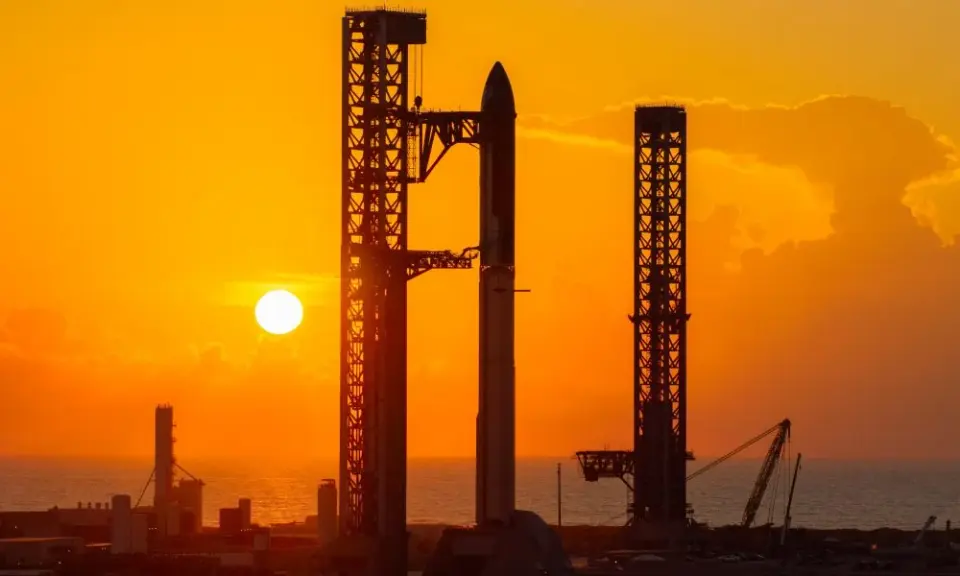
SpaceX has stacked its Starship-Super Heavy rocket at Starbase, Texas, for Flight 14, the program's first attempt to reach orbit. The mission, potentially launching as early as September 28, 2026, requires pending Federal Aviation Administration approval. If successful, the vehicle will deploy 26 operational Starlink V3 satellites, orbit Earth for 10 hours, and test critical hardware improvements for future reusability.
Key points
- SpaceX stacked the 124-meter-tall Starship-Super Heavy vehicle at Starbase on September 23, 2026, ahead of Flight 14.
- The launch window opens at 8:15 a.m. ET on September 28, 2026, pending final regulatory clearance from the FAA.
- The mission aims to reach an altitude of 171 miles (275 kilometers) and remain in orbit for approximately 10 hours.
- Starship will deploy 26 next-generation Starlink V3 satellites, adding significant capacity to the constellation.
- The Super Heavy booster will attempt a controlled splashdown in the Gulf of Mexico, while the upper stage will splash down in the Pacific Ocean.
- SpaceX implemented hardware and software fixes to address engine clogging issues observed during the previous suborbital test flight.
Background
This follows a series of suborbital test flights, with Flight 13 being the most recent. Previous attempts focused on testing propulsion and recovery, but Flight 14 is the first to target a full orbital trajectory. Earlier reports indicated a September 22 target, which slipped to September 28 due to regulatory and technical reviews. The mission is a critical step toward SpaceX's goal of full rapid reusability and commercial viability.
How outlets are covering it
Spaceflight Now and Gizmodo emphasize the technical milestones of Flight 14, including the first orbital insertion burn and the deployment of operational Starlink V3 satellites. They highlight the hardware improvements made to the Super Heavy booster and Starship upper stage to address previous failures. Teslarati focuses on the broader context of SpaceX's orbital compute ambitions, noting that Google is preparing to launch its first AI satellite on a subsequent SpaceX rideshare mission. This underscores the growing commercial interest in SpaceX's launch capabilities. All sources agree that FAA approval is the primary gating factor for the launch.
Why it matters
A successful orbital launch would mark a significant milestone for SpaceX, demonstrating the capability to carry cargo to orbit and paving the way for future missions, including in-orbit refueling and expanded Starlink deployment. It would also validate the company's plans for rapid reusability and commercial viability, which are crucial for its long-term business model. The deployment of 26 Starlink V3 satellites would significantly enhance the constellation's capacity and performance.
What to watch
SpaceX is awaiting FAA approval for the launch. If approved, the vehicle could launch as early as September 28, 2026. Following the orbital insertion, the mission will deploy the Starlink V3 satellites, and the upper stage will attempt a controlled reentry and splashdown in the Pacific Ocean. The Super Heavy booster will attempt a controlled splashdown in the Gulf of Mexico. Success would pave the way for future missions, including in-orbit refueling and expanded Starlink deployment.
- SpaceX readies Starship Flight 14 for a historic journey into uncharted territory Teslarati
- SpaceX stacks massive Starship rocket ahead of 1st orbital launch attempt (video) Space
- SpaceX stack Starship and Super Heavy for first orbital flight Spaceflight Now
- Starship Is About to Attempt Something It’s Never Done in 13 Flights Gizmodo
- Starship Flight 14: How to watch Elon Musk’s megarocket heading to orbit for the first time The Independent
Want the full story? Read the original reporting
Read on Teslarati