
Webb reveals a massive black hole dwarfing its tiny host in the early universe
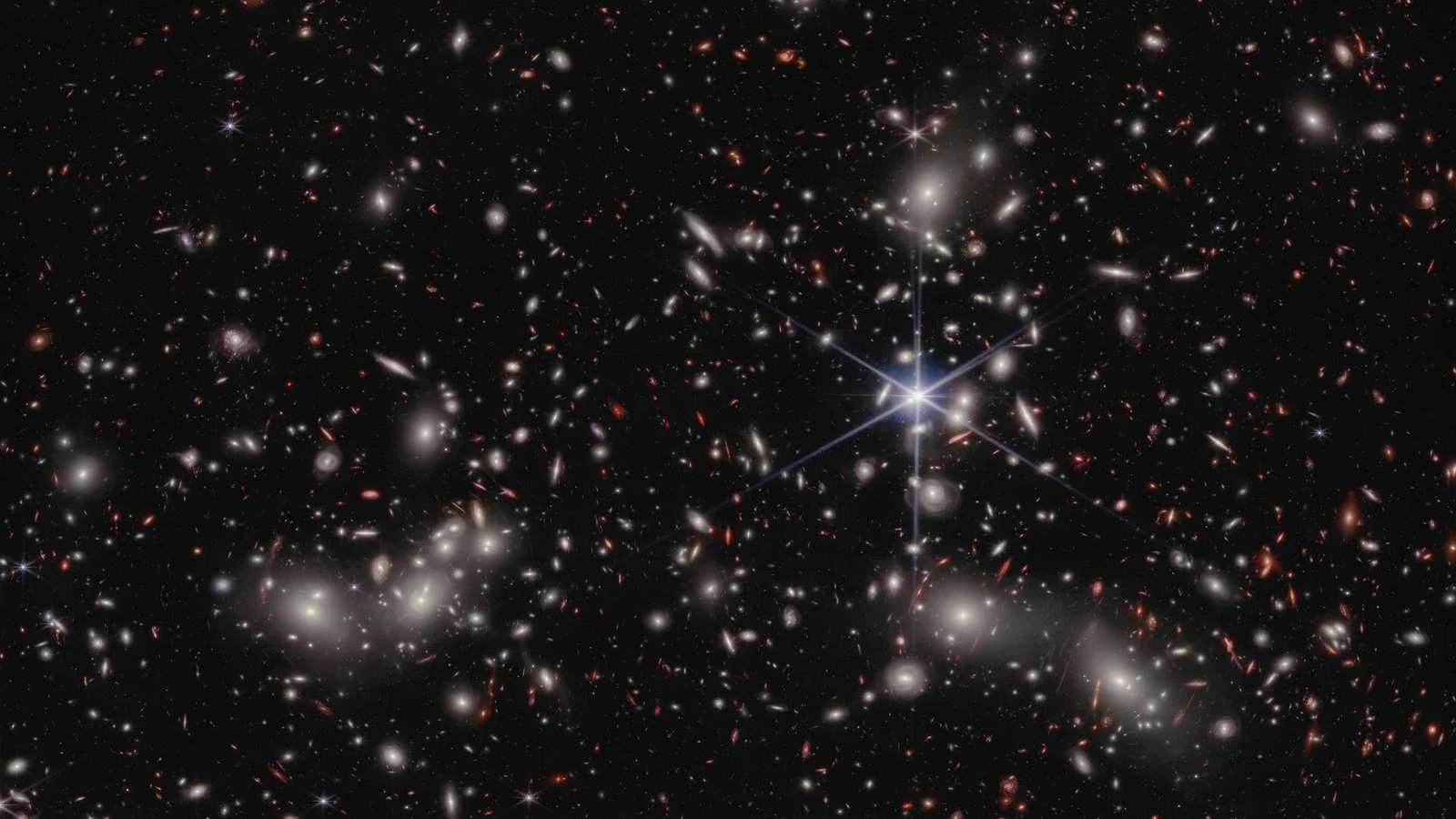
JWST directly measured a ~50 million-solar-mass black hole in the little red dot QSO1, seen when the universe was about 700 million years old, and found it vastly outweighs its host galaxy (host mass < ~20 million solar masses), making it a “naked” black hole. The object is magnified and stretched by gravitational lensing from Abell 2744 (roughly 6x magnification, 3.5x stretch), enabling spectroastrometry with JWST’s NIRSpec to map gas motion and pin down the mass. The result reinforces that local-universe black-hole mass methods can apply to early-universe objects and suggests such seeds could form before their galaxies, though two exotic origin scenarios—direct collapse or primordial black holes—remain on the table.
- James Webb telescope discovers 'naked' black hole that somehow formed before its own galaxy Live Science
- 'A Paradigm Shift': Supermassive Black Hole Without a Galaxy Changes What We Thought Came First Gizmodo
- Little Red Dot Abell2744-QSO1 (NIRCam Image) NASA Science (.gov)
- James Webb Space Telescope discovers a black hole that formed before its host galaxy. Scientists aren't sure how Space
- The Weirdness of Early Universe SMBHs Gets Even Weirder Universe Today
Reading Insights
0
39
91 min
vs 92 min read
99%
18,293 → 111 words
Want the full story? Read the original article
Read on Live Science