
Webb’s Early Galaxies Are Brighter and Earlier Than Expected, Rewriting Star-Formation Timelines
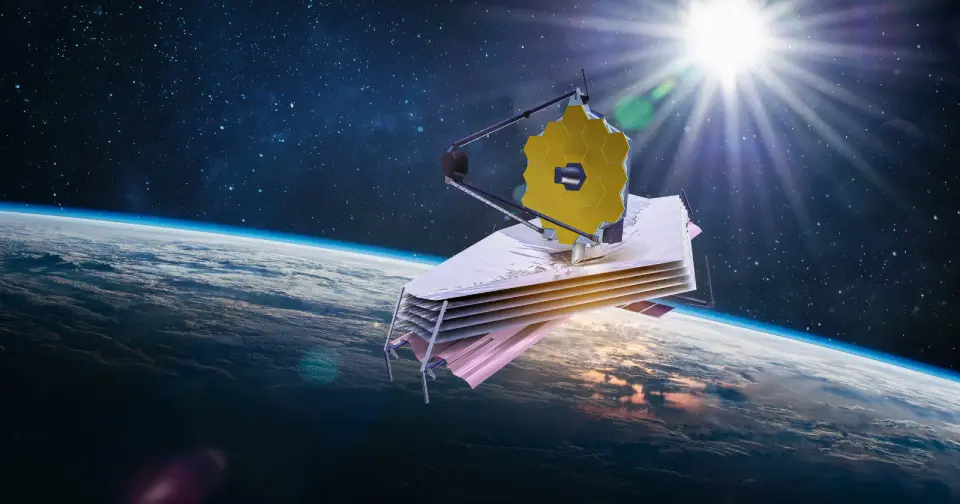
The James Webb Space Telescope has spectroscopically confirmed MoM-z14, the most distant galaxy yet at redshift about 14.44 (light from ~280 million years after the Big Bang), joining a growing population of UV-bright galaxies brighter and more common than pre‑Webb models predicted. This prompts a revision of how quickly the first galaxies formed stars, while cosmology remains intact; explanations include more efficient early star formation, bursty activity, top-heavy stellar populations, reduced dust, and contributions from accreting black holes. Ongoing and future spectroscopy will measure how common these galaxies are and improve chemical enrichment estimates, such as oxygen detection, to sharpen the picture of the early universe.
- The James Webb telescope keeps finding early galaxies that look brighter, bigger and more mature than astronomers expected, forcing researchers to rethink how quickly the first galaxies formed stars and assembled after the Big Bang. Space Daily
- 'Astonishing': James Webb telescope spots the most chemically primitive galaxy in the ancient universe Live Science
- The Galaxy That Forgot to Spin Universe Today
Want the full story? Read the original reporting
Read on Space Daily