
Amazon Leo Launches 40 Satellites on Vulcan Centaur After Two Scrubs
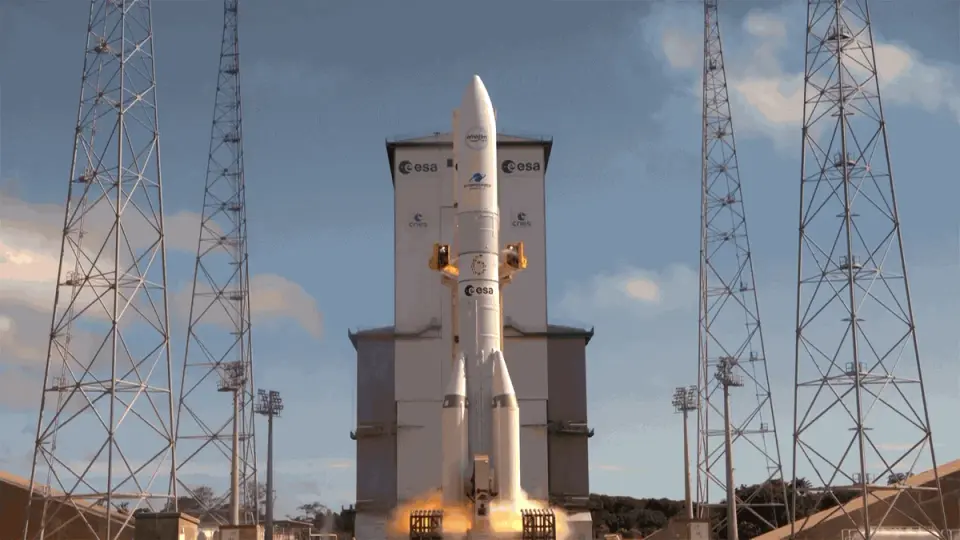
United Launch Alliance (ULA) is set to launch 40 Amazon Leo satellites on Sunday, November 15, marking the first flight of the Vulcan Centaur rocket in nine months. The mission, designated 'Vulcan Leo 1,' was delayed twice due to technical issues but is now scheduled for 12:11 p.m. ET from Cape Canaveral. This launch adds to Amazon's growing constellation of over 3,200 satellites, which aims to provide global internet access to the 2.6 billion people currently lacking reliable connectivity. Amazon Leo operates in low Earth orbit, offering lower latency than traditional geostationary systems, and is designed to compete with SpaceX's Starlink.
Key points
- ULA's Vulcan Centaur rocket will launch 40 Amazon Leo satellites on Nov. 15 at 12:11 p.m. ET from Cape Canaveral Space Force Station.
- The launch was delayed twice: first due to a power issue at the gaseous nitrogen plant, and second due to a communication problem between ground equipment and the rocket.
- This is the first flight of the Vulcan Centaur in nine months, following a pause by the U.S. Space Force after solid rocket booster nozzle failures on previous missions.
- Amazon Leo's constellation consists of over 3,200 satellites, with nearly 400 already in orbit, and aims to provide internet to 2.6 billion people without reliable access.
- Amazon Leo operates in low Earth orbit (367-392 miles above Earth), offering lower latency and faster speeds compared to geostationary satellites, and uses Ka-band spectrum for efficient data transfer.
Background
Amazon Leo, formerly known as Project Kuiper, is a satellite internet service developed by Amazon to provide global connectivity. The program began in 2018, with Amazon investing over $10 billion in upfront capital to build its own satellites, antennas, and ground infrastructure. The service is designed to reach rural communities, remote job sites, and other areas where ground-based networks are impractical. Amazon Leo is part of a broader trend in satellite internet, competing with SpaceX's Starlink, which has been operational for several years. The launch of the Vulcan Centaur is significant as it marks the return of the rocket to flight after a pause due to technical issues, and it is the first mission for the Vulcan Centaur to carry Amazon Leo satellites.
How outlets are covering it
Amazon News emphasizes the technical challenges and innovations of Amazon Leo, highlighting the company's in-house development of satellites, antennas, and ground infrastructure, as well as the use of low Earth orbit to reduce latency. Space.com focuses on the launch details, including the delays and the significance of the Vulcan Centaur's return to flight after a pause due to solid rocket booster issues. Florida Today and WKMG provide local coverage of the launch delays, emphasizing the technical issues that caused the scrubs and the rescheduling of the mission. All sources agree on the importance of the launch for Amazon's satellite internet service, but they differ in their focus: Amazon News on the technology and design, Space.com on the launch logistics, and Florida Today and WKMG on the local impact and delays.
Why it matters
The launch of 40 Amazon Leo satellites is a significant step in Amazon's effort to provide global internet access, particularly to the 2.6 billion people who currently lack reliable connectivity. The success of Amazon Leo could impact the satellite internet market, competing with SpaceX's Starlink and other providers. The launch also marks the return of the Vulcan Centaur rocket to flight, which is important for ULA's future missions and the broader space industry. The technical challenges faced during the launch, including the delays, highlight the complexities of satellite deployment and the need for robust systems to ensure reliable internet access.
What to watch
The next step is the successful launch of the 40 Amazon Leo satellites on November 15, which will add to the constellation and expand coverage. Amazon plans to deploy roughly half of its initial 3,200-plus satellite system to reach most of the world's population, with the remaining satellites improving network density. The company is also developing a second-generation satellite system and direct-to-device satellites, which will be supported by its pending acquisition of Globalstar. Customers in certain areas can start connecting later this year using the nearly 400 satellites already in orbit, and each subsequent mission will extend the network's reach.
- How Amazon is building an internet network 400 miles above Earth About Amazon
- Powerful Vulcan Centaur rocket launching for 1st time in 9 months on Nov. 15: Watch it live Space
- ULA scrubs Amazon satellite launch try again; Vulcan rescheduled for Sunday Florida Today
- United Launch Alliance Satellite mission again delayed after failure to take off Friday WKMG
- ULA delays to Sunday Vulcan rocket launch of 40 Leo satellites for Amazon Spaceflight Now
Want the full story? Read the original reporting
Read on About Amazon