
Australian Firm Uses Living Neurons to Guide Robotic Dog
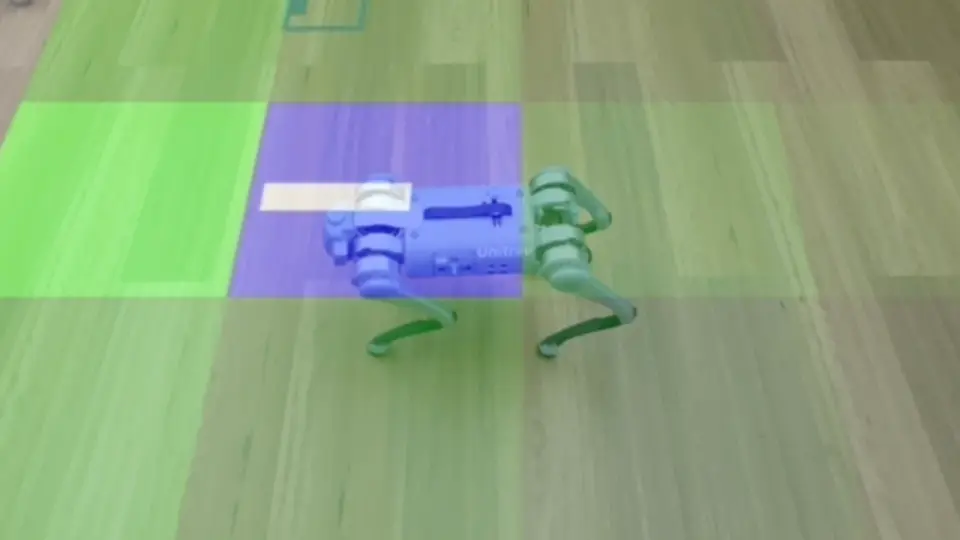
Cortical Labs has demonstrated a robotic dog controlled by a chip containing living human neurons, marking a step toward biological computing for autonomous systems.
Key points
- Cortical Labs in Australia developed a biological computer, designated CL1, which uses living neurons grown from stem cells derived from donated blood.
- The system employs electrodes to create two-way electrical signaling, translating neural activity into movement commands for a robotic dog navigating a simple map.
- The technology aims to offer superior energy efficiency and adaptability compared to traditional digital neural networks, which struggle with real-world unpredictability.
- A parallel virtual experiment with Honda Research Institute Europe involved over 4,000 hours of interaction, testing nearly 1,300 signal combinations to train an agent.
- The research was presented at the NeurIPS 2026 conference and is available on arXiv, though it has not yet undergone peer review.
Background
This development follows recent advancements in understanding human brain origins, such as Stanford’s 2026 findings on dual embryonic progenitor lines, which have improved the ability to cultivate specific neuron types in labs. Additionally, ongoing research into neurodegeneration in canine models, as reported in October 2026, highlights the growing intersection of biological computing and animal physiology, though the current focus remains on synthetic neural interfaces rather than natural animal brains.
How outlets are covering it
ScienceAlert and UA.NEWS emphasize the practical application of biological computing in physical robotics, highlighting the potential for robots to operate in hazardous or unpredictable environments. New Scientist provides a critical external perspective, noting that while the system shows signs of learning, it is still in early stages. Ferrante Neri of the Education University of Hong Kong, cited by New Scientist, describes the results as promising evidence of learning but cautions that establishing an advantage in simple tasks is only an initial step toward complex real-world navigation. All sources agree that the technology is not yet fast or efficient, with Cortical Labs CEO Brett Kagan acknowledging that the current demonstration is a simple proof of concept.
Why it matters
This breakthrough suggests a viable alternative to traditional AI for autonomous systems, potentially solving issues related to battery life and adaptability in robotics. If scaled, biological computing could enable machines to learn and respond to changing conditions more effectively than current digital models.
What to watch
Researchers plan to scale up the chips to handle more complex tasks and investigate how these biological systems retain information and memory. The immediate goal is to move beyond simple grid navigation to more sophisticated real-world applications.
Want the full story? Read the original reporting
Read on ScienceAlert