
Multi-Sensor Networks Enhance Planetary Defense by Tracking Meteor Fireballs
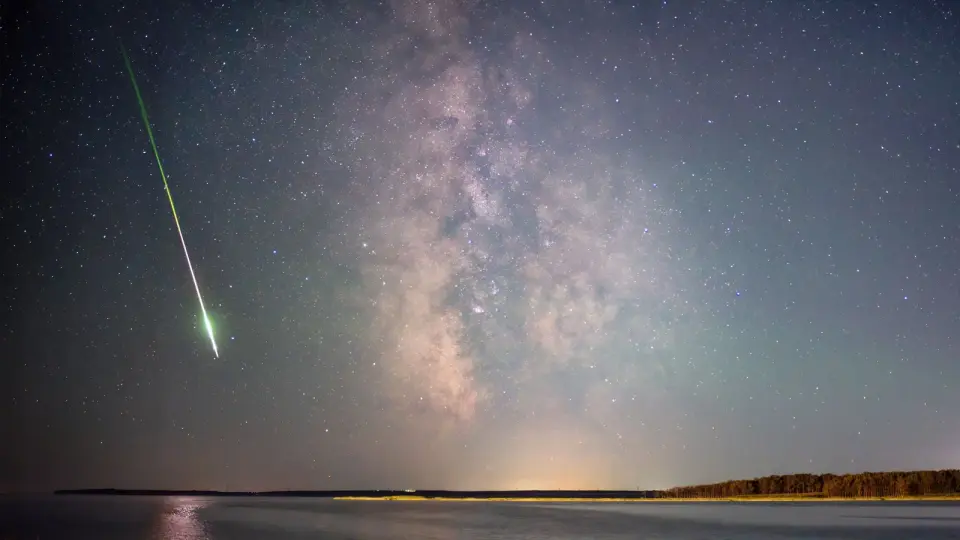
Recent meteor events highlight the value of combining military, civilian, and ground-based sensors to track space rocks. While U.S. military satellites often detect initial impacts, civilian satellites and ground networks provide crucial independent data to refine trajectories and energy estimates. This multi-source approach improves situational awareness and helps distinguish natural meteors from artificial reentries, reducing the risk of misinterpretation during planetary defense operations.
Key points
- An April 2026 bolide over the South Atlantic was detected by both U.S. military sensors and civilian satellites, including NOAA’s GOES-E and Europe’s Meteosat Third Generation Imager-1.
- The April 2025 Alaska fireball was reconstructed using 37 seismic stations, 16 infrasound sensors, and Doppler weather radar, as it was not detected by U.S. military sensors.
- A 2023 event in Queensland, Australia, involved a 12-foot-wide rock that fragmented catastrophically, releasing energy equivalent to a 7.1-kiloton bomb.
- Civilian lightning imagers, not originally designed for bolide detection, provide open data that complements classified military observations.
- Combining seismic, optical, and radar data allows scientists to determine fragmentation points, energy release, and whether material survives to the ground.
Background
This development builds on ongoing efforts to monitor near-Earth objects, as noted in recent planetary health assessments that emphasize the need for robust Earth system monitoring. While previous coverage focused on exoplanet discoveries and aurora imaging, the current focus is on terrestrial atmospheric entry events. The integration of diverse sensor data aligns with broader goals to validate physical models and improve response protocols for both natural and artificial space debris.
Why it matters
Accurate tracking of atmospheric entries is critical for distinguishing natural meteor events from potential military strikes or artificial reentries. Misinterpretation could lead to severe geopolitical consequences. Enhanced detection capabilities also improve the ability to predict impact locations and assess the risk of surviving debris reaching the ground, thereby strengthening global safety and scientific understanding of planetary defense mechanisms.
What to watch
Researchers will continue to integrate data from various sensor types to refine models of atmospheric entry. Future events will serve as real-world tests for these methods, helping to validate how objects fragment and deposit energy. The focus will remain on improving post-event situational awareness and ensuring that civilian and military data are effectively cross-checked for comprehensive analysis.
Want the full story? Read the original reporting
Read on Space