
Space AI: From Narrow Fixes to Autonomous Decisions
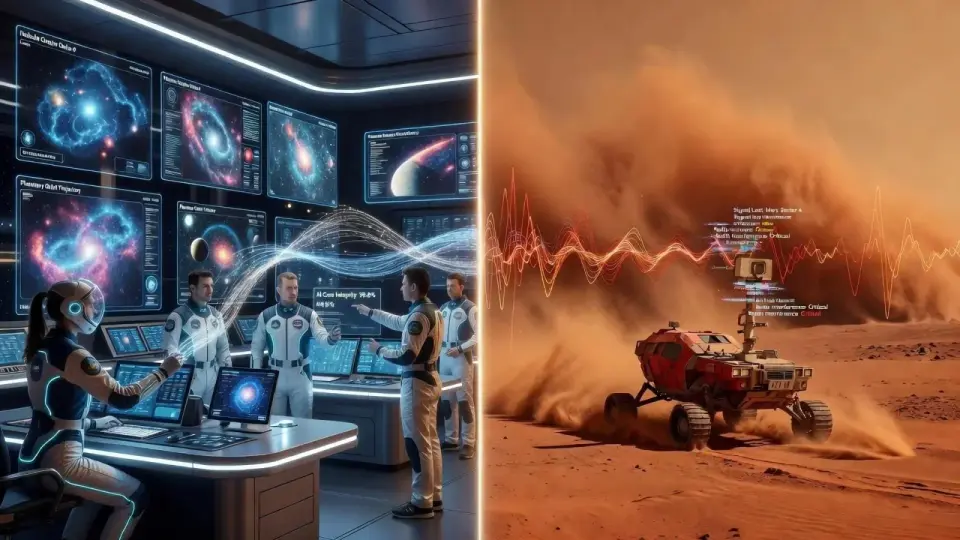
AI in space is already operational, handling data analysis, autonomous navigation, and human-robot collaboration, but faces challenges like data scarcity and reliability.
Key points
- AI processes petabytes of data from telescopes, enabling discoveries impossible for humans.
- Mars rovers like Perseverance use AI for autonomous navigation, avoiding past failures.
- AI assists astronauts on the ISS, enhancing efficiency and safety.
- Challenges include data scarcity, reliability, and harsh environments.
- Full autonomy is the next frontier, but current AI is still supervised.
Background
AI in space has evolved from a promise to an operational reality, with applications in data analysis, autonomous navigation, and human-robot collaboration. Earlier coverage highlighted the ISS's speed and the potential for AI in various fields, but this story focuses on the current state and challenges of AI in space.
How outlets are covering it
Futura-Sciences emphasizes the broad impact of AI in space, from data analysis to autonomous navigation, highlighting its mission-critical role. Space Daily provides a more nuanced view, noting that current AI in space is often a narrow fix for specific problems, not general machine judgment. 조선일보 focuses on the revival of legacy technologies in modern industries, including AI and space exploration, but does not directly address the current state of AI in space.
Why it matters
AI in space is transforming how we explore and understand the cosmos, but its full potential is limited by challenges like data scarcity and reliability. Understanding these limitations is crucial for future missions and the development of truly autonomous AI systems.
What to watch
The next step is full autonomy, where AI can make independent decisions and explore the unknown. However, this requires overcoming significant challenges, including data scarcity, reliability, and harsh environments. Continued research and development are essential to achieve this goal.
- AI Takes Control in Space: Experts Stunned by This Unbelievable Leap Forward futura-sciences.com
- AI actually flying on spacecraft today is a narrow fix for one physical problem, not machine judgment: a Mars rover picks its own laser targets with 93 percent accuracy, and one satellite's entire first AI experiment was built by a single engineer in under two week Space Daily
- AI breakthrough: Why life on the Moon and Mars could happen much sooner futura-sciences.com
- Can AI Command Earth-to-Orbit Operations? eetimes.com
- Legacy Technologies Revive in Modern Industries 조선일보
Want the full story? Read the original reporting
Read on futura-sciences.com