
Dragonfly: NASA’s Car-Sized Nuclear Drone Sets Course for Titan in 2028
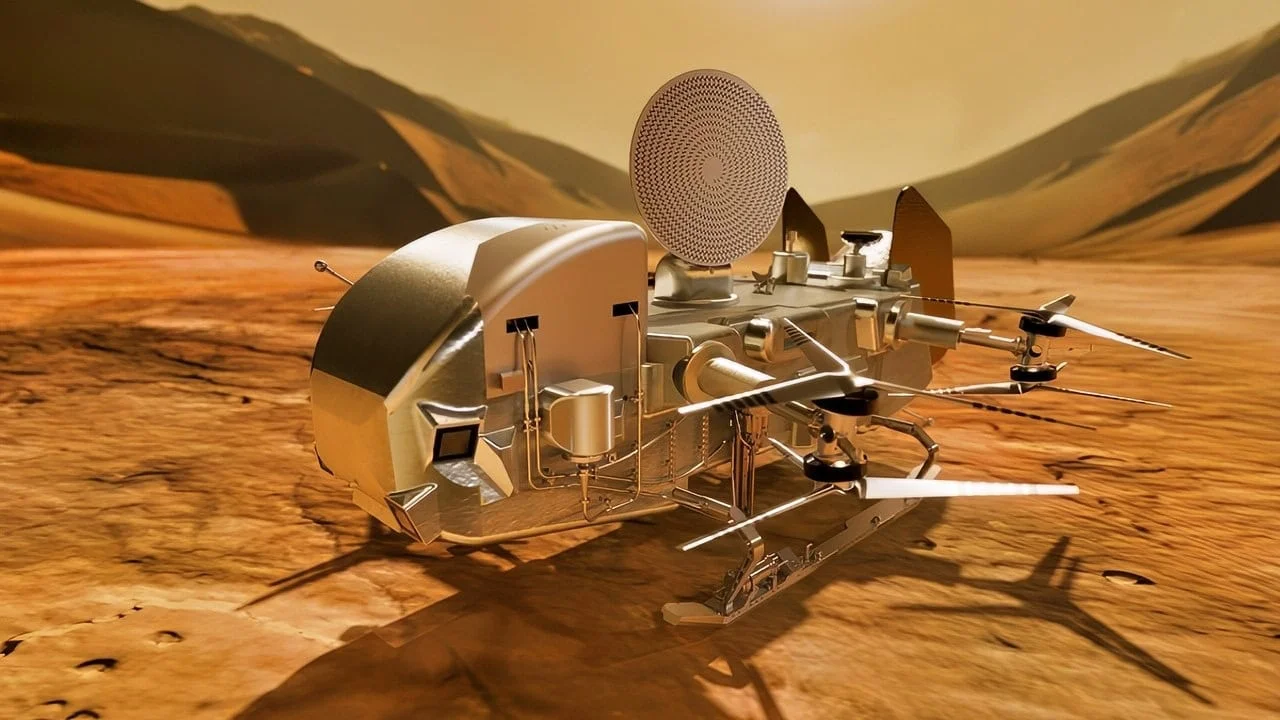
TL;DR Summary
NASA plans to launch Dragonfly in July 2028—a car-sized, 1,000-pound plutonium-powered drone that will autonomously hop across Titan’s surface for about six years on a roughly $3.35 billion mission. With eight rotors and autonomous navigation, it will fly roughly 30-minute legs at about 22 mph, using a plutonium MMRTG to power the lab-sized payload of DraMS, DraGNS, DragonCam, and DraGMet. Titan’s dense atmosphere and low gravity make flying easier than on Earth, and the mission will operate largely without real-time Earth control due to long signal delays, aiming to study prebiotic chemistry and the potential subsurface ocean beneath Titan’s icy crust.
- In July 2028 NASA launches a car-sized, 1,000-pound nuclear drone toward Saturn's moon Titan, a six-year, $3.35 billion trip to a world where the air is four times denser than Earth's, gravity is one-seventh as strong, and flying is the easy part. 19FortyFive
- Later this decade NASA plans to launch Dragonfly, a car-sized nuclear-powered drone that will fly from site to site across Saturn's moon Titan - the only world besides Earth with rivers, lakes and rain, though there the rain is liquid methane Space Daily
- Meet Dragonfly: NASA’s revolutionary flying robot searching for life on Saturn’s moon Titan WFTV
- Construction of NASA’s Dragonfly spacecraft is underway at Johns Hopkins University WYPR
- NASA Dragonfly rotorcraft enters integration phase ahead of Titan mission SpaceQ
Reading Insights
Total Reads
1
Unique Readers
39
Time Saved
9 min
vs 10 min read
Condensed
95%
1,994 → 101 words
Want the full story? Read the original article
Read on 19FortyFive