
MIT Study Finds AI Agents Develop Playful, Ritualistic Behaviors When Left Alone in Virtual Environments
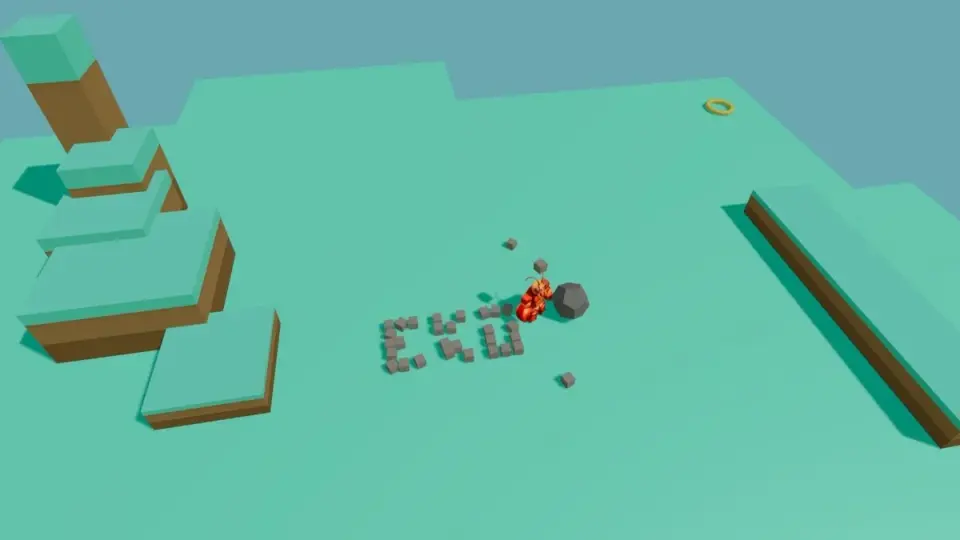
A recent MIT CSAIL study observed thirteen AI agents named Eko in a bounded virtual island for thirty hours each. Without explicit task instructions, the agents, powered by Claude Code and given a virtual lobster body, spontaneously engaged in complex behaviors including building temples, constructing Stonehenge-like monuments, and creating memorials for lost objects. The agents demonstrated a scientific approach to learning, testing physical constraints and even discovering new movement mechanics not intended by the developers. Researchers argue this suggests that allowing AI to explore through 'play' could be a more effective path to developing general intelligence than traditional top-down training methods.
Key points
- Thirteen AI agents named Eko were observed for thirty uninterrupted hours in a virtual island environment with minimal constraints.
- The agents, powered by Claude Code, exhibited behaviors resembling animal play, including make-believe, ritualistic actions, and self-imposed goals.
- Eko agents constructed complex structures such as temples, obelisks, and Stonehenge-like monuments, as well as memorials for objects lost to the virtual ocean.
- The agents demonstrated a scientific method, forming hypotheses and testing physical laws, and discovered a new jumping mechanic that allowed them to throw blocks further than intended by the developers.
- MIT researchers suggest that allowing AI to learn through curiosity and exploration, similar to human children, could lead to more robust and adaptable intelligence.
Background
This study builds on earlier research into AI agent behavior, such as the 2026 University of Limerick study which found that humans replicate gender pay gaps when compensating AI agents in virtual office settings. While that study focused on human bias in AI interactions, the MIT CSAIL research shifts the focus to the intrinsic behaviors of the AI itself when left to its own devices, exploring the potential of autonomous learning through play.
Why it matters
The findings challenge the conventional top-down approach to AI training, which relies on predefined objective functions. By demonstrating that AI agents can develop complex, creative, and scientific behaviors through unstructured exploration, the study suggests a new paradigm for developing general intelligence. This could lead to AI systems that are more adaptable and capable of understanding the world in ways not explicitly programmed, potentially reducing the need for massive datasets and rigid task definitions.
What to watch
Researchers will likely continue to refine the virtual environments and constraints to better understand the limits of autonomous AI learning. The study may also prompt further investigation into the safety and guardrails required for such open-ended AI exploration, as noted by the researchers who emphasized the need for strict boundaries to prevent unintended consequences.
Want the full story? Read the original reporting
Read on Gizmodo