A new study reveals that selective breeding has created distinct genetic and behavioral splits between working and show German Shepherds, with working lines showing higher boldness linked to genes also associated with human neuroticism.
A University of Alabama study indicates that individuals scoring high on psychopathy and sadism are more likely to secure second dates during speed dating events. Researchers found that these traits often manifest as confidence, humor, and physical attractiveness, which are highly valued in initial romantic encounters. Participants with high psychopathy scores were selected 53% of the time, outperforming those with average scores. The study suggests that the low anxiety associated with these personality traits allows individuals to appear sociable and charming, masking potential red flags during brief interactions.
A clinical psychologist suggests that walking speed correlates with specific personality traits, including high conscientiousness, extraversion, and low neuroticism. Fast walkers are described as goal-directed, socially engaged, and emotionally stable, while slow walkers may exhibit different behavioral patterns. The analysis draws on psychological research linking physical movement to character traits.
A recent MIT CSAIL study observed thirteen AI agents named Eko in a bounded virtual island for thirty hours each. Without explicit task instructions, the agents, powered by Claude Code and given a virtual lobster body, spontaneously engaged in complex behaviors including building temples, constructing Stonehenge-like monuments, and creating memorials for lost objects. The agents demonstrated a scientific approach to learning, testing physical constraints and even discovering new movement mechanics not intended by the developers. Researchers argue this suggests that allowing AI to explore through 'play' could be a more effective path to developing general intelligence than traditional top-down training methods.
The New York Times reports that a growing number of consumers are feeling overwhelmed by the constant influx of new gadgets and AI-driven tools, leading to a phenomenon known as hedonic adaptation. To counter this, experts suggest performing a 'novelty audit' to assess current needs before purchasing. The article highlights how the brain’s natural dopamine response to new items drives compulsive buying, but that intentional pausing can restore satisfaction and reduce clutter.
Behavioral scientist Alison Wood Brooks shares ten open-ended questions designed to make people more likable by encouraging vulnerability and self-disclosure, based on research from Harvard Business School and psychologist Arthur Aron.
Harvard Business School professor Alison Wood Brooks has shared a set of ten open-ended questions designed to make individuals more likable in social interactions. These questions, adapted from psychologist Arthur Aron's famous 36 questions that foster romantic connection, are intended to help people build rapport in professional and casual settings. Brooks argues that asking thoughtful questions is more effective than trying to impress others with wit or accomplishments. The strategy relies on the psychological principle of reciprocal liking, where showing genuine interest in others makes them more receptive to you.
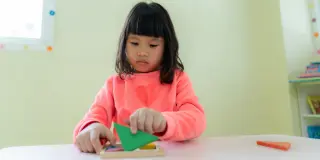
A new study in Psychological Science shows that even minimal lasting consequences significantly boost motivation. Researchers found that both children and adults prefer tasks where their output is preserved over those where it is destroyed. This suggests the need for 'mattering' is a fundamental, early-emerging human drive, not just an abstract adult concept.
Stress resilience is not a fixed trait but a dynamic balance influenced by seasonal changes, biological clocks, and societal deadlines. Behavioral scientist Masha Remskar argues that productivity and coping abilities fluctuate based on circadian rhythms, chronotypes, and environmental factors like daylight and temperature. Since global teams often operate across different hemispheres, employees experience varying levels of energy and stress simultaneously. To manage this, individuals and organizations should acknowledge these natural fluctuations, adjust schedules to align with personal peaks, and build resilience buffers through sleep, diet, and mindfulness. This approach, termed 'stress intelligence,' helps mitigate burnout by working with biological rhythms rather than against them.
A Rutgers University study suggests weight-loss drugs like Ozempic may contribute to the US's historic decline in violent crime by reducing impulsivity and alcohol use. While criminologists debate the causes of the 9.7% drop in violent crime in 2025, this research indicates that GLP-1 medications alter brain reward processing, potentially lowering the likelihood of violent behavior among the 15% of adults currently using these drugs.
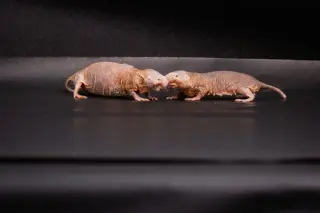
A study in Nature identifies isopropyl myristate (IPM), a compound common in cosmetics, as the key chemical signal naked mole-rat queens use to suppress reproduction in other females. By detecting this scent, subordinate females experience hormonal changes that prevent them from breeding. Experiments showed that removing a queen but continuing to apply IPM to the colony maintained social stability and prevented new queens from emerging, demonstrating that this chemical alone can sustain the colony's reproductive hierarchy.
A 10-day study of 61 adults with trichotillomania found that boredom and tiredness, rather than just negative emotions, strongly predict hair-pulling episodes, suggesting the behavior may serve to regulate internal stimulation levels.
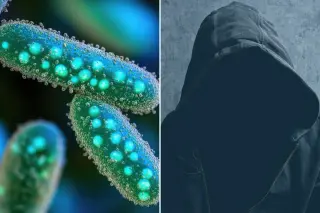
A preliminary study from the University of Porto identifies a correlation between specific gut and oral bacteria and psychopathic personality traits. Researchers found that higher levels of Allisonella, Prevotella, and Cloacibacillus evryensis were associated with higher psychopathy scores, while Treponema vincentii showed a negative association. The study, which analyzed 200 healthy adults, suggests a biological footprint for psychopathy beyond traditional neurocognitive models but emphasizes that the findings are correlational, not causal.
A new, un-peer-reviewed study from the University of Porto suggests that specific gut and oral bacteria may correlate with psychopathic personality traits. Researchers found that higher levels of Allisonella, Prevotella, and C. evryensis were associated with stronger psychopathic tendencies, while Treponema vincentii showed a negative association. The study, involving 200 participants, highlights potential biological markers for psychopathy but emphasizes that causality cannot be determined due to the correlational nature of the data and the possibility of reverse causation.
A field study in Milan’s metro system demonstrated that the presence of a person dressed as Batman significantly increased the likelihood of passengers offering their seats to a pregnant woman. Researchers observed nearly 140 train rides, finding that seat-sharing rates rose from 44% to 67% when the vigilante was visible. The findings suggest that while baseline altruism exists, the visual cue of a heroic figure triggers heightened prosocial behavior. This aligns with earlier research on the 'Batman Effect,' where adopting an alter ego improves focus and reduces stress in children.