
NASA’s Psyche Mission Proves Laser Video Transmission with Cat Footage
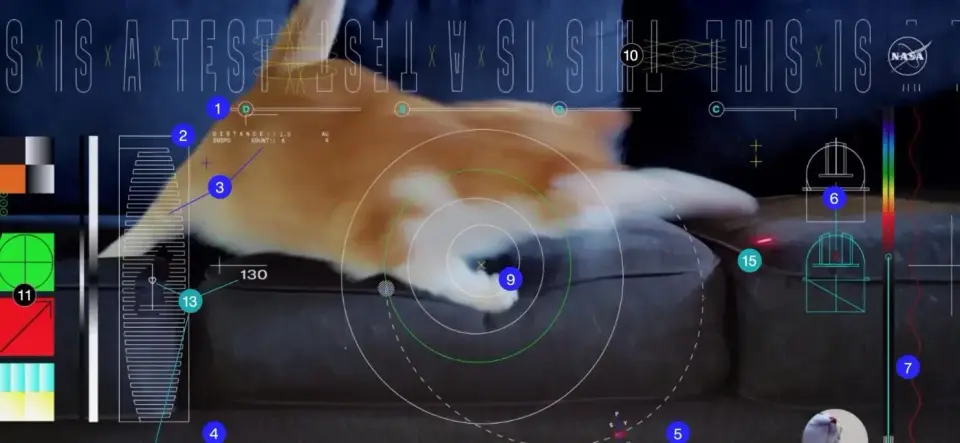
In December 2023, NASA’s Psyche spacecraft transmitted a preloaded 15-second video of a cat named Taters to Earth using Deep Space Optical Communications (DSOC). The clip, featuring Taters chasing a laser pointer, was sent from 19 million miles away and arrived at Caltech’s Palomar Observatory in 101 seconds. This test demonstrated that laser beams can transmit data at 267 megabits per second, significantly faster than current radio systems, though it remains an experimental technology for future deep-space missions.
Key points
- The video was preloaded test data uploaded before the October 2023 launch, not recorded in space.
- DSOC uses near-infrared laser beams to transmit data, achieving speeds up to 100 times faster than conventional radio transmitters.
- The 267 megabit-per-second rate exceeded typical ground broadband speeds during the test.
- The transmission arrived at Palomar Observatory in 101 seconds, but the subsequent internet link to JPL was slower than the space-to-ground laser link.
- DSOC is currently experimental and has not replaced conventional radio systems for deep-space communication.
Background
This development follows broader efforts to enhance deep-space communication capabilities. While recent news has focused on temporary mini-moons and robotic telesurgery, NASA’s DSOC test represents a critical step in preparing for future missions to the Moon and Mars, where higher bandwidth is essential for transmitting large volumes of scientific data and high-resolution images.
Why it matters
Successful high-speed laser communication is vital for future space exploration, enabling the transmission of large datasets and real-time video from distant missions. This technology could support human missions to the Moon and Mars by improving data transfer efficiency and reliability, though further testing is needed to ensure performance across greater distances and varying conditions.
What to watch
NASA plans additional DSOC tests as Psyche travels toward the main asteroid belt. Future trials will assess reliability across greater distances, shifting spacecraft angles, and cloudy weather conditions. A full-time optical network has not yet been built, and integration into future spacecraft remains a work in progress.
Want the full story? Read the original reporting
Read on Futura, le média qui explore le monde