
Nikon Microscopy Contest Winner Faces AI Allegations
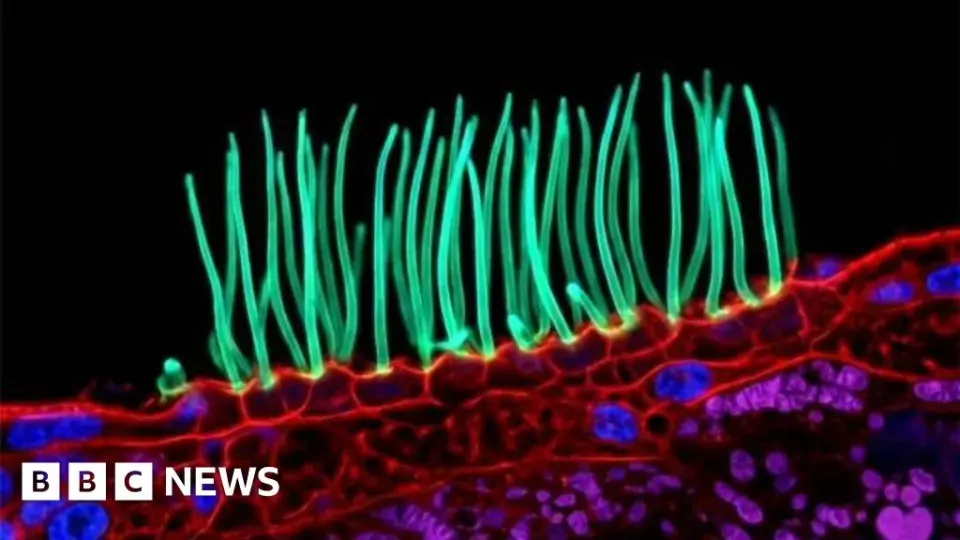
The winner of Nikon's 15th annual Small World In Motion contest is under investigation after scientists alleged the winning video was manipulated using artificial intelligence. Dr. Ning Xu of Tsinghua University submitted a clip of cilia in a child's airways, which Nikon initially accepted. Critics argue the footage contains impossible movements and AI watermarks. While Xu claims he only used AI for visualization, not generation, Nikon is reviewing the entry to ensure fair competition.
Key points
- Nikon is investigating the 2026 Small World In Motion winner, a video by Dr. Ning Xu of Tsinghua University, for potential AI manipulation.
- The entry depicts cilia in a child's airways but has been criticized for showing structures that 'pop in and out of existence' and appear too large.
- Xu admitted using AI to visualize features in grayscale images but denied generating the video or the biological structures themselves.
- Nikon stated it sees no rule violations yet but is reviewing technical documents provided by Xu, while the $3,000 prize remains pending.
- Former judges and other entrants, including fifth-place finisher Dr. Patrick Hickey, argue that AI-generated content violates the contest's core requirement for microscope-captured footage.
Background
This dispute follows a broader trend of AI integration in visual media, including Google's recent expansion of AI photo automation tools and previous controversies involving AI-generated political imagery. The Nikon Small World contest has run for 15 years, emphasizing the intersection of scientific accuracy and artistic beauty in microscopy.
How outlets are covering it
BBC reports that Nikon is currently standing by its procedures but is awaiting an update after receiving technical documents from Xu. Boing Boing highlights the artistic value of the contest's entries, such as sea slugs and starfish larvae, but does not address the current controversy. Critics like Edward Phelps and Ian Donovan emphasize scientific plausibility and technical artifacts, while Hickey focuses on the fairness of the competition rules regarding generative AI.
Why it matters
The incident highlights the growing tension between AI-assisted visualization and strict scientific integrity in prestigious competitions. It raises questions about how institutions define 'authentic' imagery in an era where AI can mimic biological structures, potentially undermining trust in scientific communication and award recognition.
What to watch
Nikon is expected to issue a formal decision regarding the validity of Xu's entry. If the video is disqualified, the prize may be awarded to a runner-up. The outcome will likely influence future rules for scientific imaging contests regarding the use of AI in post-processing.
Want the full story? Read the original reporting
Read on BBC