
November 2025 Solar Storm Caused 33-Foot GPS Errors, Threatening Autonomous Vehicles
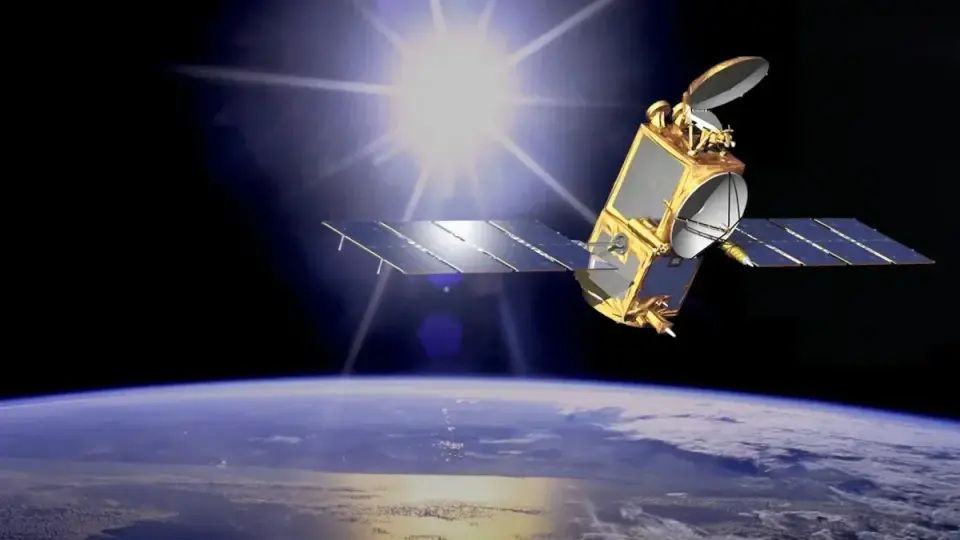
A severe geomagnetic storm in November 2025 caused GPS positioning errors exceeding 33 feet across the continental United States, posing risks to autonomous vehicles and precision agriculture. A new study published in Geophysical Research Letters reveals that the auroral oval pushed unusually far south, creating widespread ionospheric disturbances at mid-latitudes that were previously considered stable. While the storm occurred after the farming season, avoiding major crop losses, the incident highlights vulnerabilities in global navigation satellite systems and the need for improved space weather forecasting.
Key points
- GPS accuracy degraded by over 10 meters (33 feet) across parts of the US during the November 11, 2025, geomagnetic storm.
- The disruption lasted for hours and affected a broad swath of mid-latitudes, a region typically considered quiet for signal scintillation.
- The event poses significant risks to autonomous transportation and precision agriculture, though the timing spared the 2025 farming season.
- Researchers noted that strong signal fading at mid-latitudes had previously only been observed in isolated cases, not across vast longitudinal ranges.
- The findings underscore the need for better predictive models and coordinated observations to mitigate space weather impacts on critical infrastructure.
Background
This incident follows a similar solar storm in May 2024, which caused approximately $500 million in damages to the US farming industry by disrupting GPS signals during the active season. Previous coverage in September 2026 highlighted the same November 2025 event, noting that researchers used aurora observations and GPS networks to map ionospheric disturbances. The current report expands on these findings by detailing the unprecedented geographic spread of the signal degradation at mid-latitudes.
How outlets are covering it
Supercar Blondie emphasizes the immediate safety risks to self-driving cars, suggesting that the 33-foot error margin could have caused vehicles to veer off course or crash. ZME Science provides a more technical perspective, focusing on the scientific anomaly of the auroral oval pushing unusually far south to create a broad band of disturbed, unevenly charged air. While Supercar Blondie highlights the potential for accidents, ZME Science notes that GPS did not fail outright but became inaccurate enough to threaten systems requiring ultra-precise positioning. Both outlets agree on the magnitude of the error and the need for better forecasting, but ZME Science places greater emphasis on the novelty of the mid-latitude disruption compared to historical isolated cases.
Why it matters
The incident exposes a hidden weakness in global navigation satellite systems that are relied upon for critical infrastructure, including autonomous transportation and precision agriculture. The unprecedented spread of GPS errors at mid-latitudes challenges existing assumptions about space weather impacts and highlights the need for improved predictive capabilities to protect economic and safety-critical systems from future solar storms.
What to watch
Researchers will use the data from the November 2025 storm to refine physics-based models for predicting where and when solar storms will degrade GPS accuracy. Improved space weather forecasting and coordinated observations are expected to enhance the ability to mitigate disruptions to critical technologies in the future.
- Satellites in space moved by 33 feet and that caused serious issues for GPS on Earth with self-driving cars at huge risk supercarblondie.com
- A Solar Storm Knocked GPS Off by 33 Feet Across the US and Scientists Had Never Seen This Kind of Disruption ZME Science
- A Powerful Solar Storm Knocked GPS Off By More Than 10 Meters Across The US IFLScience
- A solar storm disrupted GPS last year. Scientists finally found how it happened The Independent
- Solar Superstorm Knocked US GPS Off By Up To 10 Meters, Study Finds Dataconomy
Want the full story? Read the original reporting
Read on supercarblondie.com