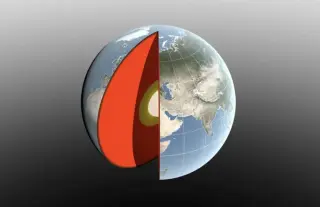
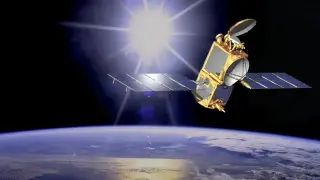
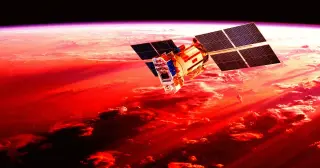
A NASA-led study refines measurements of Earth's center of mass, finding its annual wobble is about half of previous estimates—only a few millimeters—driven by seasonal transfers of water, ice, and air, using LAGEOS lasers and GRACE-FO data to improve reference systems for GPS and navigation.
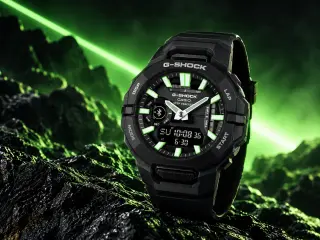
Casio has officially listed the G-Shock GBA-950-1A in the UK, expanding its G-Squad lineup. The runner-focused smartwatch offers GPS-linked distance tracking, step counting, Strava compatibility, dual time zones, and 200 m water resistance, with a ~53 g weight and a £130 price. It pairs with Casio’s app for data logs and notifications, and follows the 2025 Japan launch alongside other G-Squad models.
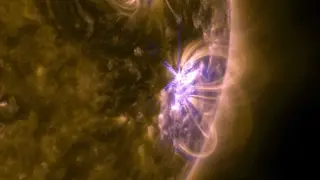
A November 2025 solar storm triggered significant GPS errors—over 33 feet—in global navigation satellite systems, causing mid-latitude positioning disruptions that could affect self-driving cars and precision farming. Reported in Geophysical Research Letters and highlighted by Futurism and NASA, the event underscores the need for better space weather understanding and predictive modeling to safeguard GPS-dependent technologies.
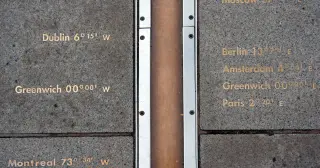
The brass line at Greenwich marks the historical Prime Meridian, but GPS-based coordinates place zero longitude about 102 metres east of that marker due to a shift in reference frames in 1984. The Airy Transit Circle defined the original meridian, but modern satellite geodesy uses a center-of-Earth frame, so the marker is now a historical symbol rather than the true zero line. Tourists continue to photograph it, and the observatory preserves it for heritage reasons.
UC Riverside researchers use a GPS-based method to measure tiny crust movements and identify locked fault segments (asperities) in subduction zones, revealing where a rupture is likely to occur. The approach narrowed down the rupture location for a Kamchatka megathrust quake in 2025, but cannot predict exact timing. The team plans to apply the method to other major zones (Japan, Mexico, New Zealand, Pacific Northwest) to improve disaster response, stressing that forecasting should supplement, not replace, public preparedness.
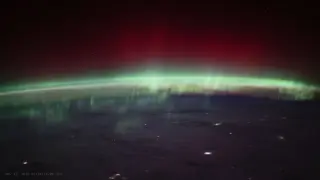
During a severe geomagnetic storm on November 11, 2025, GPS positions across much of the continental United States drifted by as much as 10 meters (33 feet) for hours, as an unusually far south auroral oval and a broad band of ionospheric disturbance triggered widespread scintillation—exposing a previously underappreciated vulnerability in systems that rely on ultra-precise positioning and raising questions about prediction.
UC Riverside researchers used GPS data and an algorithm to identify locked, stress-building portions of major faults (asperities) to indicate where the next large earthquake is likely to rupture. In tests, the model highlighted the Kamchatka subduction zone before the 2025 quake, suggesting potential for long-term hazard mapping, though it cannot predict timing or tsunami size; the team plans to apply the method to other subduction zones for improved preparedness.
UC Riverside researchers have developed a GPS-based, fault-stress modeling method to identify fault segments most likely to produce major earthquakes, especially along subduction zones. While the approach cannot predict when an earthquake will occur or its size, it can pinpoint high‑risk areas to improve long‑term preparedness and guide California fault studies (e.g., Hayward) using measurements of accumulated strain and related algorithms, with real-world references like the Kamchatka 2025 quake illustrating how stress hotspots relate to rupture zones.
California researchers have developed a GPS-based method to identify locations along major fault lines most prone to producing giant earthquakes. By measuring accumulated strain in subduction zones with an algorithm, the approach can pinpoint hotspot areas where large quakes are more likely, though it cannot predict when or how severe they’ll be. The method offered insights from a Kamchatka quake in 2025 and is being applied to California faults like the Hayward Fault to improve long-term preparedness.
A November 2025 geomagnetic storm disrupted GPS signals for hours over much of the U.S. and Canada, causing positioning errors of over 30 feet (about 10 meters) that could affect precision farming and autonomous vehicles; researchers mapped ionospheric disturbances using aurora observations and GPS networks, underscoring the need for better space-weather forecasting to mitigate impacts on critical tech.
A new study finds a November solar storm caused significant GNSS errors—over 33 feet—across the continental US due to auroral activity and upper-atmosphere density changes, degrading GPS signals and potentially disrupting precision farming and autonomous transport; a May 2024 storm previously cost farmers about $500 million, underscoring the need for better space-weather forecasting to mitigate disruptions to RF systems.
A November 2025 solar superstorm triggered coast-to-coast ionospheric disturbances across the continental US, producing amplitude scintillation that degraded GPS accuracy by more than 10 meters (about 33 feet) in some areas and threatening precision agriculture and autonomous systems; the mid-latitude disturbances spanned from West to East Coast in a scale never before seen, and researchers say better space-weather prediction and modeling are needed to mitigate future disruptions. The findings appear in Geophysical Research Letters, based on GNSS and aurora observations led by Endawoke Yizengaw.
Sellas Life Sciences’ stock surged after a German report claimed its Regal AML trial reached the 80th event, though the company has not confirmed the milestone and the official count remains at 78 with data still undergoing review. Optimism around GPS persists, helped by positive Moderna data on cancer vaccines, with initial SLS009 results expected in Q4. Sellas ended Q2 with $138.3 million cash; retail traders remain skeptical until official confirmation and regulatory filings, while a potential FDA BLA could follow if the milestone proves valid.
Waze users report issues like the app not opening or freezing, failing to fetch routes, inaccurate or random routing, location not updating, and an overload of alerts. Most problems stem from missing permissions, outdated app versions, or misconfigured settings, all fixable in minutes: clear the app cache, free storage, update or reinstall the app, and verify location permissions and precise location are enabled; reboot the device if needed. For route fetch failures, check connectivity, toggle airplane mode, and consider breaking long routes into shorter steps. To improve navigation accuracy, adjust Settings > Navigation to manage toll roads and enable personalized ETAs and routes. If location isn’t updating, ensure Location access is Always or While Using and perform a reboot if necessary. To reduce distractions, customize Alerts and reports and set Sounds to Alerts only or Off. These fixes are straightforward and can enhance reliability and reduce driving interruptions.
Security researchers exposed how cheap GPS-enabled kids’ watches backed by YiQingTeng/SETracker, SinoTrack, and NewGPS2012 platforms can be hijacked to track users, take photos, or eavesdrop—often with little or no authentication. The flaws span dozens of brands sharing the same backends, meaning millions of devices are at risk. Presented at Black Hat, the researchers urge stronger security across GPS wearables and the supply chains that power them.