Tag

Ionosphere

All articles tagged with #ionosphere

Solar Superstorm Expands Mars's Ionosphere, Revealing Space Weather on the Red Planet
science1 month ago

Solar Superstorm Expands Mars's Ionosphere, Revealing Space Weather on the Red Planet

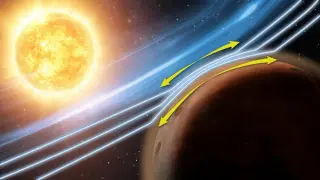
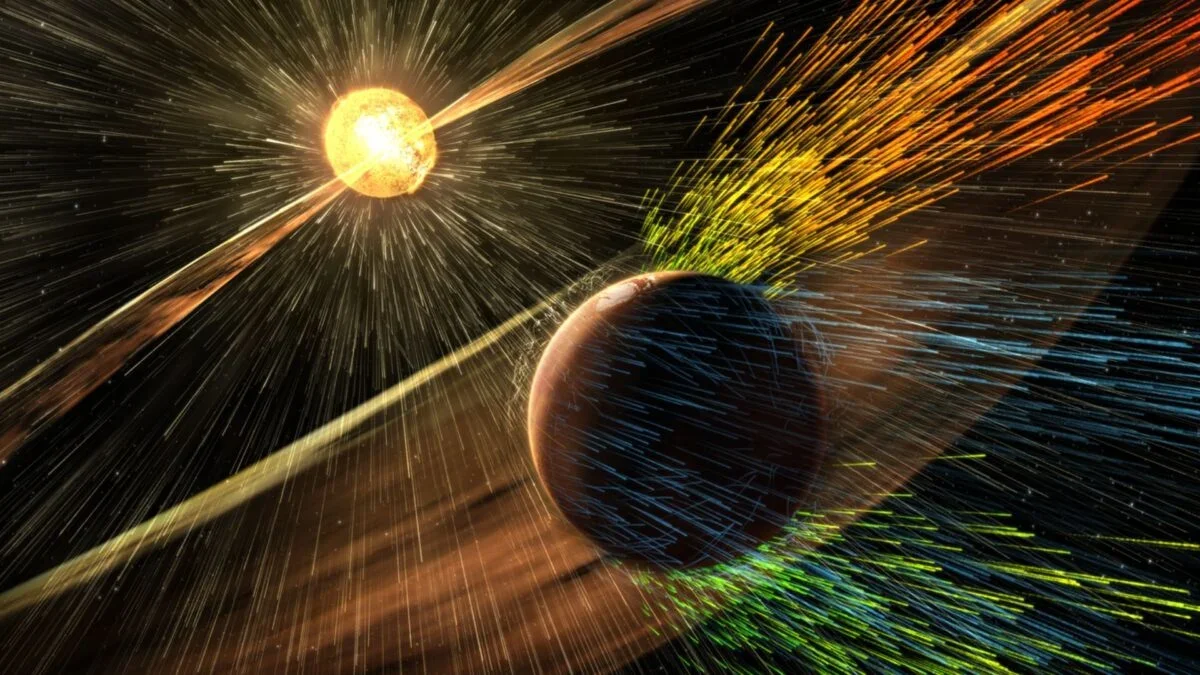
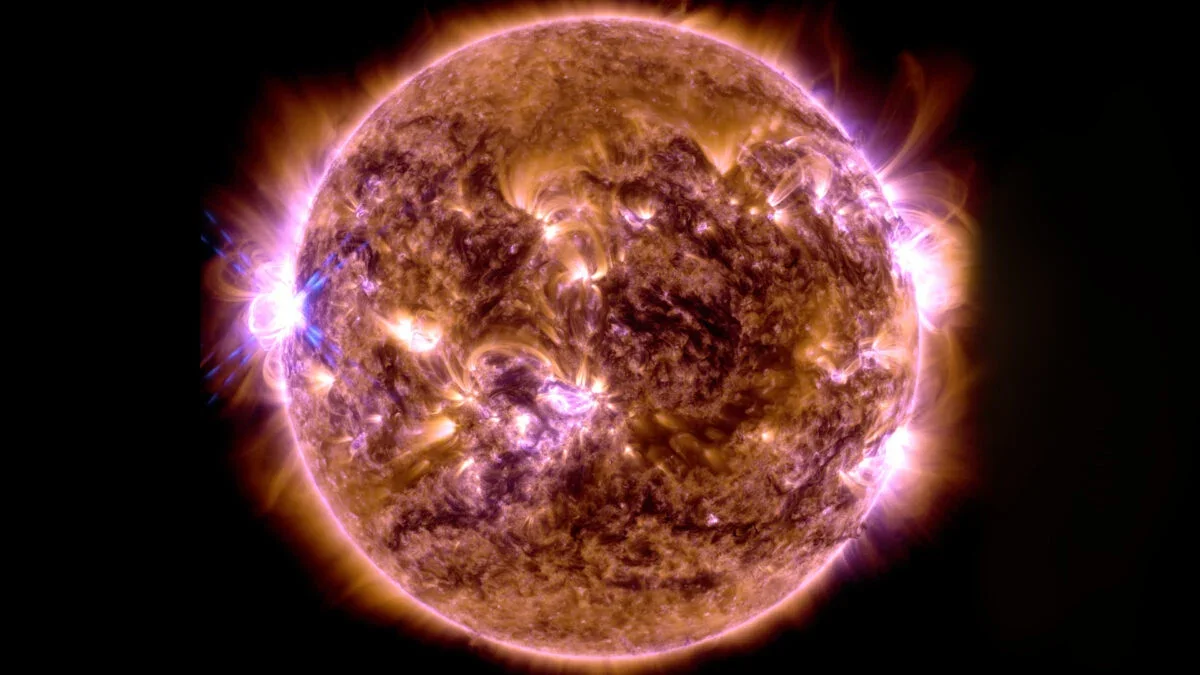
A May 2024 solar superstorm from sunspot AR3664 produced an X2.9 flare and a coronal mass ejection that not only triggered a major Earth geomagnetic storm but also dramatically swelled Mars’s lower ionosphere—nearly threefold—as solar plasma and X‑rays flooded the planet’s upper atmosphere. ESA’s Mars Express and the ExoMars Trace Gas Orbiter used radio occultation to measure the changes, showing how solar activity injects energy and particles into Mars’s atmosphere and highlighting its ongoing atmospheric loss. The orbiters briefly glitching during the storm but ultimately recovering demonstrates the value of radiation‑hard spacecraft for space weather studies.

space1 month ago

Webb Telescope Maps Uranus’ Ionosphere in 3D

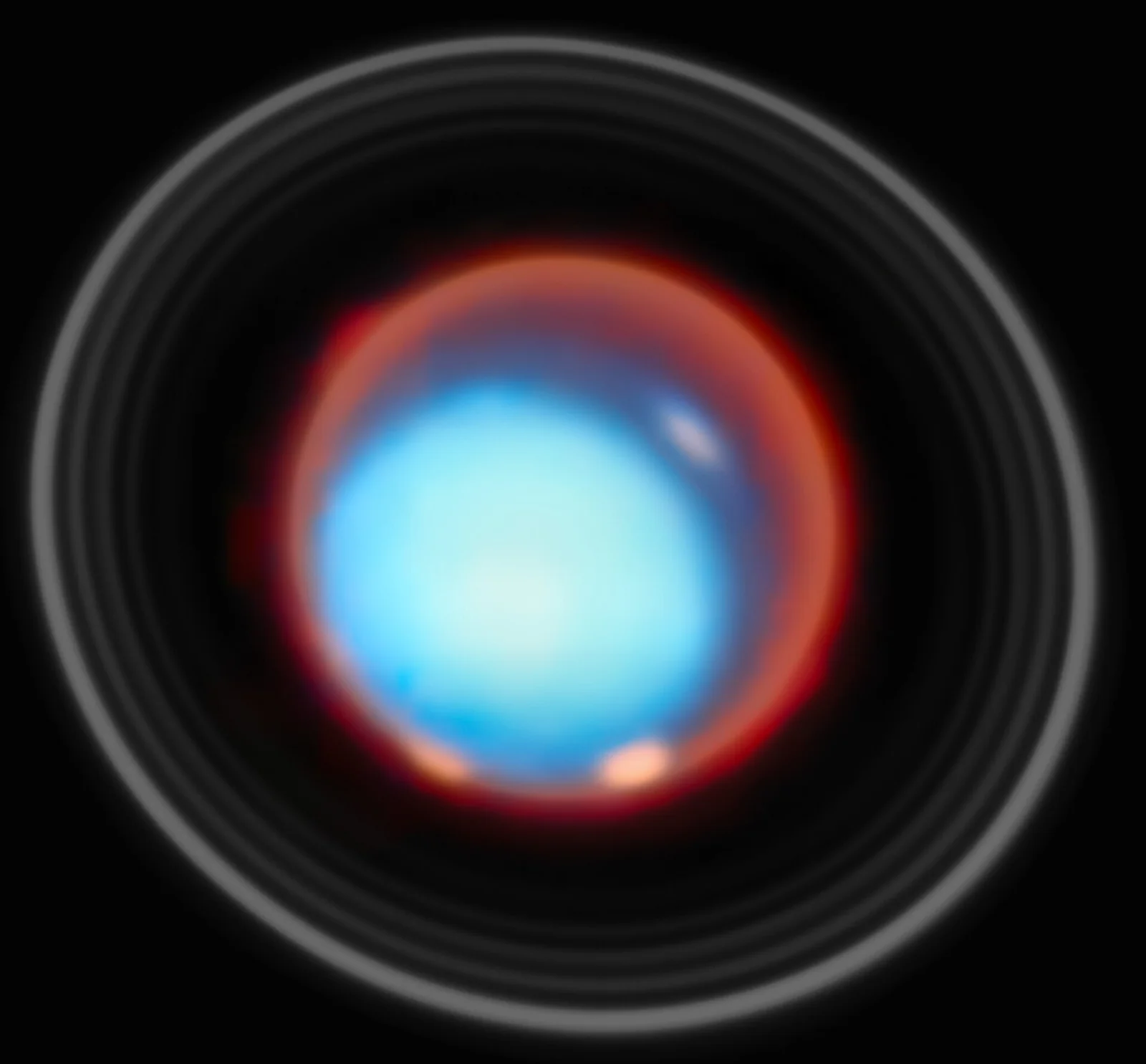
The European Space Agency reports that the James Webb Space Telescope used the Near-Infrared Spectrograph (NIRSpec) to study Uranus’ upper atmosphere, focusing on its ionosphere up to about 5,000 km above the clouds and creating a full-rotation 3D map to probe the planet’s magnetic field and auroras. The measurements show the hottest regions at roughly 3,000–4,000 km altitude with ion densities around 1,000 km, offering new insights into Uranus’ enigmatic magnetosphere and ice-giant atmospheres more broadly.

Sun storms could jostle Earth’s faults, new study hints at quake link
science1 month ago

Sun storms could jostle Earth’s faults, new study hints at quake link

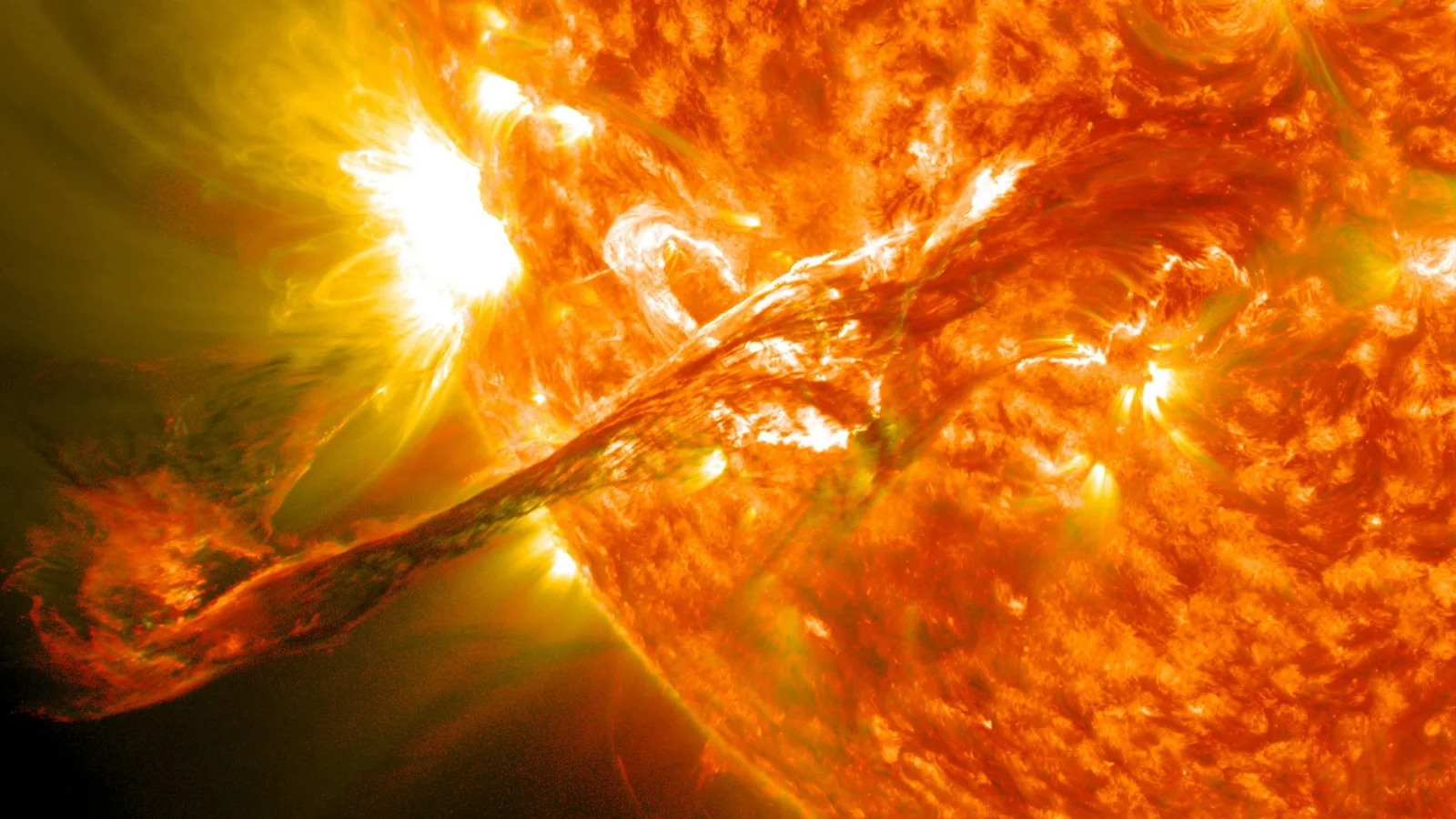
A new study suggests that solar flares may perturb Earth’s ionosphere, altering electrostatic forces in the crust and potentially nudging faults toward earthquakes. The authors model the crust and ionosphere as connected like a leaky battery; critics say the approach is oversimplified and real geology could dampen any effect. Validation is challenging, though the researchers cite a 2024 Japan quake as possible support, emphasizing that correlation does not equal causation.

JWST maps Uranus's upper atmosphere in 3D, revealing auroras and magnetic quirks
space1 month ago

JWST maps Uranus's upper atmosphere in 3D, revealing auroras and magnetic quirks

Using JWST's NIRSpec, an international team mapped Uranus's upper atmosphere in 3D for the first time, detailing how temperature and ion density vary up to 5,000 km above the clouds. The study finds peak temperatures around 3,000–4,000 km and ion-density maxima near 1,000 km, with two bright auroral bands and a magnetic-field driven depletion region. The average upper-atmosphere temperature is about 426 K (roughly 150 C), and the atmosphere continues to cool since the 1990s, offering new insight into the energy balance of ice giants.

NASA Launches Rockets to Investigate Mysterious Ionospheric Clouds Disrupting Communications
science10 months ago

NASA Launches Rockets to Investigate Mysterious Ionospheric Clouds Disrupting Communications

NASA's SEED mission aims to study mysterious high-altitude Sporadic-E layers near the equator using rockets launched from Kwajalein Atoll, to better understand their formation and impact on global communication systems, which could lead to improved prediction and mitigation of space weather disruptions.

Smartphones Revolutionize Ionosphere Mapping for Space Weather Insights
technology1 year ago

Smartphones Revolutionize Ionosphere Mapping for Space Weather Insights

Google researchers have proposed using Android smartphones to crowdsource ionosphere data by measuring GPS signal delays, which can estimate the total electron current (TEC) of the ionosphere. This method leverages the widespread availability of dual-frequency receivers in smartphones, potentially surpassing the data collection capabilities of the existing 9,000 fixed-position stations.

Smartphones Revolutionize Ionosphere Mapping and GPS Accuracy
science-and-technology1 year ago

Smartphones Revolutionize Ionosphere Mapping and GPS Accuracy

Researchers from Google and CU Boulder have utilized millions of Android smartphones to create detailed maps of the ionosphere, the uppermost layer of Earth's atmosphere. By using the GPS sensors in these phones, the team was able to track atmospheric phenomena like plasma bubbles, potentially doubling the accuracy of GPS technology. This innovative approach leverages everyday technology to enhance scientific understanding and improve GPS precision worldwide.