
SpaceX Completes First Starship Orbital Flight, Deploys 26 Starlink Satellites
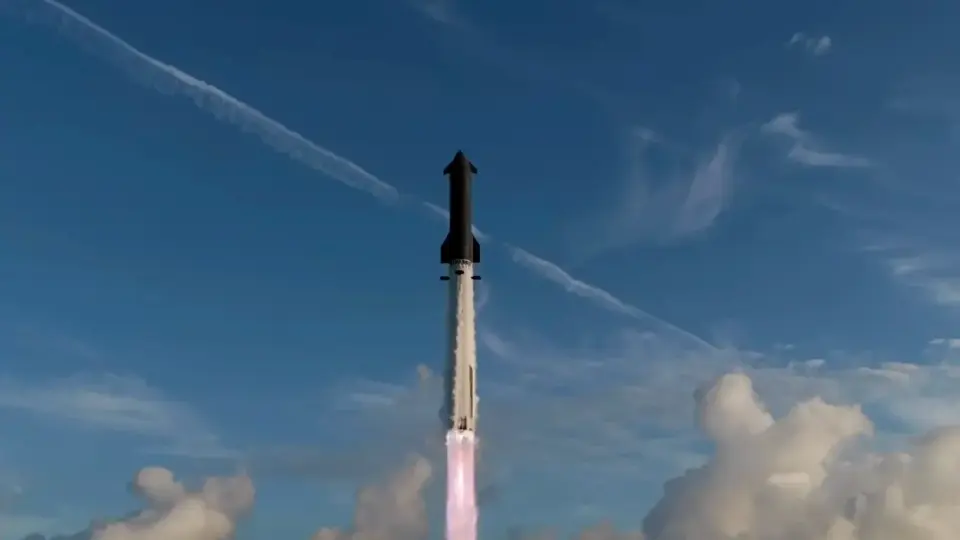
SpaceX successfully launched its Starship rocket into Earth orbit for the first time on September 28, 2026. The mission, designated Flight 14, deployed 26 third-generation Starlink satellites and concluded with a controlled splashdown in the Pacific Ocean north of Hawaii after three hours. Although one engine shut down early, the vehicle reached orbit and returned safely, marking a critical milestone for future lunar missions.
Key points
- SpaceX launched the Super Heavy-Starship from Starbase, Texas, at 8:49 a.m. EDT on September 28, 2026, achieving its first orbital insertion after thirteen previous suborbital tests.
- The upper stage deployed 26 third-generation Starlink satellites, which feature ten times the capacity of previous models, marking the first operational payload launch for the vehicle.
- The mission ended early after three hours with a splashdown north of Hawaii, rather than the planned six orbits, following the successful satellite deployment.
- One Raptor engine on the upper stage shut down prematurely, but the flight team proceeded with a single-engine burn to reach orbit, and the booster successfully splashed down in the Gulf of Mexico.
- NASA Administrator Jared Isaacman praised the launch, noting it is a key step toward the Artemis IV moon landing planned for 2028, though experts remain skeptical of meeting that timeline.
Background
Prior to this event, SpaceX had conducted thirteen suborbital test flights of the Starship system. Recent archive reports indicated that Flight 14 was initially targeted for late September to test orbital insertion and deploy Starlink V3 satellites, which promise significantly higher bandwidth. The vehicle had undergone upgrades to heat-shield tiles and engine reliability following previous hard splashdowns. This mission represents the transition from suborbital testing to orbital operations, a prerequisite for the complex logistics required for lunar missions.
How outlets are covering it
Spaceflight Now provides a detailed technical account, highlighting the early shutdown of one upper-stage engine and the subsequent decision to proceed with a single-engine orbit insertion. They emphasize the successful booster splashdown and the early termination of the mission after satellite deployment. Yahoo Finance confirms the orbital achievement and satellite deployment but offers limited additional detail due to technical issues in the source text. Axios serves as the primary source confirming the launch but provides minimal narrative detail compared to Spaceflight Now. While all sources agree on the success of the orbital insertion and satellite deployment, Spaceflight Now offers the most comprehensive analysis of the flight anomalies and the implications for the Artemis program, noting that industry observers doubt SpaceX can meet the 2028 lunar landing target.
Why it matters
This flight validates the Starship system's ability to reach orbit and deploy operational payloads, a critical requirement for NASA's Artemis program. The successful deployment of 26 Starlink V3 satellites expands SpaceX's internet constellation with higher-capacity hardware. However, the early engine failure and the decision to end the mission early highlight ongoing reliability challenges. The success of this test is a prerequisite for the complex multi-launch logistics required for lunar missions, where multiple tanker flights must refuel a lander before it can dock with a crewed capsule.
What to watch
SpaceX plans to launch its first Starship from Florida later in 2026 or early 2027, utilizing new pads at Kennedy Space Center and Cape Canaveral. The company must now certify the vehicle for human spaceflight and demonstrate the reliability needed to launch multiple tanker flights for the Artemis IV mission. NASA is also funding a Blue Origin alternative lander as a hedge against potential delays in SpaceX's development schedule.
- SpaceX brings Starship home early after first orbital flight axios.com
- Starship returns to Earth; rocket splashes down north of Hawaii after three-hour flight Spaceflight Now
- SpaceX Just Did Something Historic. The Economics of Rocket Launches Are About to Change in a Big Way inc.com
- SpaceX Starship test reaches Earth orbit, 26 Starlink satellites deployed Yahoo Finance
- Starship, world's most powerful spacecraft, splashes down in the Pacific after 1st orbital flight test ABC13 Houston
Want the full story? Read the original reporting
Read on axios.com