
NASA sets December uncrewed test for Boeing Starliner, targeting 2028 crewed return
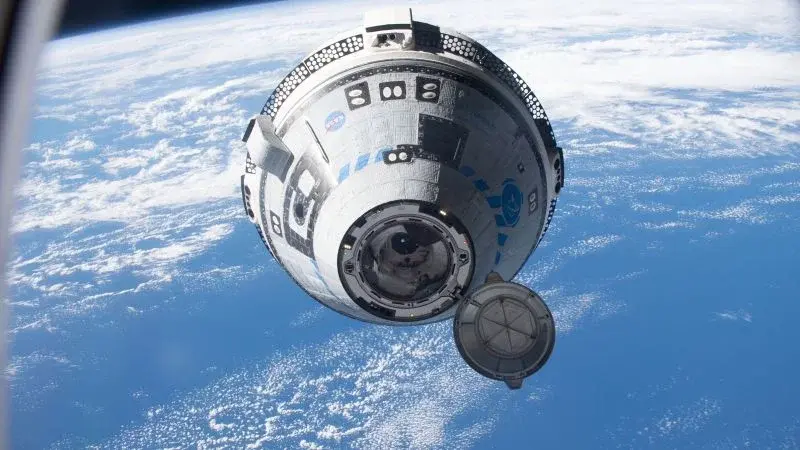
NASA Administrator Jared Isaacman announced a new roadmap for Boeing’s Starliner, which will attempt an uncrewed test flight no earlier than December 2026. If successful, a crewed mission could occur by mid-2028, commanded by astronaut Woody Hoburg. The agency is investing an additional $359 million to fix thruster issues and certify the new Vulcan Centaur rocket, as SpaceX prepares to retire its Crew Dragon capsule.
Key points
- NASA Administrator Jared Isaacman confirmed that Boeing’s Starliner will conduct an uncrewed test flight no earlier than December 2026 to validate recent design modifications.
- If the uncrewed flight succeeds, the next crewed mission is targeted for mid-2028, with NASA astronaut Woody Hoburg named as the commander.
- NASA is allocating an additional $359 million to fund Starliner upgrades and the certification of United Launch Alliance’s Vulcan Centaur rocket, replacing the retiring Atlas V.
- NASA is moving to order two additional crewed flights from Boeing under its current contract, as SpaceX has indicated it will retire the Crew Dragon capsule in the 2030s to focus on Starship.
- Isaacman previously classified the botched 2024 Starliner test flight, which left astronauts Suni Williams and Butch Wilmore in space for 286 days, as a 'Type A mishap' comparable to the Columbia and Challenger disasters.
Background
Starliner has been under development for over a decade, plagued by thruster issues. The 2024 Crew Flight Test resulted in a nine-month stay for Williams and Wilmore on the ISS due to helium leaks and thruster outages. NASA’s leadership has since criticized Boeing’s engineering and oversight, but the agency remains committed to Starliner to maintain redundancy in crewed access to low Earth orbit, especially as SpaceX plans to sunset its Crew Dragon program.
How outlets are covering it
CNN emphasizes the severity of the 2024 failure, noting Isaacman’s 'Type A mishap' classification and the $359 million cost for upgrades. Scientific American highlights the technical 'step back' to an uncrewed flight and the specific 286-day duration of the 2024 crewed delay. NASA’s official media advisory confirms the briefing participants and the focus on regular crew flights, while all sources agree on the December 2026 uncrewed target and the 2028 crewed timeline. CNN and Scientific American both note the strategic necessity of Starliner as SpaceX moves toward retiring Crew Dragon in favor of Starship.
Why it matters
The success of Starliner is critical for maintaining multiple operational pathways for crewed access to the International Space Station. As SpaceX plans to retire Crew Dragon in the 2030s, Starliner must become operational to ensure the US does not rely on a single provider for astronaut transport, preserving redundancy and competition in the commercial space sector.
What to watch
NASA and Boeing will monitor the results of the uncrewed test flight scheduled for no earlier than December 2026. If the flight validates the thruster and seal modifications, NASA will proceed with certification for the Vulcan Centaur rocket and prepare for a crewed mission in mid-2028. The agency is also finalizing the order for two additional Boeing flights under its current contract.
- NASA reveals new plan for Boeing’s troubled Starliner spacecraft and commander of future mission CNN
- NASA, Boeing to Provide Update on Starliner Development NASA (.gov)
- NASA ramps up support to get Boeing’s astronaut capsule flying after Butch and Suni fiasco AP News
- NASA looks ahead to Boeing Starliner tests as it tries to overcome the spacecraft’s troubles Scientific American
- Watch live: NASA, Boeing give update on future of Starliner The Hill
Want the full story? Read the original reporting
Read on CNN