
Australian Physicist Claims Gravity Alters Light Speed, Challenging Einstein's Core Principle
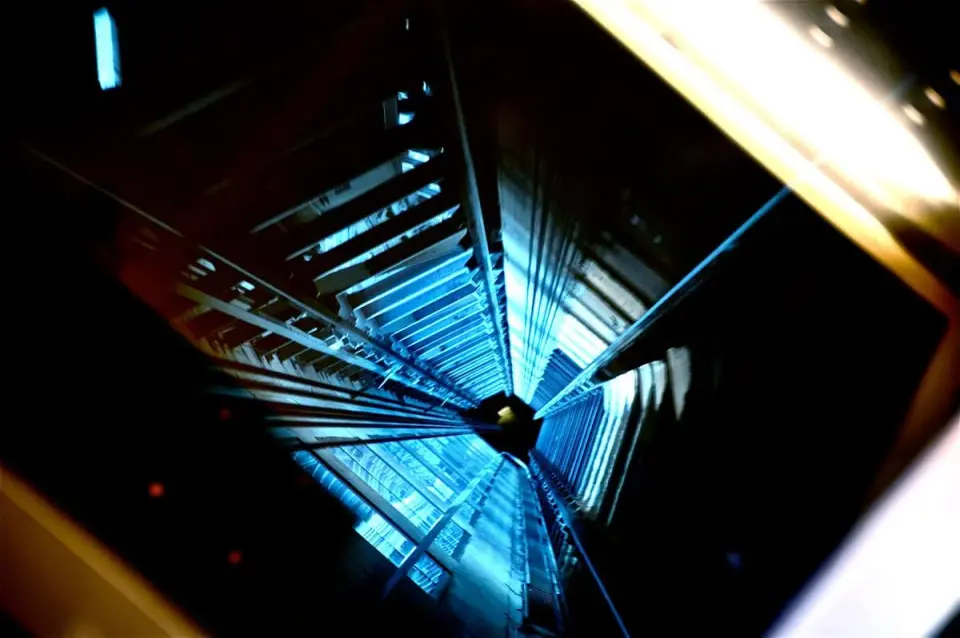
Enbang Li, a physicist at the University of Wollongong in Australia, has proposed that the speed of light is not constant but is instead influenced by local gravity. Using a device built within an elevator shaft on the university campus, Li claims to have detected changes in light speed as it traverses Earth's surface. These findings suggest that gravity can speed up light, potentially contradicting the foundational assumption of special relativity that light travels at a constant rate in a vacuum. If validated, this discovery could impact Earth science applications, including climate monitoring and mineral resource exploration, by providing new methods to measure local gravitational variations.
Key points
- Enbang Li of the University of Wollongong built a machine to detect changes in the speed of light caused by gravity.
- The experiment utilized an elevator shaft on the university campus to measure light speed variations at different altitudes.
- Li's findings suggest that light is sped up by gravity, challenging the 1905 special relativity principle of constant light speed.
- Li notes that Einstein himself considered a variable speed of light in 1911 but abandoned the model when publishing general relativity in 1915.
- The potential implications include improved techniques for climate monitoring and mineral resource exploration through local gravity measurements.
Background
Recent scientific efforts have focused on testing the boundaries of Einstein's theories. In August 2026, a quantum Galileo interferometer confirmed that Einstein's equivalence principle holds at quantum scales using rubidium atoms. Additionally, in September 2026, researchers proposed a 'cosmic glitch' where gravity might be slightly weaker on cosmological scales, though this does not directly address the speed of light. Li's work contrasts with these by focusing on local gravitational effects on light speed rather than quantum mechanics or large-scale cosmology.
Why it matters
If the speed of light is not constant but varies with local gravity, it could fundamentally alter our understanding of physics and general relativity. This shift could lead to new technologies for measuring Earth's internal structure and gravitational fields, enhancing fields like geology and climate science. It also raises questions about the consistency of foundational physical laws across different scales and environments.
What to watch
The next steps likely involve independent verification of Li's findings by other research institutions. If confirmed, further experiments may be conducted to measure light speed variations in different gravitational environments, potentially leading to revised models of general relativity and new applications in Earth science and resource exploration.
Want the full story? Read the original reporting
Read on zmescience.com