
Cornwall Snorkeler Captures Rare Rainbow Glow of Comb Jelly
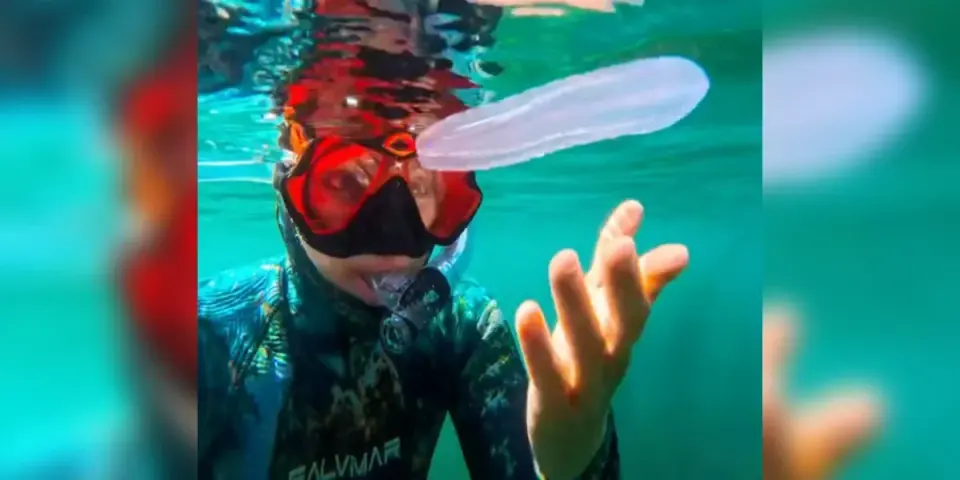
A snorkeling instructor in Cornwall, UK, documented a comb jelly displaying a vivid rainbow glow. The effect is caused by light scattering off the animal's moving cilia, not bioluminescence. Comb jellies are ancient invertebrates distinct from jellyfish, using sticky tentacles rather than stinging cells to catch prey.
Key points
- Katie Maggs, a snorkeling instructor, encountered a translucent comb jelly while swimming in Cornwall, United Kingdom.
- The animal’s comb rows produced a rainbow effect as they moved through the water, a phenomenon described as spellbinding by observers.
- Comb jellies are not jellyfish; they lack stinging cells and instead use sticky tentacles to capture crustaceans and larvae.
- The rainbow glow is not bioluminescence but results from light scattering in different directions by the moving cilia, according to the Smithsonian Museum of Natural History.
- Comb jellies are among the oldest animals, with fossils dating back 525 million years, and can grow up to 5 feet long.
Background
This encounter highlights the unique biological traits of comb jellies, which have remained largely unchanged for over half a billion years. Unlike other marine invertebrates, they lack a designated opening for waste expulsion, instead releasing indigestible particles through pores on their rear end. While most individuals are only a few inches long, some can reach significant sizes, as noted in recent sightings in Honduras.
Why it matters
The incident underscores the visual diversity of marine life and clarifies common misconceptions about comb jellies versus jellyfish. It also illustrates how physical structures, such as cilia, can create optical effects that mimic bioluminescence, offering insights into the evolutionary simplicity and efficiency of ancient species.
What to watch
No further developments are reported. The video shared by Katie Maggs on Instagram continues to circulate, prompting public interest in the optical properties of comb jellies. Marine biologists may use such sightings to further study the behavior and distribution of these ancient invertebrates in UK waters.
Want the full story? Read the original reporting
Read on The Dodo