Tag

Bioluminescence

All articles tagged with #bioluminescence

On-Demand Bioluminescent Algae Could Light Robots and Rooms
science14 days ago

On-Demand Bioluminescent Algae Could Light Robots and Rooms

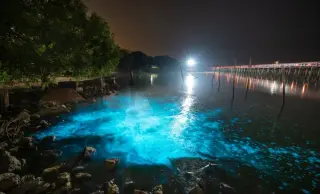
Researchers at CU Boulder developed a method to trigger sustained bioluminescence in the marine alga Pyrocystis lunula using chemical cues (acidic or basic solutions), enabling light output for up to 25 minutes and embedding the cells in sodium alginate hydrogels via 3D printing to form stable shapes that glow for weeks. Acid-triggered light stays localized in scintillons and, when combined with compressive loading, yields more light; acid-conditioned constructs retained about 75% of luminescent activity after four weeks, while base-treated cells declined due to membrane degradation. The team demonstrated glow across printed forms and envisions applications in biosensing and autonomous lighting for soft robots in environments like deep sea or space, with the algae consuming CO2 during operation. The work was published in Science Advances on May 6, 2026.

Algae glow enables 3D-printed light shapes
science20 days ago

Algae glow enables 3D-printed light shapes

US researchers encapsulated the bioluminescent alga Pyrocystis lunula in a hydrogel and used 3D printing to create glowing shapes. Exposing the algae to a mildly acidic solution triggers light production for up to about 25 minutes, producing a cyan glow suitable for applications like glow devices or biosensors, though real-world use and the algae’s survivability under acidity remain challenges.

Green Blink in Japanese Deep-Sea Cave Reveals New Bioluminescent Coral
science1 month ago

Green Blink in Japanese Deep-Sea Cave Reveals New Bioluminescent Coral

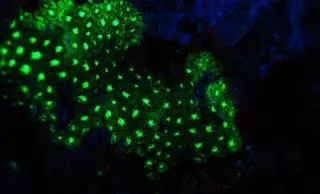
A JAMSTEC-led ROV dive in a 385-meter-deep limestone cave near Minamidaito Island, Japan, documented a new bioluminescent coral, Corallizoanthus aureus, that flashes green only when stimulated by touch or chemical cues, with glow localized to polyp tentacles (~515 nm). Analyses suggest an intrinsic luciferin-based mechanism (likely coelenterazine) and no bacterial symbionts; the light may function as a defensive burglar alarm by attracting predators of would-be attackers. This discovery marks the first documented bioluminescence in a deep-sea cave and expands knowledge of cave biodiversity and coral taxonomy, highlighting the value of specialized exploration tech in cryptic habitats.

Gulf’s Pocket-Sized Bioluminescent Shark Revealed as New Species
science1 month ago

Gulf’s Pocket-Sized Bioluminescent Shark Revealed as New Species

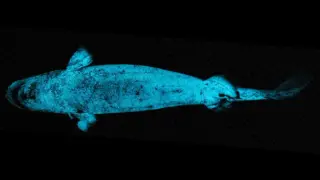
Scientists from NOAA announced the discovery of Mollisquama mississippiensis, the American pocket shark, a 5.5‑inch bioluminescent shark found in the Gulf of Mexico. It’s only the second pocket shark species known and differs from its Pacific relative in features like its pocket anatomy and body photophores. The glowing glands likely help with camouflage or predation, a trait that may have evolved independently in sharks. The shark was found accidentally by the NOAA Pisces during a sperm whale prey survey and is now part of Tulane’s research collection, with advanced imaging helping distinguish it from its Pacific cousin.

Oregon's Glowing Giant: the World’s Largest Organism
science3 months ago

Oregon's Glowing Giant: the World’s Largest Organism

The world’s biggest and oldest organism is a single clone of honey fungus (Armillaria ostoyae) in Oregon’s Malheur National Forest, spanning about 3.7 square miles. Its vast underground mycelial network (with rhizomorphs) grows by feeding on trees, while the surface shows bioluminescent hints known as foxfire. Estimates place its age between 2,400 and 8,650 years, underscoring how a fungus can dwarf all other life in scale.

Unveiling the Ocean's Nightmares: Bizarre Deep-Sea Creatures Discovered
science8 months ago

Unveiling the Ocean's Nightmares: Bizarre Deep-Sea Creatures Discovered

The article describes the fascinating and mysterious barreleye fish, a deep-sea creature with a transparent head and upward-facing tubular eyes that can rotate forward, allowing it to see in the dark depths of the Pacific Ocean. Its unique adaptations for survival in the midnight zone have intrigued scientists, especially after a 2009 expedition captured live footage, revealing new insights into its anatomy and behavior. The fish's features may inspire technological innovations, and it remains a symbol of the vast, largely unexplored ocean depths.

Unveiling the Ocean's Mysteries: Bizarre Deep-Sea Creatures Discovered
science8 months ago

Unveiling the Ocean's Mysteries: Bizarre Deep-Sea Creatures Discovered

The barreleye fish, a deep-sea species found mainly in the North Pacific, has a transparent head and upward-facing tubular eyes that help it detect prey in dark waters. Its unique visual system and fluid-filled shield protect it from stinging tentacles of jellyfish, and it can rotate its eyes forward to focus on food, showcasing remarkable adaptations for survival in the deep ocean.