
China’s New 1,900 g-Tonne Centrifuge Accelerates Century-Scale Environmental Tests to Days
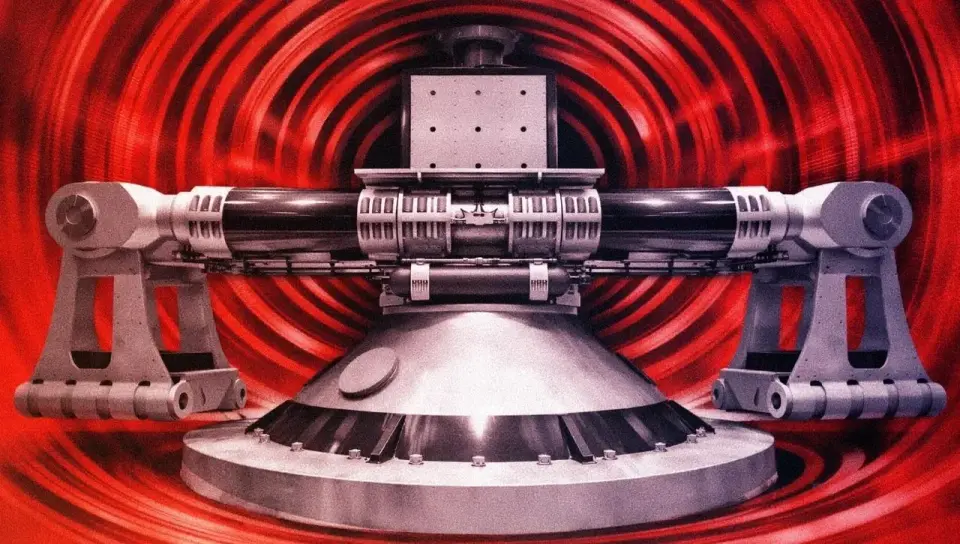
Zhejiang University has installed the CHIEF1900, the world’s most powerful research centrifuge, located 49 feet underground in Hangzhou. With a capacity of 1,900 g-tonnes, it surpasses the previous record holder, the CHIEF1300, and exceeds the capacity of major U.S. facilities. The machine allows scientists to simulate decades or centuries of slow processes, such as pollutant migration through soil, in just days by using hypergravity to scale physical models.
Key points
- The CHIEF1900, manufactured by Shanghai Electric Nuclear Power Group, holds a capacity of 1,900 g-tonnes, breaking the previous world record of 1,300 g-tonnes set by the CHIEF1300 in September 2025.
- Located 49 feet underground near Zhejiang University’s campus in Hangzhou, the facility uses hypergravity to compress time and space in physical models, allowing 100 years of pollutant migration to be simulated in 3.65 days.
- The centrifuge is designed for applications in geology, environmental science, and infrastructure safety, including testing dam stability during earthquakes and analyzing deep-sea engineering challenges.
- Engineering challenges include managing heat from aerodynamic drag and mechanical losses, addressed by a combination of vacuum operation, liquid cooling, and ventilation systems.
- The facility features six specialized experimental chambers and aims to replace long-term natural observation with rapid, scaled physical modeling for complex environmental and structural behaviors.
Background
This development follows the operational launch of the CHIEF1300 in September 2025, which previously held the world record for centrifuge capacity. The new CHIEF1900 represents a significant escalation in hypergravity research capabilities, moving beyond the previous 1,300 g-tonne benchmark. While earlier archive coverage focused on unrelated underground structures like the Liverpool tunnels or underwater analog missions, the CHIEF facility represents a distinct advancement in using controlled hypergravity environments to accelerate the study of long-term geological and environmental processes.
Why it matters
The CHIEF1900 enables researchers to bypass the decades-long timelines required for observing slow natural processes, such as soil contamination or structural degradation, by using hypergravity to scale these effects into days. This capability is critical for improving the safety of massive infrastructure like dams and for accurately predicting long-term environmental risks from underground waste deposits, ultimately reducing the time and cost associated with traditional field studies.
What to watch
Researchers will likely begin utilizing the CHIEF1900 to conduct experiments on slope stability, earthquake-related soil behavior, and advanced materials. The scientific value of the facility will depend on the new knowledge generated from these accelerated tests, potentially leading to improved engineering standards for deep underground and deep-sea projects.
Want the full story? Read the original reporting
Read on Futura, le média qui explore le monde