
RTX 5090 Prices Hit $7,500 at Best Buy as AI Demand Drains Retail Stock
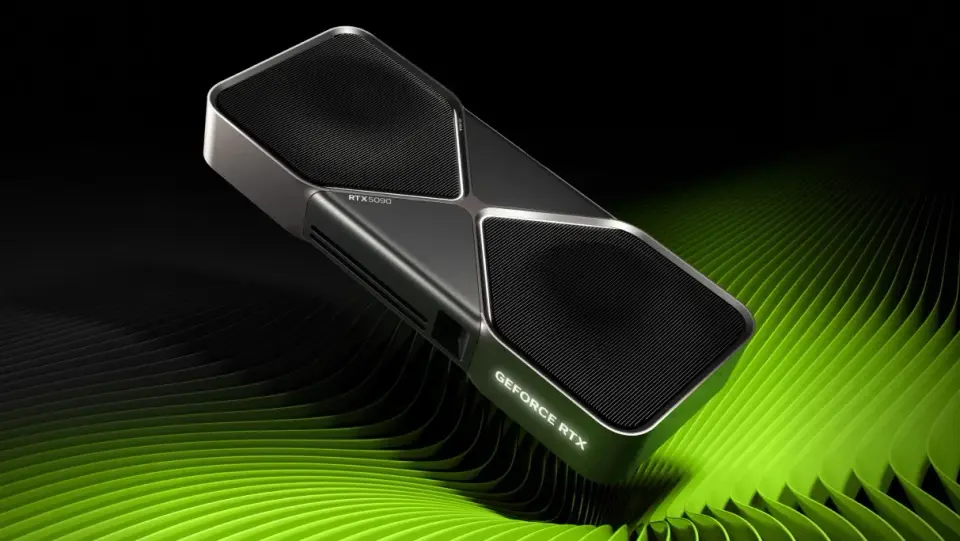
The Nvidia GeForce RTX 5090 has reached unprecedented price levels in the US market, with Best Buy listing units for $7,494.99. This surge, driven by AI server demand and supply shortages, has pushed retail prices to nearly four times the original $1,999 MSRP, while third-party sellers demand up to $9,500.
Key points
- Best Buy lists the RTX 5090 for $7,494.99, a significant increase from the $1,999 launch price in January 2025.
- Third-party marketplace listings on Amazon and Newegg reach up to $9,500, though first-party inventory is nearly gone.
- The price spike is attributed to AI firms bulk-buying consumer GPUs for server workloads, bypassing professional data-center cards.
- A modified 96GB version of the RTX 5090 appeared on Alibaba for $3,888, offering a cheaper alternative to Nvidia's $16,000 RTX PRO 6000.
- Nvidia's recent $96.22 billion quarter was driven 91.8% by data-center revenue, with consumer graphics accounting for only 8.2%.
Background
Since early 2026, GPU prices have risen sharply due to GDDR7 memory demand and AI hardware expansion. In September 2025, prices were already 145% above MSRP. Recent reports indicate that AI firms are purchasing bulk RTX 5090 units for server use, mirroring previous crypto-mining squeezes. Additionally, DLSS 5 neural rendering has pushed power draw limits, causing connector melting in some units, further complicating the market.
How outlets are covering it
Kotaku emphasizes the absurdity of Best Buy, a major retailer, listing the card at $7,500, noting that other stores are out of stock. Tom's Hardware highlights the volatility of third-party sellers, with prices reaching $9,500, and points out that Micro Center still had stock at $4,299. TechPowerUp focuses on the gray market, reporting a modified 96GB version on Alibaba for $3,888, which is cheaper than the US retail price but lacks official support. TechStock² argues that these high consumer prices do not directly impact Nvidia's earnings, as the company's revenue is overwhelmingly driven by data-center products, not consumer GPUs.
Why it matters
The extreme pricing of the RTX 5090 illustrates the severe strain on the consumer GPU market caused by AI demand. It highlights the shift in Nvidia's business model toward data centers and the potential for long-term supply shortages for gamers. The situation also raises questions about the sustainability of consumer GPU prices and the impact of AI on hardware availability.
What to watch
The next key indicators will be authorized-channel restocks and Nvidia's fiscal third-quarter results. If official supply returns and marketplace prices fall, the episode may be seen as a reseller-driven anomaly. If scarcity persists, it could signal a more durable shift in demand. Nvidia has guided to $108 billion in revenue, and any acceleration in graphics revenue could indicate sustained consumer demand despite high prices.
- No One Can Believe The Current Price Of An Nvidia RTX 5090 kotaku.com
- Nvidia's RTX 5090 vanishes from online retail in the US — third-party sellers now demand as much as $9,500 for Nvidia's fastest GPU Tom's Hardware
- Modified GeForce RTX 5090 with 96 GB Memory Shows Up on Alibaba for Nearly $4,000 TechPowerUp
- NVIDIA's RTX 5090 cards are ending up in AI servers in bulk instead of gaming PCs TweakTown
- RTX 5090 Listings Reach $9,500, but Nvidia’s $96 Billion Quarter Runs on Data Centers TechStock²
Want the full story? Read the original reporting
Read on kotaku.com