
New Study Maps US Power Grid Vulnerability to Extreme Solar Storms
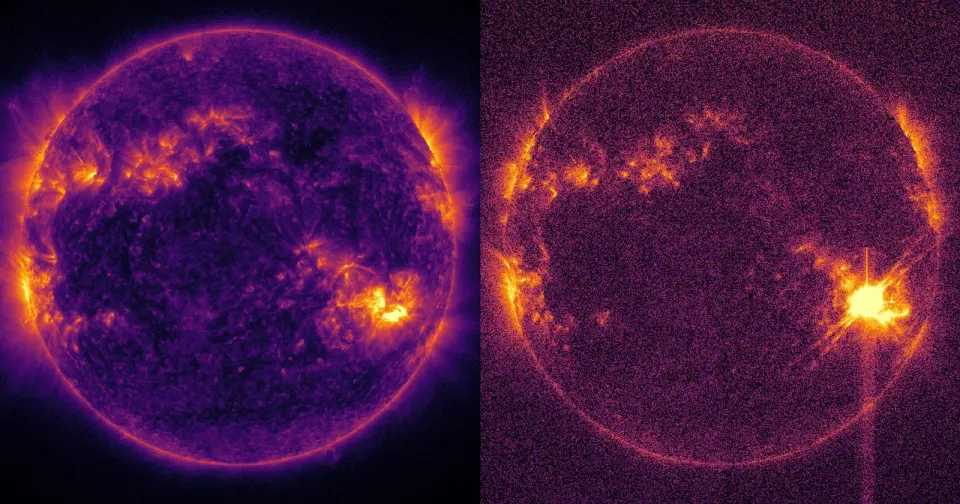
A new study published in AGU Advances estimates that a severe solar storm could cause $1.5 to $2 billion in daily economic losses in the US, affecting 5.1 million people. The research highlights the Northeast and Northern Plains as the most vulnerable regions due to grid structure and geology. While the May 2024 'Gannon' storm caused no outages, it damaged GPS sensors, costing up to $1 billion. Experts warn that while the grid can handle storms up to three times stronger than Gannon, a Carrington-level event could trigger widespread blackouts. NERC plans aim to restore power within 24 hours if equipment remains intact, but older transformers pose a significant risk.
Key points
- A study in AGU Advances models the impact of a Carrington-level solar storm on the US power grid, estimating $1.5 to $2 billion in daily losses.
- The Northeast and Northern Plains are identified as the most vulnerable areas due to high-latitude exposure and resistive bedrock.
- The May 2024 Gannon storm caused $500 million to $1 billion in losses by damaging GPS sensors used by farmers in 12 states.
- Grid operators received six hours' warning for the Gannon storm, allowing them to fortify the system and prevent blackouts.
- NERC estimates the grid can withstand storms up to three times stronger than Gannon, but older transformers may fail under more intense conditions.
Background
The May 2024 Gannon storm was the first severe solar storm to test modern infrastructure, causing auroras across all 50 US states but no power outages. It highlighted vulnerabilities in GPS-dependent agriculture and satellite communications. Previous studies, such as a 2008 report by the National Academies, predicted more catastrophic outcomes, including multi-year blackouts and trillion-dollar costs, which experts now consider overly pessimistic. The 1989 Quebec blackout remains the last major solar-induced power failure in North America.
Why it matters
Understanding solar storm impacts is critical for protecting critical infrastructure, including power grids, satellites, and communication systems. The study provides a detailed map of regional vulnerabilities, helping grid operators and policymakers prepare for future events. As the sun enters a period of heightened activity, the risk of a severe solar storm increases, making preparedness essential to avoid economic and societal disruptions.
What to watch
The Space Weather Prediction Center is improving its forecasting capabilities, aiming to provide up to 24 hours' warning for future solar storms. Grid operators are continuing to fortify the system, including adding extra generators and canceling maintenance on transmission lines. Further research is needed to assess the impact of solar storms on newer technologies, such as drones and commercial satellites, which were affected during the Gannon storm.
Want the full story? Read the original reporting
Read on CNN