
Chemically Induced Stem Cells Recreate Full Mouse Embryo Development in Lab
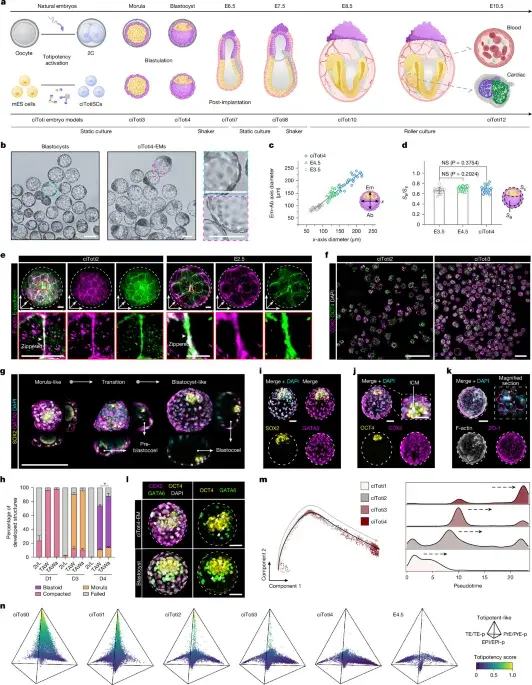
Researchers have successfully modeled the entire early mouse embryonic development process using only chemically induced totipotent-like stem cells, bypassing the need for fertilized eggs or multiple cell types.
Key points
- A team led by Sheng Ding and colleagues at Nature demonstrated that chemically induced totipotent-like stem cells (ciTotiSCs) can autonomously develop into embryo models (ciToti-EMs) that mimic natural mouse embryos from the pre-implantation stage through early organogenesis.
- The ciTotiSCs self-organized into blastocyst-like structures that closely resembled natural blastocysts in both morphology and lineage segregation, including the formation of both embryonic and extraembryonic compartments.
- The resulting ciToti-EMs progressed through key developmental milestones such as gastrulation, embryonic axis formation, haematopoiesis, and early organogenesis, closely resembling natural embryos at embryonic day 8.5 (E8.5).
- Extended culture of the ciToti-EMs led to the development of functional cardiac tissues that were highly comparable to those found in natural embryos at embryonic day 10.5 (E10.5).
- This study provides a powerful new model for investigating mammalian embryonic development and opens new avenues for creating multicellular organisms from non-germline cells, addressing a long-standing challenge in developmental and synthetic biology.
Background
This breakthrough builds on previous advancements in stem cell research, including the creation of comprehensive cell lineage maps for mouse embryos using prime editing technologies (October 2026) and the development of totipotent stem cells through chemical cocktails (June 2022). It also aligns with recent efforts to model post-gastrulation development using various stem cell types, such as naive embryonic stem cells and induced pluripotent stem cells (2025).
Why it matters
This research could revolutionize our understanding of mammalian embryonic development and provide new tools for studying developmental disorders. It also opens up possibilities for creating multicellular organisms from non-germline cells, which could have significant implications for regenerative medicine and the treatment of diseases.
What to watch
Future research will likely focus on extending the ciToti-EM system to model later stages of embryonic development and exploring its applications in disease modeling and regenerative medicine. Additionally, efforts may be made to adapt this approach to human cells, potentially leading to new therapeutic strategies.
Want the full story? Read the original reporting
Read on Nature