
UC Davis Researchers Demonstrate Real-Time Singing and Speech via Brain Implants in ALS Patients
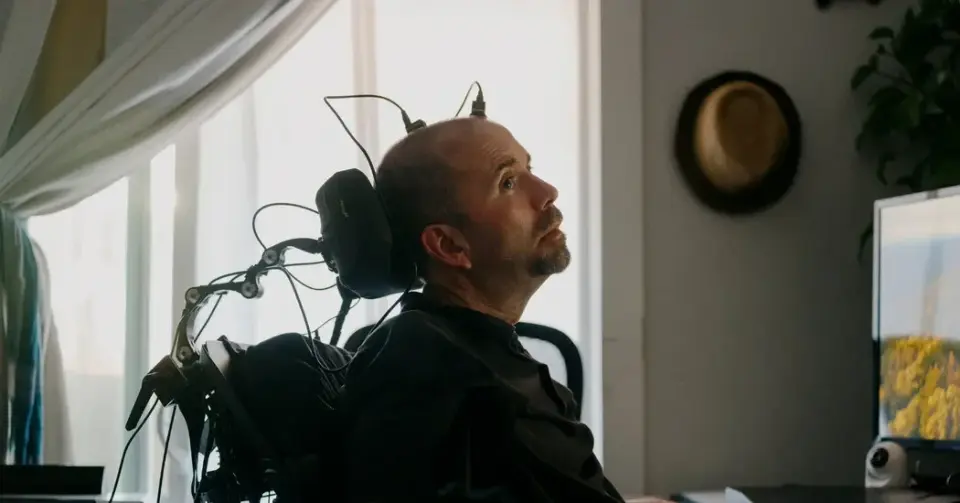
Researchers at the University of California, Davis have advanced brain-computer interface technology to the point where it can facilitate real-time singing and intelligible speech for patients with amyotrophic lateral sclerosis. Presented at the Society for Neuroscience conference, the new system decodes neural signals from the motor cortex to generate audio that mimics the user's natural voice, including intonation and melody. This marks a shift from experimental proof-of-concept to practical utility, allowing individuals who have lost their voice to communicate with emotional nuance.
Key points
- A 46-year-old male patient with ALS used the implant to produce intelligible speech directly from brain signals.
- A 58-year-old female patient, a trained singer, successfully performed a musical scale using the device.
- The technology translates intended speech from the motor cortex into audible output, preserving the user's original voice characteristics.
- Experts describe this as a transition from laboratory demonstrations to systems capable of supporting everyday communication.
- The findings are to be presented at the Society for Neuroscience conference in Washington, D.C.
Background
This development follows a 2025 breakthrough where a similar system allowed an ALS patient to change intonation and sing short melodies. It also builds on a June 2026 study in Nature Medicine, which documented an ALS patient using a BCI for over 3,800 hours at home to communicate 183,060 sentences. Recent industry challenges, such as Synchron's pause of trials due to cable faults, highlight the technical hurdles in scaling these devices, though the UC Davis work focuses on signal decoding rather than hardware reliability.
How outlets are covering it
The New York Times emphasizes the practical milestone, noting that the system is now 'good enough' for real communication and singing, citing biomedical engineer Cindy Chestek. IFLScience and Trinity News frame the achievement within the broader debate on 'mind reading,' clarifying that these devices decode intended actions or speech rather than accessing private inner thoughts or unspoken beliefs. While the NYT focuses on the restoration of voice, the secondary sources highlight the ethical and technical limitations, noting that current BCIs cannot capture the full complexity of human consciousness or non-verbal thoughts.
Why it matters
This advancement demonstrates that brain-computer interfaces can move beyond basic text output to restore the emotional and tonal aspects of human communication. For patients with degenerative motor neuron diseases, this technology offers a path to maintaining personal identity and expressive capability, rather than relying on robotic or text-based alternatives. It also sets a new benchmark for the accuracy and usability of neural decoding in clinical settings.
What to watch
Researchers will present the full data at the Society for Neuroscience conference next week. Future development will likely focus on expanding the range of decodable signals to include non-verbal thoughts and improving the long-term reliability of implanted hardware, as seen in recent industry adjustments. Ethical frameworks, or 'neurorights,' may also evolve to address privacy concerns regarding neural data collection.
- Brain Implants Give A.L.S. Patients the Voice to Speak and Sing The New York Times
- Brain-computer interfaces: A new voice for people with paralysis Medical Xpress
- How Close Are We To Genuine Mind-Reading? IFLScience
- Could BCIs (brain-computer interfaces) make telepathic communication a reality? Trinity News
- Brain Implant Helps ALS Patient Speak Again as Daughter Rediscovers the Voice She Barely Remembers www.techtimes.co.uk
Want the full story? Read the original reporting
Read on The New York Times