Tag

Medical Technology

All articles tagged with #medical technology

Brain-implant breakthrough lets ALS patient speak nearly 2 million words at home
science27 days ago

Brain-implant breakthrough lets ALS patient speak nearly 2 million words at home

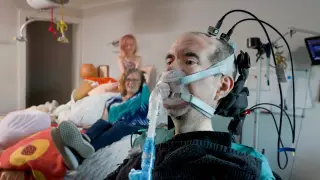
Casey Harrell, an ALS patient who had lost his voice, regained a functional means of communication through a brain-implant in the BrainGate2 trial, enabling him to spell and speak from home for about two years and producing nearly 2 million words; the Nature Medicine study highlights how brain-computer interfaces can restore conversation for paralyzed individuals and transform daily life for patients and families.

Trump-backed push to insert AI doctors into US medicine faces safety questions
technology1 month ago

Trump-backed push to insert AI doctors into US medicine faces safety questions

The Trump administration is laying groundwork for chatbots that can diagnose illness and prescribe medicine, hoping to address doctor shortages, but physicians warn AI could bring safety, liability and bias concerns. A Washington Post story highlights a real case where a patient’s AI-assisted diagnosis led to a clinical-trial entry, illustrating AI’s potential to augment care alongside significant regulatory and safety challenges.

Aging at home: four tech categories that boost independence
wellbeing1 month ago

Aging at home: four tech categories that boost independence

Smart-home devices and safety tech are helping older adults live independently at home, as shown by a 78-year-old wheelchair user who used Alexa to call his children after his wife’s stroke. The piece outlines four tech categories—smart-home/ambient devices, medical alert and safety systems, AI-enabled products, and wearables/virtual companions—that can support daily tasks, safety, and social connection, while noting that in-person help remains essential for core activities; the aging tech market is expanding.

Handheld cancer detector nears home-based early-detection breakthrough
science1 month ago

Handheld cancer detector nears home-based early-detection breakthrough

Researchers at Westlake University in China have unveiled a handheld cancer-screening device that can detect early-stage cancer biomarkers from a single blood drop. Using a compact 3D metamaterial Bound States-in-the-Continuum sensing chip, the device replaces bulky laboratory equipment with a portable chip, LED, and photodetector, enabling at-home or remote testing. In trials with 171 patient serum samples, it achieved 94.9% accuracy for early cancer detection and 92.1% for post-surgery monitoring—far outperforming the standard ELISA method (74.7%). The team also claims mass production of thousands of identical chips per wafer at about $5 per chip. Findings were published in Nature Photonics and demonstrated 10,000x greater sensitivity than ELISA in spotting lung-cancer biomarkers.

Hims & Hers plots wellness-and-longevity pivot beyond weight-loss meds
health1 month ago

Hims & Hers plots wellness-and-longevity pivot beyond weight-loss meds

Hims & Hers, the telehealth company built on selling GLP-1 weight-loss drugs online, plans a pivot into wellness and longevity, including potentially FDA-regulated peptides. The founder-CEO aims to source peptides in the U.S. and lean on its mass-marketing platform to push broader wellness products, signaling a transition from prescription-focused care toward a broader wellness business amid regulatory scrutiny.

Vision Pro Enables World-First Cataract Surgery with Remote Collaboration
technology2 months ago

Vision Pro Enables World-First Cataract Surgery with Remote Collaboration

Apple's Vision Pro was used by New York ophthalmologist Dr. Eric Rosenberg to perform the world’s first cataract surgery via the ScopeXR platform, which streams live 3D digital microscope feeds into the headset and overlays preoperative data, while enabling real-time remote collaboration with other surgeons—underscoring Apple’s push into enterprise medical uses amid consumer-adoption challenges and a shift toward lighter smart-glass tech.

Inca the German Shepherd’s nose saves a life by detecting early lung cancer
health4 months ago

Inca the German Shepherd’s nose saves a life by detecting early lung cancer

Colleen Ferguson, a 60-year-old science teacher in Kent, England, was surprised when her two-year-old German Shepherd, Inca, kept sniffing her breath. After medical tests, doctors discovered a golf-ball-sized tumor in Ferguson’s lung caught at stage 1, which was surgically removed. The surgeon credited the dog with saving her life. The piece also highlights MIT’s development of an AI-assisted electronic nose (e-nose) to detect cancer, illustrating the growing potential of machine olfaction in early cancer diagnosis.

AI health chats offer help but aren’t a substitute for doctors
health4 months ago

AI health chats offer help but aren’t a substitute for doctors

AP News explains that popular AI chatbots like ChatGPT and Claude can provide general health information, but they aren’t medical professionals and may misinterpret symptoms or give outdated or incorrect guidance. They also raise privacy and data-sharing concerns. Experts advise users to verify information with trusted medical sources, consult healthcare providers for diagnoses or emergencies, and treat AI advice as supplementary—not a replacement for professional care—especially for urgent or complex health issues.

Apple Watch Advances in Needle-Free Glucose Monitoring Technology
technology6 months ago

Apple Watch Advances in Needle-Free Glucose Monitoring Technology

Apple Watch has made significant advancements in glucose monitoring, including FDA-approved integration with existing CGMs like Dexcom G7, which now connects directly without a phone, and ongoing development of non-invasive glucose sensors using optical technology. While immediate benefits are available for current CGM users, Apple's long-term goal is to create a non-invasive, wrist-worn device that could revolutionize metabolic health monitoring and disease prevention. Despite technical and regulatory challenges, these innovations suggest a transformative future for health tech.

Hospitals Face Dilemma with New Medical Technology
healthcare6 months ago

Hospitals Face Dilemma with New Medical Technology

The article discusses how hospitals' self-interested investments in expensive medical technologies, driven by physician training and recruitment needs, create a prisoner’s dilemma that leads to higher costs and disparities, especially impacting rural hospitals. It suggests rethinking GME funding and training to promote collaboration and resource allocation that benefits community health and reduces dependence on costly technology.