
SpaceX demands mandatory orbital data sharing after 164,000 Starlink near-misses
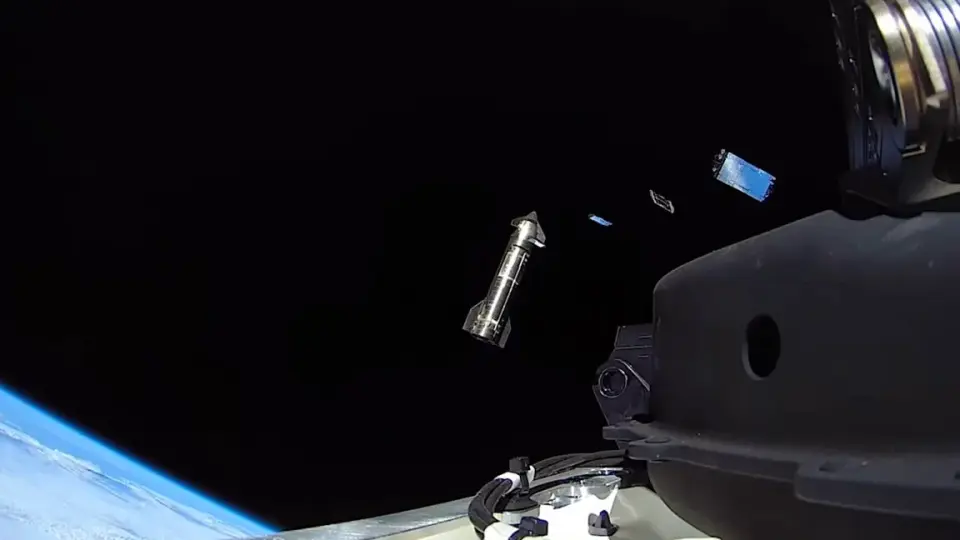
SpaceX executive Michael Nicolls urged global satellite operators to share trajectory data at the International Astronautical Congress, citing 164,000 potential collisions in six months. The company argues that undisclosed maneuvers by rivals, particularly from China, create unacceptable risks in low-Earth orbit, where Starlink now accounts for two-thirds of active satellites.
Key points
- SpaceX reported approximately 164,000 potential near-miss collisions involving Starlink satellites over the past six months, with about 650 involving active satellites from other operators.
- Michael Nicolls, SpaceX’s VP for Starlink and president of xAI, stated that the greatest risk in low-Earth orbit comes from operators who maneuver without publishing their ephemeris (trajectory) data.
- Specific incidents included a close approach in August where a Starlink satellite had to rotate to a 'knife-edge profile' to avoid another object, and an October 2025 near-miss within 57 meters.
- SpaceX has lowered its active constellation altitude below 500 kilometers and plans to deploy new Starlink V3 satellites at approximately 350 kilometers to expedite reentry and reduce collision risks.
- Amazon Leo’s head, Rajeev Badyal, stated that Amazon coordinates regularly with SpaceX and other operators, calling ephemeris sharing a 'non-issue' for their operations.
Background
SpaceX has been expanding its Starlink network rapidly, with the first batch of upgraded Starlink V3 satellites deploying from the Starship rocket in late September 2026. The company previously moved around 4,400 satellites to lower orbits in January 2026 to mitigate collision risks. This follows earlier concerns raised by China in 2021 regarding Starlink satellites near its Tiangong space station.
How outlets are covering it
Ars Technica and Business Insider emphasize the lack of cooperation from Chinese and Russian operators, noting that nearly all Chinese satellite operators decline to share ephemeris data. WESH highlights the broader risk of orbital debris cascades, quoting Florida Tech’s Dr. Don Platt on the 'busy highway' analogy. Amazon’s leadership, as reported by Ars Technica, presents a contrasting view, claiming that coordination with SpaceX is routine and that sharing data is standard practice for them, though they declined to comment on adversaries like China.
Why it matters
As satellite constellations grow to potentially millions of units, including SpaceX’s planned 'Starmind' AI network, the lack of standardized data sharing increases the risk of a Kessler syndrome-like debris cascade. This could render low-Earth orbit unusable, impacting global communications, weather tracking, and space access for all nations.
What to watch
SpaceX is urging the adoption of open ephemeris sharing as a minimum standard for low-Earth orbit. The company continues to deploy Starlink V3 satellites at lower altitudes and is expanding its 'Stargaze' tracking system, which currently monitors about 90% of maneuvering satellites intersecting Starlink orbits. Industry-wide coordination remains a challenge, particularly with operators who prioritize secrecy for competitive or strategic advantages.
- SpaceX calls for better coordination in orbit after near-misses with Starlink Ars Technica
- Starlink's plan to avoid orbital near-misses: Ephemeris sharing The Register
- SpaceX is calling out other satellite operators for nearly crashing into Starlink Business Insider
- SpaceX warns of collision risk as satellites begin to crowd Earth's orbit WESH
- SpaceX Identifies Unshared Ephemeris Data as Primary Orbital Collision Hazard in Low Earth Orbit SatNews Publishers
Want the full story? Read the original reporting
Read on Ars Technica