Tag

Orbital Debris

All articles tagged with #orbital debris

Debris-fueled risk: NASA’s Aqua nears retirement and a lasting climate record teeters
space5 days ago

Debris-fueled risk: NASA’s Aqua nears retirement and a lasting climate record teeters

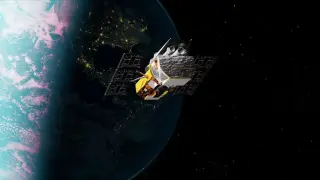
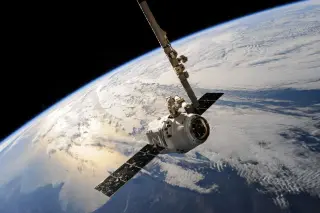
NASA’s Aqua satellite, a cornerstone of the Earth Observing System that has tracked wildfires and climate data for 24 years, is running out of fuel and will soon lose its ability to maneuver away from space debris, threatening gaps in a decades-long climate record as orbital junk rises and no direct replacement is fully funded, with private ventures like Google’s fire-detection plans poised to fill at least part of the data gap.

Fireball from Space: ISS Captures Debris Reentry Over West Africa
space22 days ago

Fireball from Space: ISS Captures Debris Reentry Over West Africa

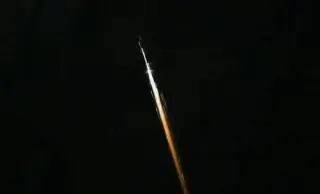
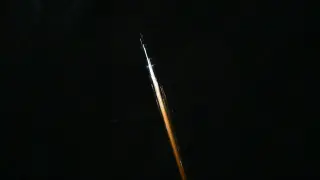
From the International Space Station's Cupola, NASA astronaut Chris Williams recorded a bright fireball streaking through the upper atmosphere—likely the reentry of debris from the Progress MS-34 mission. Observed at about 10:40 PM GMT on April 27 from roughly 250 miles up, the event provided a rare orbital view of how high-speed objects break up upon atmospheric entry; Williams shared photos and video on X, noting the pass over West Africa and emphasizing that such reentries typically occur over remote areas and pose no risk to people on the ground.

ISS Captures Spectacular Fireball Likely Debris Reentry After Progress MS-34 Launch
space-exploration24 days ago

ISS Captures Spectacular Fireball Likely Debris Reentry After Progress MS-34 Launch

NASA astronaut Chris Williams aboard the International Space Station photographed a dramatic fireball on April 27, 2026, likely caused by debris from a satellite or the upper stage of the Soyuz rocket related to the Progress MS-34 (Progress 95) mission. The fireball appeared as the Progress 95 cargo ship—launched April 25, docked two days later and to remain attached for about seven months—passed overhead near West Africa, with Williams noting a bright streak that split into a shower of pieces. Williams is a rookie aboard an eight‑month stay, sharing the ISS with SpaceX Crew-12 astronauts Jessica Meir and Jack Hathaway, along with Sophie Adenot and Andrey Fedyaev.

Solar storms could push crowded low-Earth orbit into a 2.8-day debris cascade
science25 days ago

Solar storms could push crowded low-Earth orbit into a 2.8-day debris cascade

A study led by Sarah Thiele warns that today’s mega-constellations in low-Earth orbit are so crowded and maneuver-dependent that a rare disruption, especially a solar storm, could overwhelm collision-avoidance systems. Using the CRASH Clock metric, researchers estimate that a complete loss of command over avoidance could trigger a catastrophic collision in about 2.8 days, far faster than the late-2010s risk, with even a 24-hour outage carrying roughly a 30% chance of a major debris-producing event. The work highlights the fragile infrastructure of crowded space and the need for robust contingency planning amid ongoing mega-constellations.

Mega-constellations risk turning orbit into a debris nightmare
environment1 month ago

Mega-constellations risk turning orbit into a debris nightmare

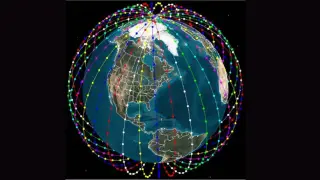
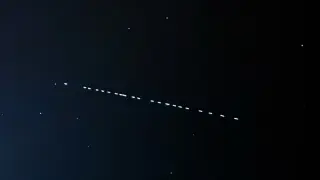
SpaceX’s Starlink mega-constellations now dominate low-Earth orbit with about 10,000 satellites and plans for up to a million more, sparking concerns over light pollution, future debris, and potential ground fallout; satellites typically burn up on re-entry, but larger mega-constellations could leave debris that falls to Earth, as seen in Saskatchewan, and Canada has no formal debris reporting or environmental regulation for space activities; experts warn of increased collision risk (Kessler syndrome) and stress the need for Canadian internet alternatives and stronger governance, since SpaceX currently controls a large share of orbital slots.

Orbit Overload: Climate Shifts Could Leave Space Junk Lingering
space3 months ago

Orbit Overload: Climate Shifts Could Leave Space Junk Lingering

SpaceX has asked for permission to launch up to one million satellites to provide global internet, but researchers warn that an already crowded orbit could become messier as climate-change–driven changes in the upper atmosphere cause space debris to linger longer; by century’s end, only about half as many satellites may safely fit in orbit, even as SpaceX accounts for roughly two-thirds of all satellites launched to date (about 15,000).

Solar Storms Could Collapse LEO Satellite Web in Days
space4 months ago

Solar Storms Could Collapse LEO Satellite Web in Days

New analysis warns that solar storms could trigger a rapid, near-term collapse of Earth’s LEO satellite mega-constellations if command-and-control for avoidance is lost. The study introduces the CRASH Clock, estimating a catastrophic collision could occur in about 2.8 days as of mid-2025 (versus 121 days in 2018), and a 24-hour outage carries roughly a 30% chance of seeding long-term debris cascades. Solar storms heat the atmosphere, increasing drag and degrading orbit predictions while possibly disabling satellite navigation and communications, leaving many satellites unable to dodge each other. Authored by Sarah Thiele and colleagues and posted on arXiv, the work argues for real-time tracking and control to prevent a “house of cards” collapse of space infrastructure, a risk underscored by the 2024 Gannon storm and the historic Carrington Event.

October 31, 2000: The Last Day of Humanity Before Change
science-and-technology11 months ago

October 31, 2000: The Last Day of Humanity Before Change

On October 31, 2000, the first crew arrived at the ISS, marking the start of continuous human presence in space, a milestone that has supported extensive scientific research. The station faces aging challenges and potential retirement by 2030, while China has launched its own space station, Tiangong, expanding its influence. Growing orbital debris poses significant risks to space operations, prompting efforts to improve debris management and ensure sustainable human activity in orbit.

Space Exploration's Hidden Environmental Costs: Debris and Climate Impact
science1 year ago

Space Exploration's Hidden Environmental Costs: Debris and Climate Impact

Scientists warn that the increasing amount of space debris in Earth's orbit poses a significant threat, potentially leading to the Kessler syndrome, where collisions create more debris, making parts of space unusable. With over 10,200 active satellites and millions of debris pieces, the risk of collisions is rising, especially in low Earth orbit. Experts urge immediate action and regulation to prevent a 'tragedy of the commons' scenario, where individual actions deplete shared resources, affecting scientific research and cultural experiences like stargazing.

NASA Advances Space Sustainability Strategy
space1 year ago

NASA Advances Space Sustainability Strategy

NASA Deputy Administrator Pam Melroy reported significant progress on the agency's space sustainability strategy, including developing a framework for assessing space sustainability, analyzing collision risk uncertainties, and planning investments in debris management and space situational awareness. The strategy, initially focused on Earth orbit, is expanding to include cislunar space, with ongoing interagency and international coordination and the appointment of Trudy Kortes as interim director of space sustainability.

NASA Unveils Efficient Space Debris Cleanup Solutions
science-and-technology2 years ago

NASA Unveils Efficient Space Debris Cleanup Solutions

NASA's Office of Technology, Policy, and Strategy has released a new report identifying cost-effective methods for managing orbital debris, emphasizing direct risk and cost evaluations over 30 years. The study compares over 10 different actions to reduce debris risk, such as shielding, tracking, and remediation, and suggests that some methods may be more valuable than previously thought. The findings aim to guide NASA and the space community in addressing the growing issue of space debris.

NASA Unveils Cost-Effective Solutions for Space Debris Management
space2 years ago

NASA Unveils Cost-Effective Solutions for Space Debris Management

A NASA report highlights that reducing the time satellites remain in orbit post-mission is a highly cost-effective way to mitigate orbital debris. The study found that even modest reductions in post-mission disposal timeframes can yield significant benefits, with potential net benefits up to $9 billion. The report also identifies promising debris remediation techniques, such as "just in time" collision avoidance, and emphasizes the importance of economic analysis in developing space sustainability strategies.

"European Satellite's Impending Reentry and Earth Impact Pose Debris Mitigation Challenges"
space2 years ago

"European Satellite's Impending Reentry and Earth Impact Pose Debris Mitigation Challenges"

The European Space Agency's ERS-2 satellite, launched in 1995, is set to reenter Earth's atmosphere on Feb. 21 after being decommissioned in 2011. The impending reentry highlights the challenges of mitigating orbital debris, as some components of the satellite are expected to survive reentry. ESA has recently published a new orbital debris mitigation policy, aiming for a zero-debris vision and reducing the post-mission disposal timeframe from 25 to 5 years, with plans to progressively implement the measures through the end of the decade.

"Japan's ADRAS-J Satellite Launches to Inspect Space Debris"
space-technology2 years ago

"Japan's ADRAS-J Satellite Launches to Inspect Space Debris"

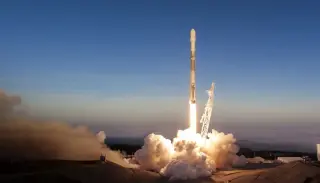
Japan's ADRAS-J satellite, launched by Rocket Lab, aims to monitor a derelict HII-A rocket stage in space, representing the world's first attempt to approach, characterize, and survey existing space debris. The spacecraft will rely on ground-based observations to approach the unprepared object and use cameras and sensors to document its state, as part of Japan's Commercial Removal of Debris Demonstration program.