
Romania's 7,000-year-old 'Thinkers' of Cernavodă reveal Neolithic burial practices
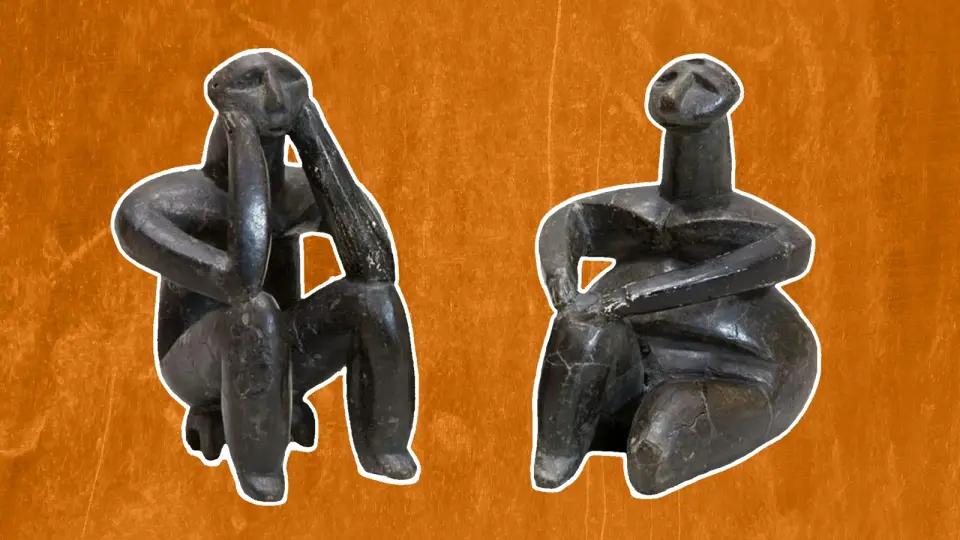
In 1956, archaeologists discovered two unique seated clay figurines in a 7,000-year-old grave in Cernavodă, Romania. Known as the 'Thinker' and the 'Seated Woman,' these artifacts belong to the Hamangia culture and remain central to Romanian cultural heritage, though their exact purpose is debated.
Key points
- The figurines were unearthed in 1956 from a single grave in a Stone Age cemetery in southeast Romania.
- Crafted from fired clay, the two pieces stand approximately 11.5 centimeters tall and date to around 5000 B.C.
- The male figure, the 'Thinker,' sits on a low stool with his head resting in his hands, resembling a meditative pose.
- The female figure, the 'Seated Woman,' features prominent hips and breasts, with her hands resting on her bent knee.
- Both artifacts are currently housed in the National Museum of Romanian History, with the male figure serving as the institution's logo.
- The Hamangia culture, which created these items, thrived from 5200 to 4500 B.C. across the Danube and Black Sea regions.
Background
Recent archaeological findings across Europe, such as a 7,000-year-old Neolithic grave in Leipzig and a 5,000-year-old kidney stone in Russia, highlight the growing interest in understanding ancient burial practices and daily life. The Cernavodă figurines fit into this broader trend of examining Neolithic societies, offering insights into the symbolic and ritualistic behaviors of early European cultures.
Why it matters
The Thinkers of Cernavodă provide a rare glimpse into the artistic and spiritual life of the Hamangia culture, a Late Neolithic society known for sheep herding and defensive settlements. Their unique seated poses, distinct from the standing figurines typically found in the same cemetery, suggest a specific ritual or religious significance, possibly linked to solar worship or the representation of complementary gender principles. As a key part of Romania's cultural heritage, these artifacts continue to draw public interest and scholarly debate regarding their meaning.
What to watch
While the figurines were discovered decades ago, ongoing research and public interest continue to explore their symbolic value. The National Museum of Romanian History maintains them as a central part of its collection, and the male 'Thinker' remains a prominent symbol in the museum's branding. Future studies may further investigate the connection between these artifacts and broader Neolithic spiritual practices in Europe.
Want the full story? Read the original reporting
Read on Live Science