
Ford clashes with Trump administration over Chinese battery and manufacturing ties
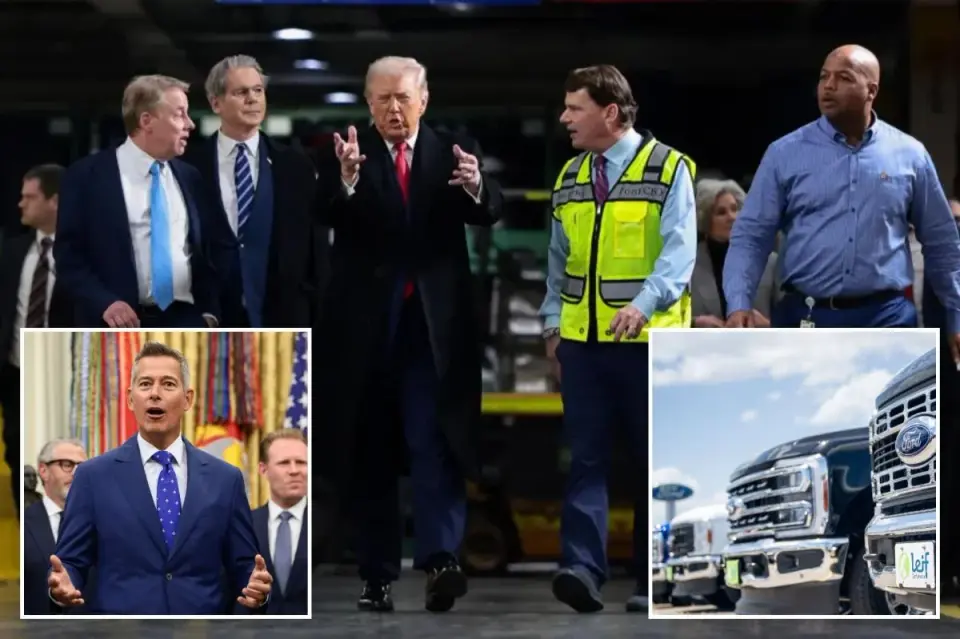
Ford is facing intense scrutiny from the Trump administration and congressional Republicans over its business relationships with Chinese companies. Transportation Secretary Sean Duffy accused the automaker of compromising American manufacturing integrity through its reliance on Chinese battery technology and potential joint ventures. Ford has firmly rejected these claims, defending its status as the top U.S. producer and disputing specific allegations in Duffy's letter.
Key points
- Transportation Secretary Sean Duffy sent a letter to Ford CEO Jim Farley expressing 'profound concern' over the company's strategic ties to Chinese firms, including battery giant CATL and automaker Geely.
- Duffy specifically criticized Ford's use of CATL technology at its Michigan battery plant and alleged that Farley proposed a framework to facilitate Chinese joint ventures in the U.S., an assertion Ford has flatly denied.
- Ford responded by calling Duffy's letter a 'wrongheaded attempt to capture headlines' and emphasized that it employs more hourly workers in the U.S. than any other automaker.
- Congressional Republicans, including Sen. Rick Scott and the House Select Committee on China, have joined the administration in criticizing Ford's Chinese partnerships.
- Ford maintains that its CATL arrangement is a limited technology-licensing deal, not a joint venture, and that it controls the Michigan plant operations and workforce.
Background
This dispute follows earlier tensions between the U.S. auto industry and the Trump administration, including a previous tariff spat with Canada in August 2026. The current conflict highlights ongoing friction between federal policy on national security and supply chain independence versus corporate strategies for global cost efficiency and market access.
How outlets are covering it
The New York Post and CNBC both report on the core conflict but emphasize different aspects. The New York Post highlights the broader political backlash, including criticism from Sen. Rick Scott and the House Select Committee on China, as well as Ford's defense of its Lincoln production plans in China. CNBC focuses more on the direct exchange between Duffy and Farley, noting Ford's request for more open communication and its defense of its status as America's top-producing carmaker. Both outlets agree on the fundamental disagreement: the administration views Ford's Chinese ties as a national security and manufacturing risk, while Ford views the criticism as factually incorrect and counterproductive to its U.S. commitments.
Why it matters
This conflict signals a potential shift in U.S. industrial policy, where the administration is actively pressuring major domestic manufacturers to decouple from Chinese technology and supply chains. It could set a precedent for how other American companies navigate global partnerships amid rising geopolitical tensions, potentially affecting investment decisions, supply chain resilience, and the future of American manufacturing jobs.
What to watch
Ford has requested more open communication with the administration, while Duffy has urged Farley to adopt strategies that prioritize American workers and allied supply chains. The outcome of this dispute could influence future federal regulations on foreign technology licensing and joint ventures in the automotive sector. Congressional investigators may also pursue further inquiries into Ford's CATL licensing agreement and other Chinese partnerships.
- Ford under fire from GOP, Trump administration over China ties New York Post
- Trump administration expresses 'profound concern' over Ford's ties to China CNBC
- Ford’s Use of Chinese Tech Called ‘Unacceptable’ by Transportation Secretary WSJ
- U.S. transportation secretary lashes out at Ford over ties to Chinese auto companies Automotive News
- Republican lawmakers criticize Ford business ties to China Reuters
Want the full story? Read the original reporting
Read on New York Post